


Finding affordable heat pumps service in cole harbour ns means more than just the lowest price tag. True affordability comes from long-term value, not just upfront costs.
Quick Guide to Affordable Heat Pump Service in Cole Harbour:
Business owners in Cole Harbour often seek affordable heat pump service to combat rising energy costs or replace an unreliable system that struggles with Nova Scotia's climate. The real question isn't about the cheapest unit, but which system will deliver the most value over the next 15 to 20 years.
Modern heat pumps move heat instead of generating it, using far less energy than traditional systems. This efficiency can cut utility bills by 30% or more and provides all-in-one climate control. However, true affordability in Cole Harbour requires quality equipment, professional installation, and regular maintenance. Skipping these steps turns a "bargain" into a costly problem.
The maritime climate is tough on HVAC equipment, with salt air, humidity, and harsh winters. Your system needs expert service to deliver promised savings year after year.


The cheapest system upfront often becomes the most expensive over time. When looking for affordable heat pumps service in cole harbour ns, you're seeking equipment that saves you money every month.
High-efficiency heat pumps can cut energy consumption by 30% or more compared to older systems. For a commercial property, these savings add up quickly. Beyond utility savings, a quality heat pump provides year-round comfort from a single system, simplifying maintenance and reducing potential points of failure.
Heat pumps also improve indoor air quality by continuously filtering air, capturing dust and allergens. This creates a healthier environment for employees and customers. By reducing your energy consumption, you automatically shrink your carbon footprint. A modern, efficient HVAC system also increases your property value, attracting buyers or tenants with the promise of lower operating costs.
The real question isn't whether you can afford a high-efficiency heat pump. It's whether you can afford to keep paying those inflated energy bills for another 15 years.
Make your investment even smarter by leveraging government rebates and grants designed to encourage energy-efficient upgrades. The Canada Greener Homes Grant and provincial programs offer significant financial incentives that can substantially reduce installation costs.
Efficiency Nova Scotia offers local rebate programs for commercial properties with a straightforward application process. We guide Cole Harbour businesses through these programs to maximize their savings. Visit our page on heat pump rebates dartmouth ns for more details.
Flexible financing options allow you to upgrade without a large upfront capital investment. By spreading the cost over time, your monthly energy savings can often offset the financing payments. By combining rebates with financing, a high-efficiency system becomes highly achievable. This is what makes affordable heat pumps service in cole harbour ns a practical strategy for your business.
A genuinely affordable heat pumps service in cole harbour ns isn't the lowest quote; it's a partnership that ensures long-term savings. A cheap, poor installation leads to costly repairs and wasted energy. True affordability comes from a correctly sized system installed by professionals.
When assessing a property, we analyze key factors to recommend the right system. Building size, layout, and insulation levels are crucial; a well-insulated building requires a less powerful, more cost-effective system. Your existing ductwork is also a major factor. A ducted heat pump dartmouth ns can be cost-effective if ductwork exists. If not, a ductless heat pump dartmouth ns provides excellent zoned control without major disruption.
We also consider your business operating hours to recommend systems with controls that optimize performance and conserve energy. Finally, we assess if you need different temperatures in different areas. Multi-zone systems provide customized climate control, preventing energy waste.
Choosing a commercial HVAC system is complex. Trust your business's comfort and efficiency to an experienced technician.

Finding the right technician is your most important task. This decision determines whether your heat pump delivers affordable, reliable performance.
These steps help you find a trusted partner for all your hvac services dartmouth ns needs, ensuring reliable and affordable performance.
Investing in a commercial heat pump is a smart choice, but installation is just the beginning. Consistent, professional maintenance is what ensures your system delivers 15-20 years of reliable, efficient service. Like a company vehicle, your heat pump needs regular service to save you money every month.
Nova Scotia's climate is tough on HVAC equipment. In Cole Harbour, salt-laden air accelerates corrosion, humid summers strain cooling cycles, and harsh winters demand constant operation. A "set it and forget it" approach won't work here; your system needs attention from professionals who understand our unique climate.
Proactive care is always more affordable than emergency repairs. Regular maintenance through our heat pump maintenance dartmouth ns services protects your investment and ensures it continues to pay dividends.
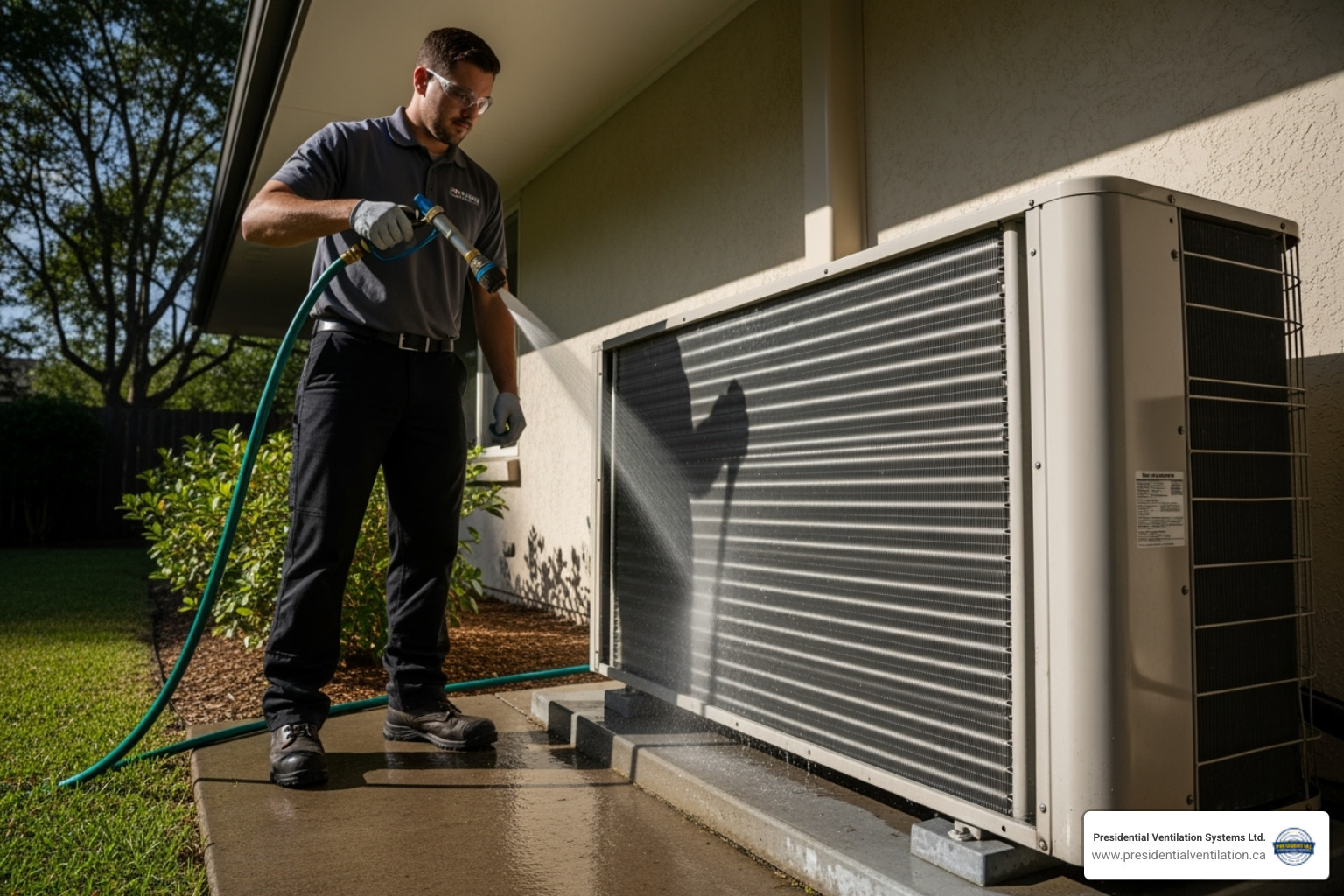
Regular maintenance is about efficiency, which is where the real savings are. A neglected system loses efficiency and drives up energy bills, while a well-maintained one can save 30% or more on energy costs. Our comprehensive maintenance includes:
This thorough approach is the foundation of a truly affordable heat pumps service in cole harbour ns, as it protects you from emergency repairs and high energy bills. See our heat pump services page for a full overview.
Even with regular maintenance, problems can arise. Catching warning signs early prevents minor issues from becoming major expenses. Call for service if you notice:
If you notice these signs, call for professional service immediately. Waiting makes problems worse and more expensive. Our team provides expert heat pump repair dartmouth ns to restore your system's performance. Addressing problems early is key to an affordable heat pumps service in cole harbour ns.
Deciding whether to repair or replace your heat pump is a strategic decision balancing short-term costs with long-term savings. Key factors to consider include:
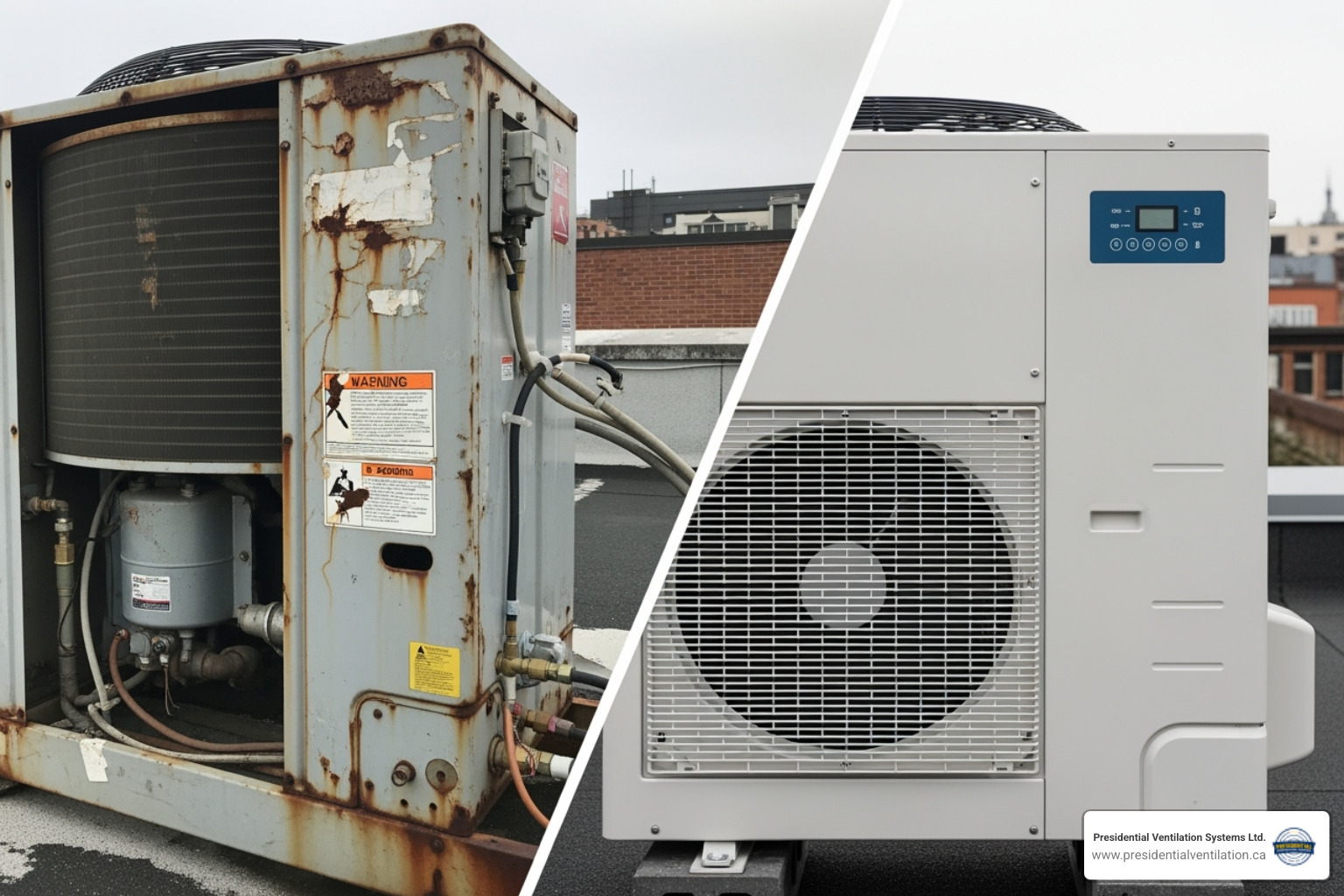
Commercial heat pumps in Nova Scotia require professional servicing twice a year. Our maritime climate—with its humid summers, harsh winters, and corrosive salt air—puts extreme stress on HVAC equipment, making biannual service essential.
Between professional visits, check your air filters monthly. A clogged filter forces the system to work harder and waste energy. This preventative approach is key to an affordable heat pumps service in cole harbour ns, as it maintains peak efficiency and saves you 30% or more on energy costs.
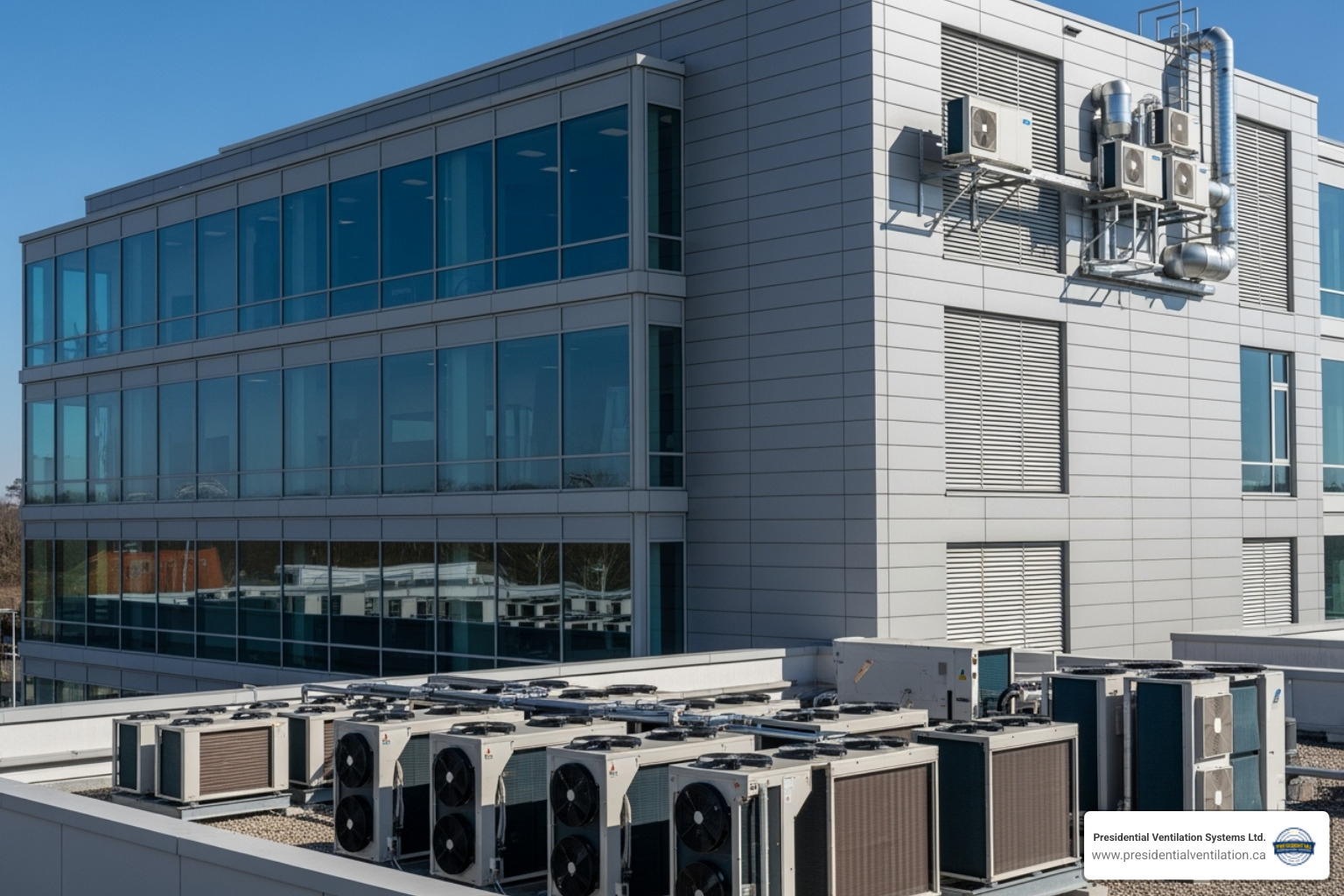
Almost any commercial building in Cole Harbour can benefit from a heat pump, but they are especially advantageous for certain types:
This guide has shown that affordable heat pumps service in cole harbour ns isn't about the lowest price. It's a long-term strategy combining efficient equipment, professional installation, proactive maintenance, and smart financial incentives.
A quality heat pump, properly maintained, is a business partner that delivers an excellent return on investment through lower energy bills, consistent comfort, and improved reliability. With over 30 years of experience in Nova Scotia, Presidential Ventilation Systems Ltd. understands the challenges of our maritime climate. Our expertise comes from thousands of local installations and service calls.
As a leading Daikin Comfort Pro Dealer, we offer Daikin's Worry-Free 12-Year Warranty on parts for most heat pumps. Our Red Seal certified technicians provide expert care for every installation, tune-up, or emergency repair. Your business deserves a comfortable workspace and a healthy bottom line. With the right heat pump system and maintenance plan, you can achieve both, benefiting your employees, customers, and finances.
Ready to transform your business operations? We can guide you through system selection, rebates, financing, and creating a maintenance plan to protect your investment.
Contact us for expert heat pump services in Dartmouth NS today. Let's discuss how we can help you achieve genuine, long-term affordability as your partner in creating a more efficient workspace.

Finding affordable heat pumps service in cole harbour ns means more than just the lowest price tag. True affordability comes from long-term value, not just upfront costs.
Quick Guide to Affordable Heat Pump Service in Cole Harbour:
Business owners in Cole Harbour often seek affordable heat pump service to combat rising energy costs or replace an unreliable system that struggles with Nova Scotia's climate. The real question isn't about the cheapest unit, but which system will deliver the most value over the next 15 to 20 years.
Modern heat pumps move heat instead of generating it, using far less energy than traditional systems. This efficiency can cut utility bills by 30% or more and provides all-in-one climate control. However, true affordability in Cole Harbour requires quality equipment, professional installation, and regular maintenance. Skipping these steps turns a "bargain" into a costly problem.
The maritime climate is tough on HVAC equipment, with salt air, humidity, and harsh winters. Your system needs expert service to deliver promised savings year after year.
The cheapest system upfront often becomes the most expensive over time. When looking for affordable heat pumps service in cole harbour ns, you're seeking equipment that saves you money every month.
High-efficiency heat pumps can cut energy consumption by 30% or more compared to older systems. For a commercial property, these savings add up quickly. Beyond utility savings, a quality heat pump provides year-round comfort from a single system, simplifying maintenance and reducing potential points of failure.
Heat pumps also improve indoor air quality by continuously filtering air, capturing dust and allergens. This creates a healthier environment for employees and customers. By reducing your energy consumption, you automatically shrink your carbon footprint. A modern, efficient HVAC system also increases your property value, attracting buyers or tenants with the promise of lower operating costs.
The real question isn't whether you can afford a high-efficiency heat pump. It's whether you can afford to keep paying those inflated energy bills for another 15 years.
Make your investment even smarter by leveraging government rebates and grants designed to encourage energy-efficient upgrades. The Canada Greener Homes Grant and provincial programs offer significant financial incentives that can substantially reduce installation costs.
Efficiency Nova Scotia offers local rebate programs for commercial properties with a straightforward application process. We guide Cole Harbour businesses through these programs to maximize their savings. Visit our page on heat pump rebates dartmouth ns for more details.
Flexible financing options allow you to upgrade without a large upfront capital investment. By spreading the cost over time, your monthly energy savings can often offset the financing payments. By combining rebates with financing, a high-efficiency system becomes highly achievable. This is what makes affordable heat pumps service in cole harbour ns a practical strategy for your business.
A genuinely affordable heat pumps service in cole harbour ns isn't the lowest quote; it's a partnership that ensures long-term savings. A cheap, poor installation leads to costly repairs and wasted energy. True affordability comes from a correctly sized system installed by professionals.
When assessing a property, we analyze key factors to recommend the right system. Building size, layout, and insulation levels are crucial; a well-insulated building requires a less powerful, more cost-effective system. Your existing ductwork is also a major factor. A ducted heat pump dartmouth ns can be cost-effective if ductwork exists. If not, a ductless heat pump dartmouth ns provides excellent zoned control without major disruption.
We also consider your business operating hours to recommend systems with controls that optimize performance and conserve energy. Finally, we assess if you need different temperatures in different areas. Multi-zone systems provide customized climate control, preventing energy waste.
Choosing a commercial HVAC system is complex. Trust your business's comfort and efficiency to an experienced technician.
Finding the right technician is your most important task. This decision determines whether your heat pump delivers affordable, reliable performance.
These steps help you find a trusted partner for all your hvac services dartmouth ns needs, ensuring reliable and affordable performance.
Investing in a commercial heat pump is a smart choice, but installation is just the beginning. Consistent, professional maintenance is what ensures your system delivers 15-20 years of reliable, efficient service. Like a company vehicle, your heat pump needs regular service to save you money every month.
Nova Scotia's climate is tough on HVAC equipment. In Cole Harbour, salt-laden air accelerates corrosion, humid summers strain cooling cycles, and harsh winters demand constant operation. A "set it and forget it" approach won't work here; your system needs attention from professionals who understand our unique climate.
Proactive care is always more affordable than emergency repairs. Regular maintenance through our heat pump maintenance dartmouth ns services protects your investment and ensures it continues to pay dividends.
Regular maintenance is about efficiency, which is where the real savings are. A neglected system loses efficiency and drives up energy bills, while a well-maintained one can save 30% or more on energy costs. Our comprehensive maintenance includes:
This thorough approach is the foundation of a truly affordable heat pumps service in cole harbour ns, as it protects you from emergency repairs and high energy bills. See our heat pump services page for a full overview.
Even with regular maintenance, problems can arise. Catching warning signs early prevents minor issues from becoming major expenses. Call for service if you notice:
If you notice these signs, call for professional service immediately. Waiting makes problems worse and more expensive. Our team provides expert heat pump repair dartmouth ns to restore your system's performance. Addressing problems early is key to an affordable heat pumps service in cole harbour ns.
Deciding whether to repair or replace your heat pump is a strategic decision balancing short-term costs with long-term savings. Key factors to consider include:
Commercial heat pumps in Nova Scotia require professional servicing twice a year. Our maritime climate—with its humid summers, harsh winters, and corrosive salt air—puts extreme stress on HVAC equipment, making biannual service essential.
Between professional visits, check your air filters monthly. A clogged filter forces the system to work harder and waste energy. This preventative approach is key to an affordable heat pumps service in cole harbour ns, as it maintains peak efficiency and saves you 30% or more on energy costs.
Almost any commercial building in Cole Harbour can benefit from a heat pump, but they are especially advantageous for certain types:
This guide has shown that affordable heat pumps service in cole harbour ns isn't about the lowest price. It's a long-term strategy combining efficient equipment, professional installation, proactive maintenance, and smart financial incentives.
A quality heat pump, properly maintained, is a business partner that delivers an excellent return on investment through lower energy bills, consistent comfort, and improved reliability. With over 30 years of experience in Nova Scotia, Presidential Ventilation Systems Ltd. understands the challenges of our maritime climate. Our expertise comes from thousands of local installations and service calls.
As a leading Daikin Comfort Pro Dealer, we offer Daikin's Worry-Free 12-Year Warranty on parts for most heat pumps. Our Red Seal certified technicians provide expert care for every installation, tune-up, or emergency repair. Your business deserves a comfortable workspace and a healthy bottom line. With the right heat pump system and maintenance plan, you can achieve both, benefiting your employees, customers, and finances.
Ready to transform your business operations? We can guide you through system selection, rebates, financing, and creating a maintenance plan to protect your investment.
Contact us for expert heat pump services in Dartmouth NS today. Let's discuss how we can help you achieve genuine, long-term affordability as your partner in creating a more efficient workspace.
What is included in a commercial HVAC preventive maintenance plan in nova scotia covers a range of scheduled tasks designed to keep your building's heating, ventilation, and air conditioning systems running safely and efficiently year-round. Here is a quick overview:
A standard commercial HVAC preventive maintenance plan in Nova Scotia typically includes:
For most commercial properties in Nova Scotia, a bi-annual schedule — once in spring before cooling season and once in fall before heating season — is the standard recommendation. High-usage facilities may benefit from quarterly visits.
Running a business in Nova Scotia means dealing with one of the most demanding climates on the East Coast. Harsh winters, high humidity, and salt-laden coastal air put commercial HVAC systems under constant stress. When a system fails in the middle of January or during a summer heat spike, it is never just a comfort issue — it disrupts operations, drives away customers, and can cost far more than any planned maintenance visit ever would.
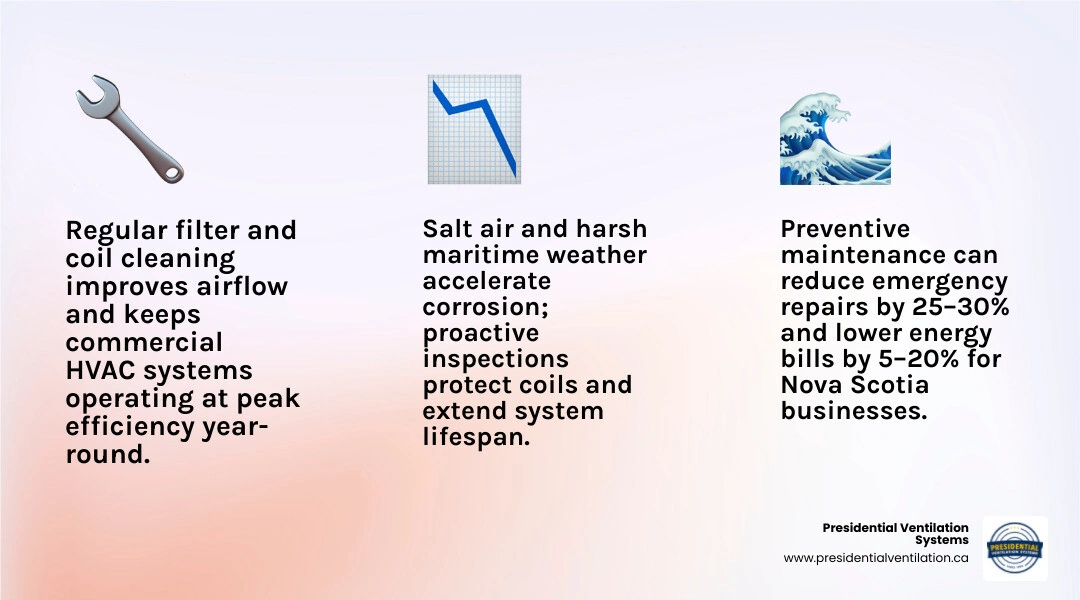
Research consistently shows that organizations with a structured preventive maintenance program see a 25–30% reduction in emergency work orders, and that emergency repairs typically cost three to five times more than planned service. Regular maintenance can also trim energy bills by 5–20% — savings that add up quickly across a full commercial building.
Yet many Nova Scotia businesses still run their HVAC systems reactively, only calling for service when something breaks. This guide breaks down exactly what a commercial HVAC preventive maintenance plan includes, how often service should happen in a maritime climate, and what to look for in a qualified local provider.
When you partner with a professional team for your commercial facility, a maintenance plan is not just a quick visual check. It is a highly structured, comprehensive service protocol designed to optimize every component of your climate control and air handling infrastructure. For businesses operating in areas like Halifax, Dartmouth, and Bedford, our unique coastal environment requires specialized attention to protect heavy machinery from premature wear.
A professional plan begins with a complete system inspection. Our technicians look at the physical integrity of your outdoor rooftop units (RTUs), indoor air handlers, and ventilation pathways. Because Nova Scotia weather can swing from freezing rain to dense marine fog in a matter of hours, these outdoor cabinets face extreme wind loads and moisture penetration.
Another critical element of a professional service plan is air balancing. Over time, building usage changes, partitions are built, and dampers drift. This causes some zones in your office or retail space to become freezing cold while others remain sweltering. During a scheduled maintenance visit, technicians check the airflow across your entire system, ensuring that air is distributed evenly to maintain consistent comfort and prevent your system from working twice as hard to condition poorly balanced spaces.
Furthermore, we pay close attention to salt air corrosion. If your business is located near the water in Eastern Passage, coastal Dartmouth, or downtown Halifax, salt spray can rapidly degrade the delicate aluminum fins on your condenser coils. This pitting and corrosion acts as an insulating barrier, reducing heat transfer and forcing your compressors to run longer and hotter. Regular washing and the application of protective coatings during maintenance visits are essential to prevent this environmental degradation.
For a deeper dive into how localized maritime conditions impact your building's climate systems, check out our Commercial HVAC Halifax guide. You can also explore our comprehensive Commercial HVAC Maintenance Guide to understand how routine care protects your facility's infrastructure.
The "V" in HVAC is often the most overlooked component of commercial building systems, yet it is arguably the most crucial for the health and productivity of your employees. A professional preventive maintenance plan places a heavy emphasis on your building's breathing apparatus.
To learn more about how proper air balancing and fresh air exchange can transform your business environment, read about our Commercial Ventilation Solutions.
An HVAC system is only as good as the controls that run it. The electrical and mechanical checks performed during a preventive maintenance visit ensure that your system responds accurately to temperature changes and operates safely.
If your system is experiencing electrical issues or requires immediate professional wiring upgrades, our team can help through our Commercial Electrical Repairs services.
How often should your business schedule preventive maintenance? While residential systems can often get away with a single annual visit, commercial systems operate under much heavier loads and must handle the rapid weather shifts characteristic of Nova Scotia.
For most businesses in the Halifax Regional Municipality (HRM), a bi-annual maintenance schedule is the bare minimum. This involves a comprehensive spring visit to prepare your cooling and ventilation systems for summer humidity, and a thorough fall visit to ensure your heating systems are fully prepared to handle freezing winter winds.
However, high-demand facilities — such as restaurants in downtown Dartmouth, manufacturing plants in Sackville, or multi-tenant office buildings in Clayton Park — often require quarterly maintenance checks. These frequent visits focus on high-wear components like air filters, belts, and condensate drains, which can clog or wear out quickly under continuous, 24/7 operation.
To ensure your system is perfectly tuned before the peak seasons hit, scheduling a professional Commercial HVAC Tune-Up is the most proactive step you can take.
Below is a breakdown of how we structure our seasonal maintenance visits to keep your commercial property comfortable and efficient year-round:
| Maintenance Category | Spring Service (Focus on Cooling & Ventilation) | Fall Service (Focus on Heating & Air Quality) |
|---|---|---|
| Coil Care | Deep clean condenser coils to remove salt crust and winter dirt. | Inspect evaporator coils; check for blockages. |
| Refrigerant & Lines | Check refrigerant charge; test for leaks along lines. | Inspect insulation on outdoor lines to prevent freezing. |
| Electrical Systems | Tighten connections; measure amp draw on cooling fans. | Inspect heating elements; test ignition and safety controls. |
| Ventilation & Airflow | Inspect makeup air units; clean exhaust fan assemblies. | Replace all air filters; inspect ductwork for winter drafts. |
| Mechanical Components | Replace worn fan belts; lubricate blower bearings. | Check belt tension; inspect burner assemblies and heat exchangers. |
| Drainage | Flush condensate drain pans and lines to prevent summer leaks. | Inspect trap assemblies; verify drainage pathways are clear of ice. |
Investing in a commercial service agreement with a trusted local partner like Presidential Ventilation Systems Ltd. is one of the smartest operational decisions a facility manager can make. It shifts your facility's maintenance strategy from a chaotic "firefighting" model to a predictable, planned process.
When you establish an ongoing maintenance agreement, you unlock several key business advantages:
To understand the full financial and operational impact of securing an ongoing partnership for your facility, read our detailed guide on How a Maintenance Agreement Extends Commercial HVAC Equipment Lifespan.
Salt air is highly corrosive to the metals used in commercial HVAC systems, particularly the copper and aluminum found in condenser coils. When salt-laden moisture from the Atlantic settles on these coils, it triggers a chemical reaction called galvanic corrosion. This causes the aluminum fins to turn to dust, which reduces the surface area available for heat transfer.
Over time, this corrosion forces your system to run longer to cool your building, driving up energy bills and putting extreme stress on the compressor. During our preventive maintenance visits, we use specialized coil cleaners to wash away salt deposits and can apply protective coatings to slow down this corrosion process, extending the life of your outdoor units in coastal areas like Halifax, Dartmouth, and Eastern Passage.
While scheduled maintenance is designed to prevent breakdowns, you should contact us immediately if you notice any of the following warning signs in your building:
Yes, absolutely. HVAC systems can easily account for up to 60% of a commercial building's total energy consumption. When coils are caked with dirt, filters are clogged, and fan belts are slipping, the system must run longer and draw more power to keep your building comfortable.
Regular maintenance resolves these inefficiencies by restoring your equipment to its optimal operating state. Clean coils and properly calibrated controls can reduce your building's energy consumption by 5% to 20%, resulting in substantial savings over the course of the fiscal year.
A well-structured commercial HVAC preventive maintenance plan is not an administrative luxury — it is a foundational business continuity strategy. For businesses operating throughout Nova Scotia, from the bustling industrial parks of Burnside to the coastal storefronts of Dartmouth and Halifax, keeping your ventilation and indoor climate systems running smoothly is essential for protecting your inventory, your staff, and your bottom line.
With over 30 years of local experience, Presidential Ventilation Systems Ltd. is your trusted partner for commercial HVAC and ventilation care. As a leading Daikin Comfort Pro Dealer, our highly trained technicians understand the unique challenges posed by the Maritime climate and are equipped to design custom maintenance programs tailored to your facility's exact needs.
Don't wait for a costly system failure to disrupt your business. Contact us today to establish a proactive maintenance-plan and enjoy the peace of mind that comes with professional, reliable HVAC care.
Knowing what to look for when choosing a commercial HVAC contractor in Nova Scotia is one of the most important decisions you can make for your building's long-term comfort, air quality, and operating efficiency. The wrong contractor can lead to poorly sized systems, code violations, premature equipment failure, and costly downtime — problems no business owner wants to face.
Here is a quick overview of the key things to evaluate:
Commercial HVAC is fundamentally different from residential work. Systems are larger, more complex, and subject to stricter building codes. In Nova Scotia specifically, the coastal climate adds another layer of challenge — salt air accelerates equipment wear, humid summers stress ventilation systems, and cold winters demand reliable, well-designed air handling. A contractor without genuine regional experience may underestimate these factors entirely.
Most commercial HVAC systems are designed to last 15 to 20 years with proper care. Choosing the right contractor from the start is what makes that lifespan achievable — and protects the investment you are making in your building.
Vetting a commercial HVAC partner requires looking past the surface. While a flashy website or an appealing initial proposal might catch your eye, a business needs a partner capable of handling heavy-duty commercial demands. Commercial properties, from retail shops in Bedford to light industrial spaces in Burnside, require high-performing air distribution systems that function seamlessly day in and day out.
When searching for the right partner, you must look closely at their technical qualifications, their understanding of commercial air distribution, and their regional history. Our team at Presidential Ventilation Systems Ltd. has been serving commercial properties across the Halifax Regional Municipality for over 30 years, and we know exactly what makes a commercial partnership successful.
Whether you operate a bustling office complex or a multi-unit residential building, the right contractor will prioritize system reliability and indoor air quality. If you are operating a business in the capital region, starting your search with a specialized provider of Commercial HVAC Halifax ensures your building remains compliant, comfortable, and energy-efficient.
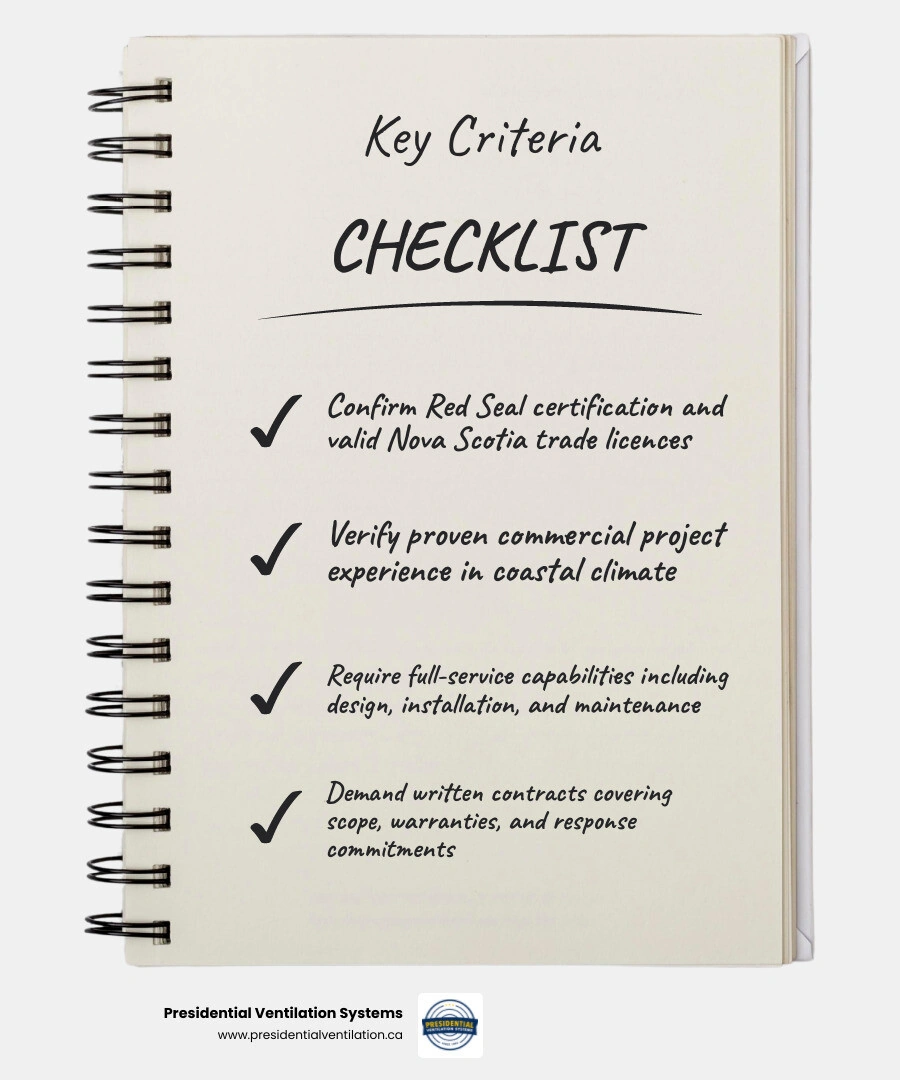
The absolute first step in evaluating any commercial contractor is verifying their legal and professional credentials. Commercial air handling systems are incredibly complex, often involving high-voltage electrical connections, intricate duct networks, and heavy commercial refrigeration cycles.
A qualified commercial contractor must possess:
Safety compliance and adherence to the National Building Code of Canada (specifically Part 6, which governs HVAC design) are non-negotiable. For businesses operating in growing commercial hubs, choosing a qualified specialist in Commercial HVAC Bedford guarantees that all local zoning, electrical, and structural codes are meticulously followed.
A contractor can have all the certifications in the world, but if they do not understand how Atlantic Canada’s unique climate impacts commercial equipment, your system will suffer. Nova Scotia's weather is notoriously unpredictable, swinging from damp, salty coastal summers to freezing, wind-swept winters.
When evaluating a contractor's local experience, ask these questions:
Working with an established local partner means they will design and install systems engineered to withstand our coastal environment. To learn more about designing commercial air systems specifically tailored to our region, consult the Commercial Ventilation Halifax Ultimate Guide.
A commercial HVAC system is only as good as the ductwork and ventilation systems supporting it. Without proper duct design and precise air balancing, even the most advanced rooftop air handler will struggle to distribute air evenly, leading to stagnant pockets, high humidity levels, and excessive energy consumption.
When choosing a contractor, ensure they have in-house capabilities for custom fabrication and air balancing. Cookie-cutter duct runs rarely fit the unique layouts of commercial spaces. For example, if you are setting up a facility in Mount Uniacke, you will need a team capable of handling specialized Commercial Ductwork Installation in Mount Uniacke NS to ensure optimal airflow from day one.
Custom-engineered air distribution ensures that every room in your building receives the correct volume of fresh, conditioned air. This is the foundation of high-performing Commercial Ventilation Solutions.
One of the biggest mistakes a contractor can make is sizing a commercial system based on guesswork or simple square-footage estimates. A commercial building’s heating and cooling load is highly dynamic.
An experienced commercial contractor will perform a comprehensive load calculation based on:
An oversized system will cycle on and off constantly, wearing out the compressor prematurely and failing to control humidity. An undersized system will run continuously, driving up your energy consumption and failing to keep your staff comfortable. Accurate load calculations prevent these headaches.
In our coastal climate, managing indoor air quality while maintaining energy efficiency is a constant balancing act. This is where Energy Recovery Ventilators (ERVs) and Heat Recovery Ventilators (HRVs) become essential. These systems capture heat and moisture from outgoing exhaust air and transfer it to the incoming fresh outdoor air, significantly reducing the load on your primary air conditioning and heating units.
A dirty air filter alone can increase your energy consumption by up to 15%, but integrating a highly efficient HRV or ERV can keep your air clean while keeping energy consumption low. In fact, residential and light commercial HRVs are incredibly efficient, typically using about the same amount of electricity as a single 60-watt light bulb.
When upgrading your building's fresh air systems, it is vital to work with a partner who understands proper zoning and integration. Business owners can review our detailed Commercial HRV Installation Bedford NS Guide to understand how balanced ventilation protects structural integrity and occupant health.
A commercial HVAC system represents a significant capital investment. To maximize its 15-to-20-year lifespan, proactive maintenance is absolutely essential. Nova Scotia’s coastal conditions present a unique threat: salt air. Salt-laden moisture from the Atlantic Ocean can quickly corrode aluminum coils, rust outdoor cabinets, and degrade electrical connections if left unchecked.
Understanding How Salt Air and Coastal Conditions in Nova Scotia Affect Commercial HVAC Equipment highlights the need for specialized, anti-corrosive coatings and regular wash-downs. A structured preventive maintenance agreement is essentially insurance for your building's mechanical systems. To learn more about protecting your investment, explore How a Maintenance Agreement Extends Commercial HVAC Equipment Lifespan.
A generic, once-a-year check-up is not enough for a commercial facility. High-use environments like offices, restaurants, and retail spaces require structured, quarterly maintenance schedules to prevent unexpected breakdowns and maintain peak efficiency.
At a minimum, your commercial maintenance plan should include:
For businesses located in the capital district, setting up a routine schedule with a local expert for Commercial Ventilation Maintenance Halifax NS keeps your system running at maximum efficiency, lowering energy consumption and ensuring clean indoor air.
Never rely on verbal agreements when it comes to your commercial property. A reputable contractor will always provide a detailed, written contract that clearly outlines:
A written contract provides peace of mind, ensuring there are no surprise expenses or misunderstandings during a major installation or service visit.
For the vast majority of commercial buildings in Nova Scotia, we recommend scheduling maintenance at least four times a year (quarterly). High-occupancy or high-use environments — such as medical facilities, restaurants, or schools — may require monthly inspections. Regular servicing ensures that filters are clean, belts are intact, and salt-air corrosion is caught and treated before it causes system failure.
In coastal regions like Halifax and Dartmouth, outdoor humidity levels can fluctuate wildly. An ERV is incredibly beneficial because it transfers both heat and moisture between the incoming and outgoing air streams. During humid summer days, it helps dehumidify the incoming fresh air before it reaches your space, reducing the workload on your air conditioning system and preventing mold growth within your ductwork.
As a general rule, commercial air handling units are built to last 15 to 20 years. However, when a single repair expense approaches 30% to 50% of the investment of a brand-new unit, replacement is almost always the smarter long-term investment. Additionally, if your system requires frequent repairs, struggles to maintain consistent indoor temperatures, or uses outdated, inefficient technology, upgrading to a modern system will significantly lower your ongoing energy consumption.
Choosing the right commercial HVAC contractor in Nova Scotia is a decision that directly impacts your business’s bottom line, your employees' comfort, and your building’s overall health. By focusing on Red Seal certified technicians, local coastal experience, custom duct design capabilities, and robust preventive maintenance plans, you can protect your investment for decades to come.
At Presidential Ventilation Systems Ltd., we bring over 30 years of local expertise, Daikin Comfort Pro standards, and a deep commitment to the communities of Halifax, Bedford, Dartmouth, Sackville, and beyond. We design custom, highly efficient commercial ventilation systems built to withstand the realities of our Nova Scotia climate.
When you are ready to partner with a team that prioritizes quality craftsmanship and long-term reliability, contact us to discuss your next Commercial HVAC Installation project. Let's work together to keep your business running smoothly and efficiently.