Education

The Secret to a Happy Home: Daikin Mini Split Care

By
Tom Brown
September 9, 2025
5 min read

Your Guide to a Long-Lasting, Efficient System

Daikin mini split maintenance is key to keeping your ductless system running smoothly. Here's what you need to know:

Essential Maintenance Tasks:

  • Clean air filters every 2 weeks to maintain airflow and efficiency
  • Clear outdoor unit of debris monthly (maintain 2-foot clearance)
  • Schedule professional service twice yearly (spring and fall)
  • Check and clean condensate drain to prevent water leaks
  • Inspect for unusual sounds or odors during operation

Quick Troubleshooting:

  • Unit won't start → Check remote batteries and circuit breaker
  • Poor heating/cooling → Clean or replace dirty filters
  • Water leaking → Clear clogged drain line with wet/dry vacuum
  • Strange noises → Check for loose parts or debris in outdoor unit

Properly maintained, your Daikin mini split system offers incredible energy efficiency and year-round comfort. Regular maintenance can save up to 15% on energy bills and prevent costly breakdowns.

Ductless systems are economical, quiet, and efficient, but like any HVAC investment, they need regular care for peak performance. The good news is that most maintenance is simple DIY work. We'll show you what to do and when to call the pros.
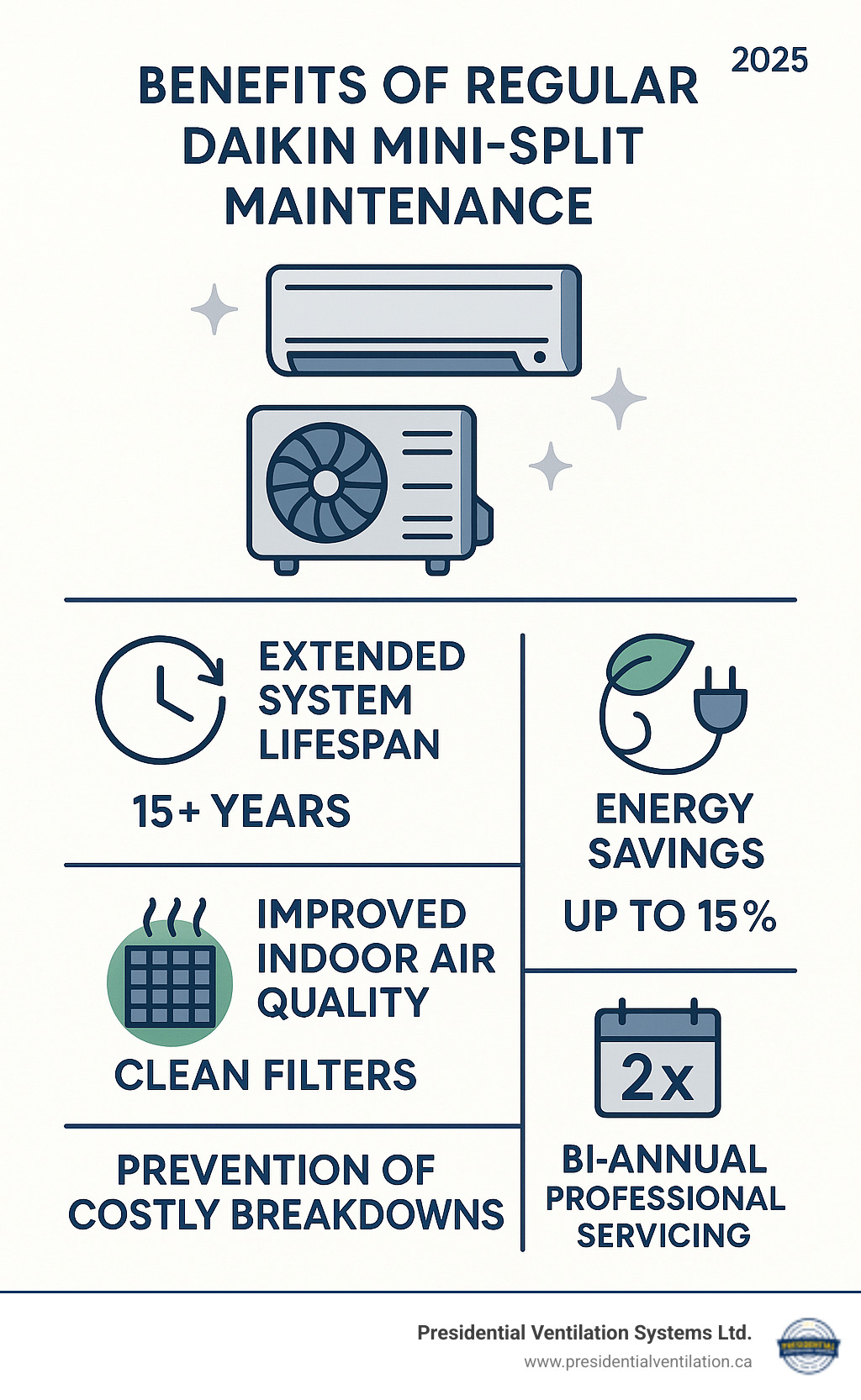
Infographic showing the key benefits of regular Daikin mini-split maintenance including extended system lifespan of 15+ years, up to 15% energy savings, improved indoor air quality through clean filters, and prevention of costly breakdowns through bi-annual professional servicing - Daikin mini split maintenance infographic

Understanding Your Daikin Mini Split

Before diving into Daikin mini split maintenance, let's review the basics. Daikin systems offer personalized comfort without extensive ductwork, making them ideal for homes in areas like Kentville NS or Halifax NS.

A mini-split system has two main parts:

  • Indoor unit (evaporator): The wall-mounted unit that distributes conditioned air into your living space. Multiple units can create different temperature "zones" in your home.
  • Outdoor unit (condenser): The workhorse located outside your home, containing the compressor and condenser coil.
  • Refrigerant lines: Insulated copper tubes connecting the indoor and outdoor units, circulating the refrigerant that transfers heat.
  • Remote controller: Used for setting temperature, mode, and fan speed.

In cooling mode, the indoor unit absorbs heat from your home and releases it outside. In heating mode, the process reverses, with the outdoor unit extracting heat from the outside air and moving it indoors. This heat transfer method is highly efficient, making these systems versatile for various applications across Nova Scotia.

Why Regular Maintenance Matters

Think of your Daikin mini-split like a car; it needs regular service to prevent problems. Here’s why maintenance is crucial:

  • Prevent breakdowns: Addressing minor issues like clogged filters prevents them from becoming major, costly repairs.
  • Lower electricity bills: A clean, efficient system doesn't have to work as hard, consuming less electricity. Cleaning filters every two weeks keeps costs down.
  • Improve indoor air quality: Clean filters trap dust and particulates, preventing them from circulating back into your home. This is especially important for those with allergies.
  • Extend system lifespan: A well-maintained unit lasts longer. Proactive care helps your system reach or exceed its expected lifespan of 15+ years.
  • System longevity: By preventing strain and optimizing efficiency, regular maintenance ensures your investment provides comfort for years to come.

Your Essential Guide to DIY Daikin Mini Split Maintenance

Most Daikin mini split maintenance is surprisingly straightforward. We've helped thousands of Nova Scotia homeowners keep their systems running smoothly and are happy to share our tips.
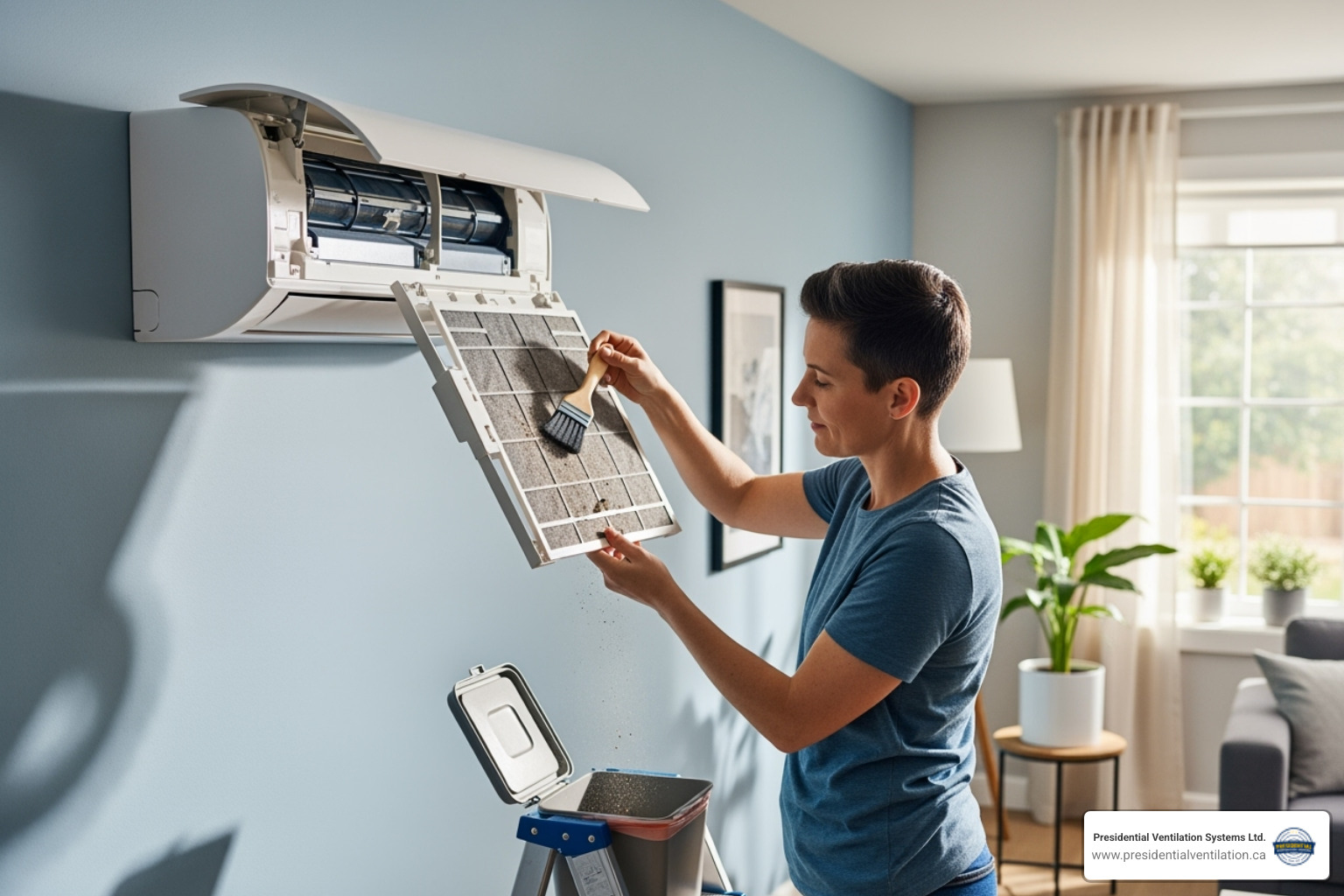
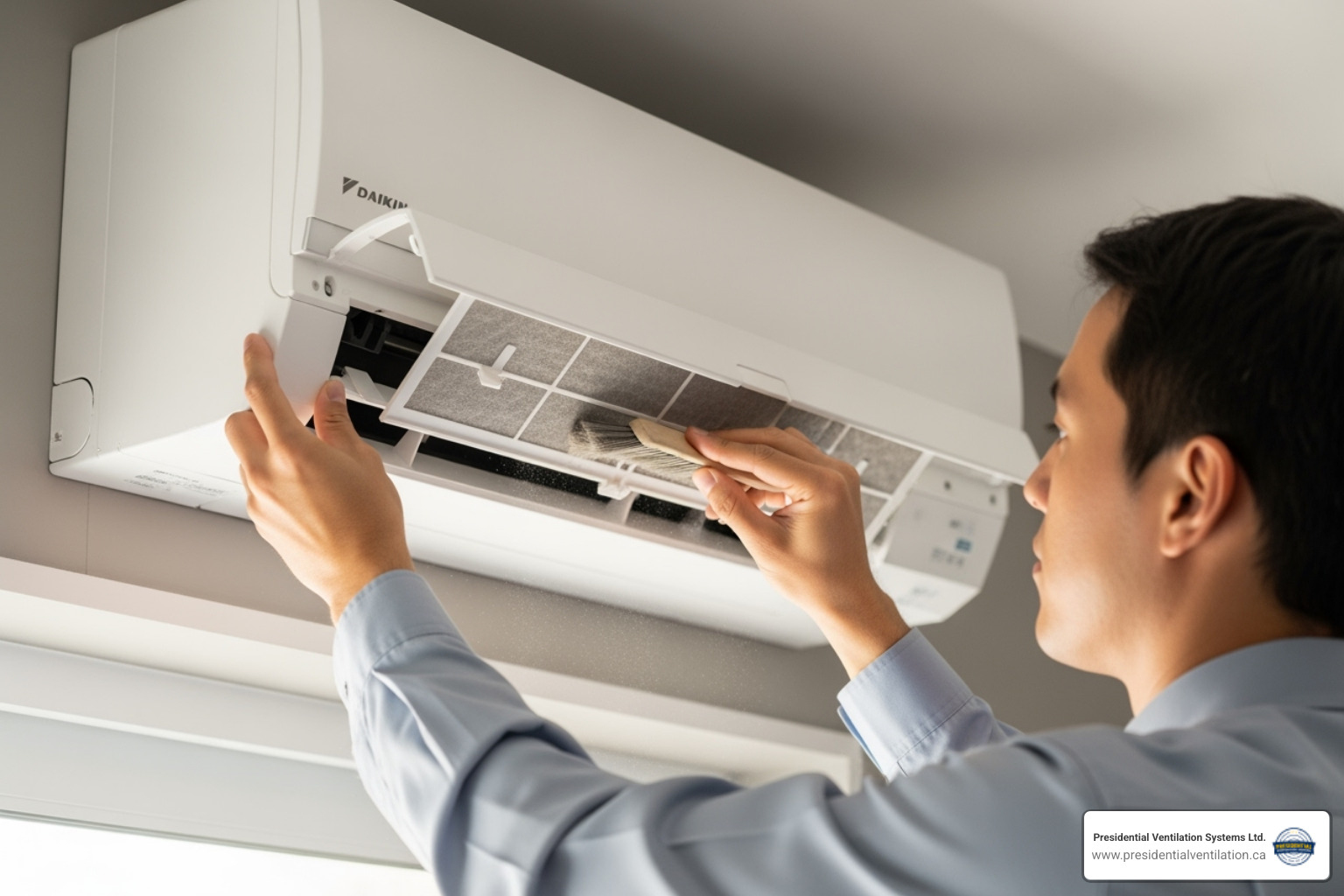
Homeowner cleaning a mini-split air filter - Daikin mini split maintenance

Safety first: Before starting, power down your system. Turn it off with the remote, then flip the corresponding circuit breaker at your electrical panel. This protects you and your equipment.

These DIY tasks are the foundation of your seasonal checklist for keeping your Daikin system efficient year-round.

Step-by-Step Indoor Unit Daikin Mini Split Maintenance

Your indoor unit deserves regular attention. Before you start, gather your cleaning supplies: a soft cloth, mild detergent, and a vacuum with a brush attachment.

For cleaning frequency, aim to clean your air filters every two weeks, especially if you have pets. For most homes, once every one to three months is sufficient.

First, gently open the front panel. Wipe the exterior and panel with a damp cloth and mild detergent, rinse with a clean damp cloth, and dry thoroughly. Avoid harsh chemicals or water above 104°F to protect the plastic components.

Next, slide out the air filters. For light dust, use your vacuum's brush attachment. For heavier grime, wash them in lukewarm water with mild detergent, rinse well, and let them air dry completely in the shade. Never wring them out.

If your model has a special titanium apatite photocatalytic air-purifying filter, clean it every 5-6 months and replace it every 3 years. For more model-specific details, the Daikin Mini-Split Cleaning | Parts Town guide is a great resource.

While the filters dry, inspect the blower wheel and evaporator coils. You can gently wipe accessible areas, but if you see significant dirt or mold, it's time to call a professional.

Check the condensate drain line, which carries away moisture. Ensure the indoor unit is level with a slight tilt toward the drain and that the outdoor drain hose is not blocked.

Once everything is clean and dry, slide the filters back in, close the panel, and restore power at the breaker.

Cleaning the Outdoor Unit

Your outdoor unit faces the elements but still needs care. The most important task is to clear debris regularly. Leaves, grass clippings, and twigs can collect around the unit, restricting airflow. Maintain a two-foot clearance on all sides for optimal performance.
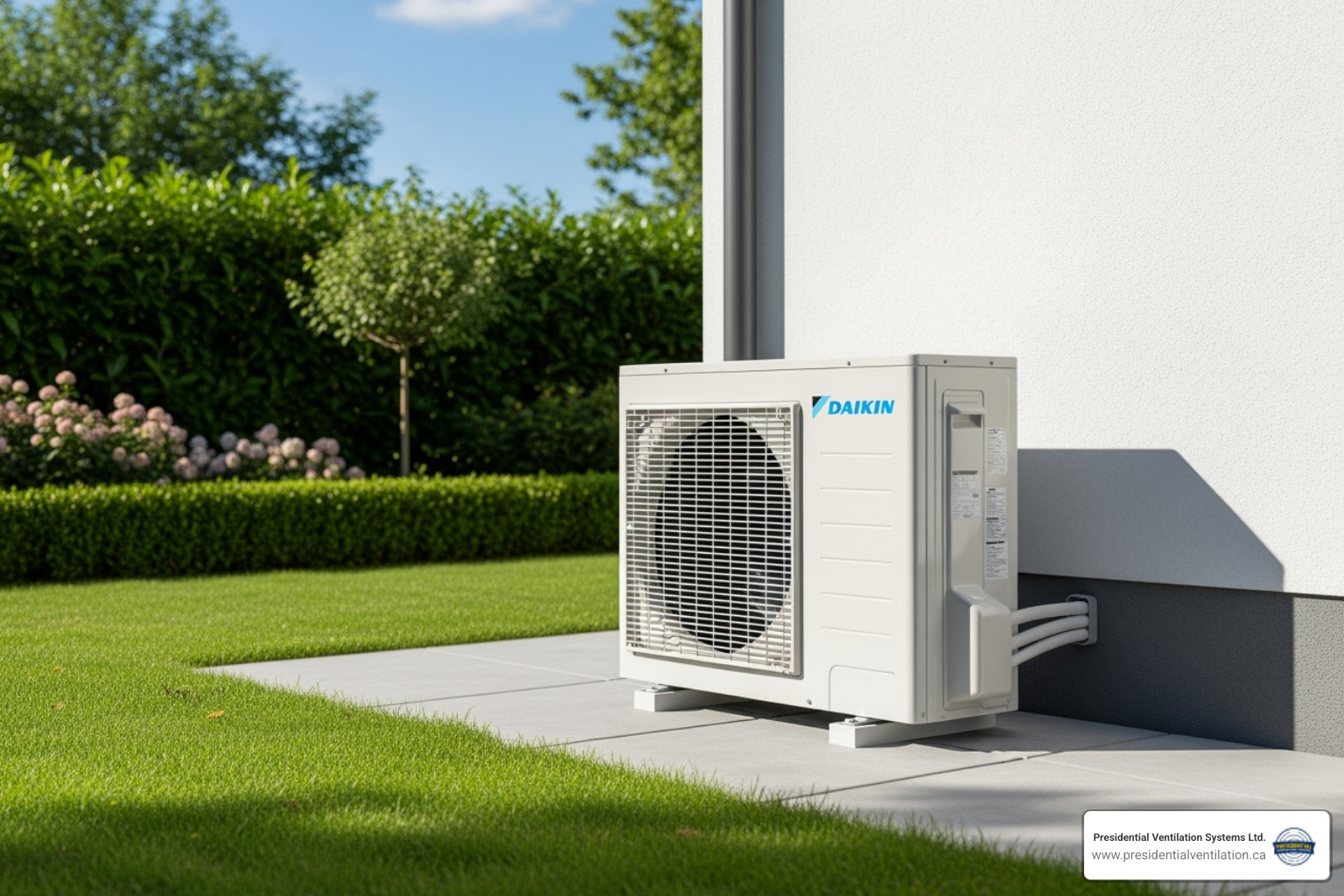
Clean Daikin outdoor unit with clear space around it - Daikin mini split maintenance

Wipe down the housing with a damp cloth and mild detergent. For the condenser fins, use a soft brush for gentle cleaning. Be careful not to bend the delicate metal fins, as this can reduce efficiency.

Winter-Proofing: Special Daikin Mini Split Maintenance for Cold Climates

In Nova Scotia, winter prep is essential for your Daikin heat pump.

After a heavy snowfall, perform snow removal around your outdoor unit to ensure it can operate efficiently. Ice buildup prevention is also crucial. If ice forms on the unit, never chip it away. Instead, use a safe clearing method: pour warm water (not hot) over the ice to melt it without causing damage.

Your Daikin system has an automatic defrost operation. When frost builds on the outdoor coil, the unit will pause for 3 to 10 minutes to melt it. You might see steam or hear bubbling sounds, which is completely normal.

For more winter tips, Daikin's Maintenance Tips | Daikin Global page offers excellent guidance.

Common Daikin Mini Split Problems & How to Troubleshoot Them

Even with regular Daikin mini split maintenance, issues can arise. Many common problems have simple solutions you can handle yourself. Here's a quick troubleshooting guide.

Person checking a Daikin remote controller - Daikin mini split maintenance

Unit Won't Turn On

If your Daikin mini-split won't turn on, check these things first:

  1. Remote control batteries: A simple fix! Remote batteries last about a year. Replace them if the display is dim.
  2. Circuit breaker check: Check your electrical panel to see if the unit's breaker has tripped. If it trips again after resetting, call a professional.
  3. Correct mode setting: Ensure the remote is set to the correct mode (e.g., cooling for cool air).
  4. Power outage/Surge: After a power fluctuation, Daikin units are designed to restart automatically after about 3 minutes.

Insufficient Heating or Cooling

This is a frequent complaint with an often simple fix. Here's what to check:

  1. Dirty air filters: This is the #1 cause. Clogged filters restrict airflow, preventing the unit from effectively heating or cooling. Clean them regularly.
  2. Blocked outdoor unit: If the outdoor unit is obstructed by bushes, snow, or debris, it can't exchange heat properly. Clear the area, maintaining a 2-foot clearance.
  3. Refrigerant leaks: Signs include ice on the coils or a hissing sound. Refrigerant is a hazardous substance, and fixing leaks requires a certified HVAC technician.
  4. System age: A mini-split heat pump over 15 years old may naturally lose efficiency, even with good maintenance.

Unusual Noises or Odors

Strange sounds or smells can indicate a problem. Here's what they might mean:

  • Rattling/vibrating: Often indicates loose components or debris in the fans. Check for loose panels.
  • Grinding/squealing: These sounds could suggest problems with the blower motor or fan bearings and require professional service.
  • Clicking/Buzzing: Normal operational sounds from refrigerant control valves, electrical components, or the flap moving.
  • Bubbling sound: Can be caused by outdoor air entering the drain hose. Try opening a vent or window to equalize pressure.
  • Musty smells: Usually indicates mold and mildew on the indoor coil or drain pan. Regular cleaning helps, but visible mold requires a professional deep cleaning.
  • Burning odors: A serious concern that could indicate an electrical issue. Turn off the unit at the circuit breaker immediately and call a professional.

Water Leaking from the Indoor Unit

Water leakage is typically caused by one of these issues:

  1. Clogged condensate drain line: This is the most common cause. Algae, mold, or debris can block the line, causing water to back up and overflow.
    • Resolution: You can often clear a minor clog by using a wet/dry vacuum on the end of the drain line outside to suck out the blockage. If you're unsure or the clog is stubborn, call a professional.
  2. Improper drainage/leveling issues: If the indoor unit isn't level, water may not drain correctly. This requires professional adjustment.
  3. Dirty air filter/coils: A very dirty filter can cause the evaporator coil to freeze. When the ice melts, the excess water can overwhelm the drain system.

When to Call for Professional Servicing

While DIY Daikin mini split maintenance is crucial, some issues require professional service. Think of it like this: you can change your car's oil, but you call a mechanic for engine noises. The same principle applies to your mini-split.

At Presidential Ventilation Systems Ltd., we have over 30 years of experience serving Nova Scotia homeowners in Dartmouth NS, Bedford NS, and Windsor NS. As a leading Daikin Comfort Pro Dealer, we're here when you need expert help.

Signs You Need an Expert

Call a professional if you notice these telltale signs:

  • Persistent issues: If you've performed all the DIY troubleshooting steps and the problem continues, it's time for an expert to diagnose the deeper issue.
  • Poor performance after cleaning: If the system still underperforms after a thorough cleaning, there could be an issue with internal components like the compressor or sensors.
  • Loud, unusual noises: Grinding, screeching, or banging sounds are your system's cry for help and often indicate mechanical problems that can worsen if ignored.
  • Refrigerant leak signs: Ice on the coils, hissing sounds, or a sudden drop in performance may signal a refrigerant leak, which requires certified handling.
  • Electrical problems: If your circuit breaker repeatedly trips or you smell something burning, turn off the unit immediately and call for service.
  • System is over 15 years old: Older units are more prone to breakdowns. A professional can assess whether a repair or replacement is the more sensible option.

What to Expect During a Professional Tune-Up

We recommend scheduling professional maintenance twice a year—once in the spring and once in the fall. This prepares your system for the demands of the upcoming season, whether you're in Mount Uniacke NS or Kentville NS.

During a professional tune-up, our certified technicians perform a comprehensive service:

  • Component inspection: We thoroughly examine both indoor and outdoor units for wear, damage, or loose parts.
  • Coil cleaning: We use specialized tools and cleaners to deep clean the evaporator and condenser coils, removing stubborn buildup.
  • Refrigerant level checking: We use professional gauges to verify refrigerant levels and pressures are correct, repairing any leaks we find.
  • Electrical connection tightening: We inspect and tighten all electrical connections to ensure safe and efficient operation.
  • Drain line flushing: We thoroughly flush the drain line to prevent clogs and water leaks.
  • System testing: We test all system functions, including heating, cooling, fan operation, and thermostat accuracy.
  • Performance measurements: We take readings like temperature differential and airflow to assess your system's performance and catch potential issues early.

Regular professional maintenance is an investment in energy savings, reliability, and a longer system lifespan.

Frequently Asked Questions about Daikin Mini Split Care

After 30+ years serving homeowners in Halifax, Dartmouth, and across Nova Scotia, we've answered many questions about Daikin mini split maintenance. Here are some of the most common ones.

How often should I clean my Daikin mini-split filters?

For optimal performance and energy savings, clean your filters every two weeks. If your system runs constantly, or if you have pets or smokers in the home, you should check them weekly.

Even if filters look clean, a quick bi-weekly cleaning prevents buildup and keeps air flowing smoothly. Think of it as preventative care—it's much easier than fixing a problem later.

What should I do if I lose my Daikin remote controller?

If you lose your remote, don't panic. Most Daikin units have a manual ON/OFF button, usually located behind the front panel or on the side of the unit. Pressing it will start the system in automatic mode, keeping you comfortable while you look for the remote.

To get a replacement, contact any Daikin dealer with your unit's model number. For newer models, you can also explore Daikin's smartphone apps, which allow you to control the system from your phone.

Can I use a commercial cleaning spray on my mini-split?

No, you should not use commercial cleaning sprays on your mini-split. Harsh chemicals found in all-purpose cleaners can damage the delicate internal components of your unit.

These chemicals can cause plastic resin parts to crack, corrode metal coils, and damage sensors, often leading to water leaks. Furthermore, using unauthorized cleaning products will void your warranty, turning a simple cleaning task into a potentially expensive repair.

Stick with mild soap and water for cleaning exterior surfaces and filters. For a deeper clean, let our certified technicians use the proper equipment and manufacturer-approved cleaners to do the job safely.

Keep Your Daikin System Running Perfectly

Your Daikin mini-split is an investment in your home's comfort and energy efficiency. Proper care ensures it runs perfectly for years. The secret is proactive care—addressing small issues before they become big problems.

Your role involves simple DIY tasks like cleaning filters every two weeks and keeping the outdoor unit clear of debris. These small efforts make a huge difference in your system's performance.

When you combine your regular care with professional support from certified technicians, you create the perfect recipe for success. Bi-annual professional tune-ups are essential for catching issues before they become expensive headaches.

The long-term benefits are clear: lower energy bills, cleaner air, and the peace of mind that your system will be reliable when you need it most.

At Presidential Ventilation Systems Ltd., we've helped Nova Scotia homeowners get the most from their HVAC systems for over 30 years. As a leading Daikin Comfort Pro Dealer, we understand our Maritime climate, from humid summers in Halifax to cold winters in Truro.

Whether you're in Dartmouth, Mount Uniacke, Kentville, or Windsor, we know what your Daikin system needs to perform at its best. Our local experience allows us to spot potential issues and keep your system running smoothly.

Don't wait for a breakdown to think about maintenance. Take action now to protect your investment.

Contact us for expert heat pump maintenance in Halifax and find what three decades of HVAC expertise can do for your home.
Share this post
The Secret to a Happy Home: Daikin Mini Split CarePresidential Ventilation Systems
Share this post

Your Guide to a Long-Lasting, Efficient System

Daikin mini split maintenance is key to keeping your ductless system running smoothly. Here's what you need to know:

Essential Maintenance Tasks:

  • Clean air filters every 2 weeks to maintain airflow and efficiency
  • Clear outdoor unit of debris monthly (maintain 2-foot clearance)
  • Schedule professional service twice yearly (spring and fall)
  • Check and clean condensate drain to prevent water leaks
  • Inspect for unusual sounds or odors during operation

Quick Troubleshooting:

  • Unit won't start → Check remote batteries and circuit breaker
  • Poor heating/cooling → Clean or replace dirty filters
  • Water leaking → Clear clogged drain line with wet/dry vacuum
  • Strange noises → Check for loose parts or debris in outdoor unit

Properly maintained, your Daikin mini split system offers incredible energy efficiency and year-round comfort. Regular maintenance can save up to 15% on energy bills and prevent costly breakdowns.

Ductless systems are economical, quiet, and efficient, but like any HVAC investment, they need regular care for peak performance. The good news is that most maintenance is simple DIY work. We'll show you what to do and when to call the pros.

Infographic showing the key benefits of regular Daikin mini-split maintenance including extended system lifespan of 15+ years, up to 15% energy savings, improved indoor air quality through clean filters, and prevention of costly breakdowns through bi-annual professional servicing - Daikin mini split maintenance infographic

Understanding Your Daikin Mini Split

Before diving into Daikin mini split maintenance, let's review the basics. Daikin systems offer personalized comfort without extensive ductwork, making them ideal for homes in areas like Kentville NS or Halifax NS.

A mini-split system has two main parts:

  • Indoor unit (evaporator): The wall-mounted unit that distributes conditioned air into your living space. Multiple units can create different temperature "zones" in your home.
  • Outdoor unit (condenser): The workhorse located outside your home, containing the compressor and condenser coil.
  • Refrigerant lines: Insulated copper tubes connecting the indoor and outdoor units, circulating the refrigerant that transfers heat.
  • Remote controller: Used for setting temperature, mode, and fan speed.

In cooling mode, the indoor unit absorbs heat from your home and releases it outside. In heating mode, the process reverses, with the outdoor unit extracting heat from the outside air and moving it indoors. This heat transfer method is highly efficient, making these systems versatile for various applications across Nova Scotia.

Why Regular Maintenance Matters

Think of your Daikin mini-split like a car; it needs regular service to prevent problems. Here’s why maintenance is crucial:

  • Prevent breakdowns: Addressing minor issues like clogged filters prevents them from becoming major, costly repairs.
  • Lower electricity bills: A clean, efficient system doesn't have to work as hard, consuming less electricity. Cleaning filters every two weeks keeps costs down.
  • Improve indoor air quality: Clean filters trap dust and particulates, preventing them from circulating back into your home. This is especially important for those with allergies.
  • Extend system lifespan: A well-maintained unit lasts longer. Proactive care helps your system reach or exceed its expected lifespan of 15+ years.
  • System longevity: By preventing strain and optimizing efficiency, regular maintenance ensures your investment provides comfort for years to come.

Your Essential Guide to DIY Daikin Mini Split Maintenance

Most Daikin mini split maintenance is surprisingly straightforward. We've helped thousands of Nova Scotia homeowners keep their systems running smoothly and are happy to share our tips.

Homeowner cleaning a mini-split air filter - Daikin mini split maintenance

Safety first: Before starting, power down your system. Turn it off with the remote, then flip the corresponding circuit breaker at your electrical panel. This protects you and your equipment.

These DIY tasks are the foundation of your seasonal checklist for keeping your Daikin system efficient year-round.

Step-by-Step Indoor Unit Daikin Mini Split Maintenance

Your indoor unit deserves regular attention. Before you start, gather your cleaning supplies: a soft cloth, mild detergent, and a vacuum with a brush attachment.

For cleaning frequency, aim to clean your air filters every two weeks, especially if you have pets. For most homes, once every one to three months is sufficient.

First, gently open the front panel. Wipe the exterior and panel with a damp cloth and mild detergent, rinse with a clean damp cloth, and dry thoroughly. Avoid harsh chemicals or water above 104°F to protect the plastic components.

Next, slide out the air filters. For light dust, use your vacuum's brush attachment. For heavier grime, wash them in lukewarm water with mild detergent, rinse well, and let them air dry completely in the shade. Never wring them out.

If your model has a special titanium apatite photocatalytic air-purifying filter, clean it every 5-6 months and replace it every 3 years. For more model-specific details, the Daikin Mini-Split Cleaning | Parts Town guide is a great resource.

While the filters dry, inspect the blower wheel and evaporator coils. You can gently wipe accessible areas, but if you see significant dirt or mold, it's time to call a professional.

Check the condensate drain line, which carries away moisture. Ensure the indoor unit is level with a slight tilt toward the drain and that the outdoor drain hose is not blocked.

Once everything is clean and dry, slide the filters back in, close the panel, and restore power at the breaker.

Cleaning the Outdoor Unit

Your outdoor unit faces the elements but still needs care. The most important task is to clear debris regularly. Leaves, grass clippings, and twigs can collect around the unit, restricting airflow. Maintain a two-foot clearance on all sides for optimal performance.

Clean Daikin outdoor unit with clear space around it - Daikin mini split maintenance

Wipe down the housing with a damp cloth and mild detergent. For the condenser fins, use a soft brush for gentle cleaning. Be careful not to bend the delicate metal fins, as this can reduce efficiency.

Winter-Proofing: Special Daikin Mini Split Maintenance for Cold Climates

In Nova Scotia, winter prep is essential for your Daikin heat pump.

After a heavy snowfall, perform snow removal around your outdoor unit to ensure it can operate efficiently. Ice buildup prevention is also crucial. If ice forms on the unit, never chip it away. Instead, use a safe clearing method: pour warm water (not hot) over the ice to melt it without causing damage.

Your Daikin system has an automatic defrost operation. When frost builds on the outdoor coil, the unit will pause for 3 to 10 minutes to melt it. You might see steam or hear bubbling sounds, which is completely normal.

For more winter tips, Daikin's Maintenance Tips | Daikin Global page offers excellent guidance.

Common Daikin Mini Split Problems & How to Troubleshoot Them

Even with regular Daikin mini split maintenance, issues can arise. Many common problems have simple solutions you can handle yourself. Here's a quick troubleshooting guide.

Person checking a Daikin remote controller - Daikin mini split maintenance

Unit Won't Turn On

If your Daikin mini-split won't turn on, check these things first:

  1. Remote control batteries: A simple fix! Remote batteries last about a year. Replace them if the display is dim.
  2. Circuit breaker check: Check your electrical panel to see if the unit's breaker has tripped. If it trips again after resetting, call a professional.
  3. Correct mode setting: Ensure the remote is set to the correct mode (e.g., cooling for cool air).
  4. Power outage/Surge: After a power fluctuation, Daikin units are designed to restart automatically after about 3 minutes.

Insufficient Heating or Cooling

This is a frequent complaint with an often simple fix. Here's what to check:

  1. Dirty air filters: This is the #1 cause. Clogged filters restrict airflow, preventing the unit from effectively heating or cooling. Clean them regularly.
  2. Blocked outdoor unit: If the outdoor unit is obstructed by bushes, snow, or debris, it can't exchange heat properly. Clear the area, maintaining a 2-foot clearance.
  3. Refrigerant leaks: Signs include ice on the coils or a hissing sound. Refrigerant is a hazardous substance, and fixing leaks requires a certified HVAC technician.
  4. System age: A mini-split heat pump over 15 years old may naturally lose efficiency, even with good maintenance.

Unusual Noises or Odors

Strange sounds or smells can indicate a problem. Here's what they might mean:

  • Rattling/vibrating: Often indicates loose components or debris in the fans. Check for loose panels.
  • Grinding/squealing: These sounds could suggest problems with the blower motor or fan bearings and require professional service.
  • Clicking/Buzzing: Normal operational sounds from refrigerant control valves, electrical components, or the flap moving.
  • Bubbling sound: Can be caused by outdoor air entering the drain hose. Try opening a vent or window to equalize pressure.
  • Musty smells: Usually indicates mold and mildew on the indoor coil or drain pan. Regular cleaning helps, but visible mold requires a professional deep cleaning.
  • Burning odors: A serious concern that could indicate an electrical issue. Turn off the unit at the circuit breaker immediately and call a professional.

Water Leaking from the Indoor Unit

Water leakage is typically caused by one of these issues:

  1. Clogged condensate drain line: This is the most common cause. Algae, mold, or debris can block the line, causing water to back up and overflow.
    • Resolution: You can often clear a minor clog by using a wet/dry vacuum on the end of the drain line outside to suck out the blockage. If you're unsure or the clog is stubborn, call a professional.
  2. Improper drainage/leveling issues: If the indoor unit isn't level, water may not drain correctly. This requires professional adjustment.
  3. Dirty air filter/coils: A very dirty filter can cause the evaporator coil to freeze. When the ice melts, the excess water can overwhelm the drain system.

When to Call for Professional Servicing

While DIY Daikin mini split maintenance is crucial, some issues require professional service. Think of it like this: you can change your car's oil, but you call a mechanic for engine noises. The same principle applies to your mini-split.

At Presidential Ventilation Systems Ltd., we have over 30 years of experience serving Nova Scotia homeowners in Dartmouth NS, Bedford NS, and Windsor NS. As a leading Daikin Comfort Pro Dealer, we're here when you need expert help.

Signs You Need an Expert

Call a professional if you notice these telltale signs:

  • Persistent issues: If you've performed all the DIY troubleshooting steps and the problem continues, it's time for an expert to diagnose the deeper issue.
  • Poor performance after cleaning: If the system still underperforms after a thorough cleaning, there could be an issue with internal components like the compressor or sensors.
  • Loud, unusual noises: Grinding, screeching, or banging sounds are your system's cry for help and often indicate mechanical problems that can worsen if ignored.
  • Refrigerant leak signs: Ice on the coils, hissing sounds, or a sudden drop in performance may signal a refrigerant leak, which requires certified handling.
  • Electrical problems: If your circuit breaker repeatedly trips or you smell something burning, turn off the unit immediately and call for service.
  • System is over 15 years old: Older units are more prone to breakdowns. A professional can assess whether a repair or replacement is the more sensible option.

What to Expect During a Professional Tune-Up

We recommend scheduling professional maintenance twice a year—once in the spring and once in the fall. This prepares your system for the demands of the upcoming season, whether you're in Mount Uniacke NS or Kentville NS.

During a professional tune-up, our certified technicians perform a comprehensive service:

  • Component inspection: We thoroughly examine both indoor and outdoor units for wear, damage, or loose parts.
  • Coil cleaning: We use specialized tools and cleaners to deep clean the evaporator and condenser coils, removing stubborn buildup.
  • Refrigerant level checking: We use professional gauges to verify refrigerant levels and pressures are correct, repairing any leaks we find.
  • Electrical connection tightening: We inspect and tighten all electrical connections to ensure safe and efficient operation.
  • Drain line flushing: We thoroughly flush the drain line to prevent clogs and water leaks.
  • System testing: We test all system functions, including heating, cooling, fan operation, and thermostat accuracy.
  • Performance measurements: We take readings like temperature differential and airflow to assess your system's performance and catch potential issues early.

Regular professional maintenance is an investment in energy savings, reliability, and a longer system lifespan.

Frequently Asked Questions about Daikin Mini Split Care

After 30+ years serving homeowners in Halifax, Dartmouth, and across Nova Scotia, we've answered many questions about Daikin mini split maintenance. Here are some of the most common ones.

How often should I clean my Daikin mini-split filters?

For optimal performance and energy savings, clean your filters every two weeks. If your system runs constantly, or if you have pets or smokers in the home, you should check them weekly.

Even if filters look clean, a quick bi-weekly cleaning prevents buildup and keeps air flowing smoothly. Think of it as preventative care—it's much easier than fixing a problem later.

What should I do if I lose my Daikin remote controller?

If you lose your remote, don't panic. Most Daikin units have a manual ON/OFF button, usually located behind the front panel or on the side of the unit. Pressing it will start the system in automatic mode, keeping you comfortable while you look for the remote.

To get a replacement, contact any Daikin dealer with your unit's model number. For newer models, you can also explore Daikin's smartphone apps, which allow you to control the system from your phone.

Can I use a commercial cleaning spray on my mini-split?

No, you should not use commercial cleaning sprays on your mini-split. Harsh chemicals found in all-purpose cleaners can damage the delicate internal components of your unit.

These chemicals can cause plastic resin parts to crack, corrode metal coils, and damage sensors, often leading to water leaks. Furthermore, using unauthorized cleaning products will void your warranty, turning a simple cleaning task into a potentially expensive repair.

Stick with mild soap and water for cleaning exterior surfaces and filters. For a deeper clean, let our certified technicians use the proper equipment and manufacturer-approved cleaners to do the job safely.

Keep Your Daikin System Running Perfectly

Your Daikin mini-split is an investment in your home's comfort and energy efficiency. Proper care ensures it runs perfectly for years. The secret is proactive care—addressing small issues before they become big problems.

Your role involves simple DIY tasks like cleaning filters every two weeks and keeping the outdoor unit clear of debris. These small efforts make a huge difference in your system's performance.

When you combine your regular care with professional support from certified technicians, you create the perfect recipe for success. Bi-annual professional tune-ups are essential for catching issues before they become expensive headaches.

The long-term benefits are clear: lower energy bills, cleaner air, and the peace of mind that your system will be reliable when you need it most.

At Presidential Ventilation Systems Ltd., we've helped Nova Scotia homeowners get the most from their HVAC systems for over 30 years. As a leading Daikin Comfort Pro Dealer, we understand our Maritime climate, from humid summers in Halifax to cold winters in Truro.

Whether you're in Dartmouth, Mount Uniacke, Kentville, or Windsor, we know what your Daikin system needs to perform at its best. Our local experience allows us to spot potential issues and keep your system running smoothly.

Don't wait for a breakdown to think about maintenance. Take action now to protect your investment.

Contact us for expert heat pump maintenance in Halifax and find what three decades of HVAC expertise can do for your home.
The Latest HVAC News

Stay informed with our informative blog posts.
Don't Sweat It: Your Guide to Emergency Central Heat Pump Repair in Lower SackvillePresidential Ventilation Systems
Education
5 min read

Don't Sweat It: Your Guide to Emergency Central Heat Pump Repair in Lower Sackville

Heat pump down? Get expert emergency central heat pump repair in lower sackville, ns. Troubleshoot signs & restore comfort fast!
Read more

When Your Heat Pump Fails: Understanding Emergency Repairs in Lower Sackville

When your emergency central heat pump repair in lower sackville, ns becomes urgent, knowing who to call and what to do can save you from hours of discomfort and potential system damage. In Lower Sackville's climate, where winters can be brutally cold and summers hot and humid, a functioning central heat pump isn't just a convenienceit's essential for your family's comfort and safety. Whether it's the middle of a January cold snap or a sweltering August afternoon, a sudden heat pump failure creates immediate stress and disruption to your daily life.

Quick Emergency Heat Pump Repair Guide:

  1. Check for power - Verify your circuit breaker hasn't tripped
  2. Look for ice buildup - Excessive frost on outdoor coils signals a problem
  3. Listen for unusual noises - Grinding or screeching means immediate attention needed
  4. Test your thermostat - Replace batteries and confirm settings
  5. Call a professional - For 24/7 emergency service in Lower Sackville from Presidential Ventilation Systems Ltd.

For comprehensive heating and cooling solutions, explore our HVAC Services Halifax HRM NS or contact us for immediate assistance.

This guide walks you through the critical signs that your central heat pump needs immediate professional attention, what you can safely troubleshoot yourself, and how to find reliable emergency repair services right here in Lower Sackville. Understanding these basics helps you act quickly when problems arise, potentially preventing minor issues from becoming majorand expensivesystem failures.

Is It an Emergency? Signs Your Central Heat Pump Needs Immediate Attention

Recognizing the early warning signs that your central heat pump is in distress can make all the difference, potentially saving you from a complete system breakdown and a more complex emergency central heat pump repair in lower sackville, ns. In our unique Nova Scotia climate, where temperatures can swing dramatically, these systems work hard year-round. Here are the key indicators that your heat pump needs immediate professional attention:

  • No Power to the Unit: This is often the most obvious sign. If your heat pump simply won't turn on, or if both your indoor and outdoor units are completely unresponsive, it's a clear signal something is wrong. While it could be a simple electrical issue, it might also indicate a more serious internal component failure requiring expert diagnostics.
  • Loud Grinding or Screeching Noises: Your heat pump should operate relatively quietly. Any sudden, loud, or unusual noises such as grinding, screeching, or persistent banging can indicate a serious mechanical problem. These sounds often point to issues with the motor bearings, fan blades hitting something, or other critical moving parts that could seize up or cause further damage if not addressed quickly.
  • Ice or Frost on Outdoor Coils (Beyond Normal Defrost Cycle): While some frost during the defrost cycle is normal, heavy ice buildup on the outdoor unit's coils, especially if it persists or appears excessively, is a major red flag. This could indicate low refrigerant levels, a malfunctioning defrost sensor, a stuck reversing valve, or poor airflow, all of which can severely impact the unit's efficiency and lead to system failure. In Lower Sackville's colder months, this can quickly compromise your home's heating.
  • Blowing Cold Air in Heat Mode or Warm Air in Cool Mode: If your heat pump is set to heat but is blowing cold air, or if it's set to cool but distributing warm air, it's failing to perform its primary function. This could be due to a faulty reversing valve (which switches the refrigerant flow direction), low refrigerant, or an issue with the compressor. Such a malfunction demands immediate attention, particularly during extreme weather.
  • System Short-Cycling: Short-cycling occurs when your heat pump turns on and off frequently without completing a full heating or cooling cycle. This not only wastes energy but also puts immense strain on the compressor, significantly shortening its lifespan. It can be caused by various factors, including an oversized unit, clogged filters, thermostat issues, or even electrical problems. If your system is short-cycling, it's struggling and needs assessment.
  • Unresponsive Thermostat: A thermostat that doesn't respond to commands, displays error messages, or has a blank screen can leave you without control over your home's climate. While sometimes a simple battery change can fix this, an unresponsive thermostat can also signal a wiring problem, a faulty sensor, or a communication issue with the heat pump itself, which a professional can diagnose.

When you notice any of these critical signs, it's time to consider that you might need an emergency central heat pump repair in lower sackville, ns. For a deeper dive into these and other warning signs, you can always refer to our detailed guide on Signs Heat Pump Needs Immediate Attention.

What to Do Immediately: A Quick Troubleshooting Checklist

infographic showing emergency heat pump repair decision tree with signs of failure, immediate troubleshooting steps, and when to call a professional for Lower Sackville residents - emergency central heat pump repair in lower sackville, ns

When your central heat pump unexpectedly stops working, especially during a cold snap or heatwave in Lower Sackville, it's easy to panic. But before you pick up the phone for an emergency central heat pump repair in lower sackville, ns, there are a few simple steps you can take to troubleshoot the issue. These steps can sometimes resolve minor problems, saving you time and stress.

  • Check Thermostat Settings: First things first, check your thermostat. Is it set to the correct mode (heat or cool)? Is the temperature setting higher or lower than the current room temperature, depending on your desired outcome? Sometimes, a family member might have inadvertently changed a setting, or the thermostat could be programmed incorrectly. Ensure it's not set to "off" or "fan only."
  • Replace Thermostat Batteries: Many thermostats run on batteries, and a low battery can cause erratic behaviour or a complete shutdown. This is a quick and easy fix that's often overlooked. If your thermostat screen is blank or flashing a low battery icon, replace the batteries with fresh ones.
  • Inspect the Circuit Breaker: A tripped circuit breaker is a common culprit for a heat pump losing power. Head to your electrical panel and look for any tripped breakers—they will usually be in the "off" position or somewhere between "on" and "off." Flip the breaker firmly to the "off" position, then back to "on." Your central heat pump system often has dedicated breakers for both the indoor and outdoor units, so check both. For any issues related to your home's electrical system, our Electrical Services Lower Sackville NS team is ready to help.
  • Check and Replace Clogged Air Filters: A dirty air filter can severely restrict airflow, causing your heat pump to work harder, reduce efficiency, and even overheat or freeze up. A clogged filter can also lead to short-cycling. Check your filter and if it's visibly dirty or dusty, replace it. We recommend checking filters monthly and replacing them every 1-3 months, depending on usage and household conditions.
  • Clear Debris from the Outdoor Unit: The outdoor unit of your central heat pump needs clear space around it to function efficiently. Walk outside and inspect the unit. Remove any leaves, grass clippings, dirt, or other debris that might be blocking the coils or obstructing airflow. Ensure there's at least two feet of clear space around the unit. Also, make sure no snow or ice is blocking the unit, especially during our Lower Sackville winters.

If you've gone through this checklist and your heat pump is still not functioning, it's time to call in the professionals. These troubleshooting steps are meant for minor issues. For anything more complex or if you're unsure, it’s always best to consult with experts. For more in-depth troubleshooting tips and when to call our technicians, visit our Heat Pump Troubleshooting Call Our Technicians guide.

Common Causes of Central Heat Pump Failure in Lower Sackville

Understanding the common culprits behind central heat pump failures can help you recognize problems quicker and even take preventative measures to avoid an emergency central heat pump repair in lower sackville, ns. Our heat pumps in Lower Sackville work tirelessly through varied seasons, making them susceptible to certain issues. Here are some of the most frequent causes of central heat pump breakdowns we encounter:

  • Electrical Connection Problems: Heat pumps rely heavily on electricity, and any interruption can lead to a shutdown. This can range from a tripped circuit breaker (which you might be able to fix yourself, as mentioned above) to loose wiring, faulty contractors, or issues with the capacitor. Electrical problems can prevent the unit from starting, cause it to short-cycle, or lead to inconsistent operation. Given the complexity of HVAC electrical systems, these issues often require a certified electrician or HVAC technician to safely diagnose and repair.
  • Refrigerant Leaks: Refrigerant is the lifeblood of your heat pump, responsible for transferring heat. If your system is low on refrigerant, it's usually due to a leak, not just a depletion over time. Low refrigerant levels can lead to poor heating or cooling, ice buildup on coils, and even compressor damage. Detecting and repairing a refrigerant leak requires specialized tools and expertise, as well as recharging the system to the correct levels.
  • Dirty Coils and Filters: We've touched on air filters, but equally important are the evaporator and condenser coils. Over time, these coils can accumulate dirt and grime, especially the outdoor condenser coil exposed to the elements in Lower Sackville. Dirty coils reduce the system's ability to transfer heat effectively, leading to decreased efficiency, increased energy consumption, and potential system overload or failure. Regular cleaning is crucial for optimal performance. You can learn more about general heat pump issues by visiting our Common Heat Pump Issues page.
  • Blower Motor Failure: The blower motor is responsible for circulating conditioned air throughout your home's ductwork. If the blower motor fails, you'll feel little to no airflow, even if the outdoor unit appears to be running. This can be caused by electrical issues, worn bearings, or simply age. A failing blower motor can severely impact your comfort and energy bills.
  • Reversing Valve Malfunction: The reversing valve is a critical component that allows a heat pump to switch between heating and cooling modes by changing the direction of refrigerant flow. If this valve gets stuck or malfunctions, your unit might only be able to provide heating or cooling, or it might blow air of the wrong temperature when engaged. This is a complex repair that requires a skilled technician.
  • Lack of Professional Maintenance: Many of these common failures can be traced back to a lack of regular professional maintenance. Without annual tune-ups, small issues can go unnoticed and escalate into major problems. Preventative maintenance helps identify wear and tear, clean critical components, and ensure all parts are functioning correctly, significantly reducing the likelihood of unexpected breakdowns.

Understanding these common causes empowers you to be a more informed homeowner. While some issues require professional intervention, recognizing the signs early can prevent a minor inconvenience from turning into a full-blown emergency.

Getting Professional Emergency Central Heat Pump Repair in Lower Sackville, NS

When your central heat pump decides to call it quits, especially during extreme weather in Lower Sackville, getting professional help isn't just an option—it's a necessity. Knowing what to look for in a repair service and understanding the distinction between emergency and routine care can ensure you get the swift and effective solution you need.

What to Look for in a Repair Service

Finding a reliable HVAC technician for emergency central heat pump repair in lower sackville, ns is crucial. Here’s what we recommend you prioritize when selecting a service provider:

  • 24/7 Emergency Availability: Heat pump emergencies don't stick to business hours. A truly reliable service provider will offer 24/7/365 emergency repair services. This means you won't be left in the cold (or heat) overnight or over a weekend. We understand that comfort is a top priority, and swift, dependable repair services are essential to get your system back up and running.
  • Local Lower Sackville Experience: Choose a company with a strong local presence and a deep understanding of the specific climate challenges in Lower Sackville, as well as surrounding areas like Middle Sackville, Upper Sackville, and Mount Uniacke. Local technicians are familiar with the common issues affecting heat pumps in our region and can often respond more quickly.
  • Certified and Insured Technicians: Always ensure that the technicians working on your system are fully certified, licensed, and insured. This guarantees they have the necessary training, expertise, and adherence to safety standards. Our technicians are highly qualified and continuously trained to stay updated on the latest HVAC technologies and best practices.
  • Positive Customer Reviews: Look for companies with a track record of excellent customer satisfaction. Online reviews and testimonials can offer valuable insights into a company's reliability, professionalism, and service quality. We pride ourselves on our reputation for professional, responsive, and high-quality service.
  • Comprehensive Diagnostic Process: A reliable technician won't just guess at the problem. They will perform a thorough diagnostic process to accurately identify the root cause of the failure, ensuring that the repair is effective and long-lasting. This detailed approach prevents recurring issues and ensures your system's long-term health. For any HVAC needs in the wider Halifax Regional Municipality, explore our services at HVAC Services Halifax HRM NS.

The Difference Between Emergency Repair and Routine Maintenance

Not all heat pump service calls are the same. There's a clear distinction between an emergency repair and routine maintenance:

FeatureEmergency RepairRoutine Maintenance
Nature of ServiceReactiveProactive
TriggerSudden failure, system breakdown, urgent issueScheduled appointment, preventative check
GoalRestore functionality immediatelyPrevent breakdowns, optimize performance, extend life
UrgencyHigh (often critical for comfort/safety)Lower (scheduled at convenience)
Typical Cost ImplicationPotentially higher (due to urgency, after-hours)Generally lower (planned, part of a service plan)

Emergency repairs are about fixing an unexpected problem that has left you without essential heating or cooling. Routine maintenance, on the other hand, is about preventing those emergencies from happening in the first place.

Why Professional Service is Crucial for Emergency Central Heat Pump Repair in Lower Sackville, NS

When faced with a heat pump emergency, attempting a DIY fix beyond basic troubleshooting can be risky. Professional service is crucial for several reasons:

  • Safety: HVAC systems involve high voltage electricity and pressurized refrigerants. Improper handling can lead to serious injury or further damage to your system. Our certified technicians have the training and safety equipment to perform repairs safely.
  • Proper Diagnostic Tools: Modern heat pumps are complex machines. Professionals use specialized diagnostic tools and equipment to accurately identify the root cause of the problem, ensuring a precise and effective repair.
  • Access to Correct Parts: We have access to genuine, high-quality replacement parts that are specifically designed for your heat pump model. Using incorrect or substandard parts can compromise your system's performance and void warranties.
  • Warranty Protection: Many heat pump warranties require repairs and maintenance to be performed by certified professionals. Attempting DIY repairs or using uncertified technicians could void your warranty, leaving you responsible for future repair costs.
  • Long-Term System Reliability: Professional repairs ensure that your system is fixed correctly the first time, contributing to its overall reliability and extending its lifespan. This is especially true for complex systems like Ducted Heat Pump Systems. Our goal is not just to fix the immediate problem but to ensure your system continues to run efficiently and effectively for years to come.

Choosing professional service for your emergency central heat pump repair in lower sackville, ns provides peace of mind, knowing that your system is in capable hands and that your home comfort will be restored swiftly and safely.

How to Prevent Future Heat Pump Emergencies

While emergencies can sometimes be unavoidable, many central heat pump failures can be prevented with a combination of diligent homeowner care and professional maintenance. Taking these steps can significantly reduce the likelihood of needing an emergency central heat pump repair in lower sackville, ns in the future.

DIY Homeowner Maintenance

As a homeowner, there are several simple yet effective tasks you can perform to keep your central heat pump running smoothly and efficiently:

  • Regularly Change Air Filters: This is arguably the most important DIY task. A clean air filter ensures proper airflow, prevents dust buildup on coils, and maintains indoor air quality. We recommend checking your filters monthly and replacing them every 1 to 3 months, or more frequently if you have pets, allergies, or live in a dusty environment. A dirty filter makes your heat pump work harder, leading to inefficiency and potential breakdowns.
  • Keep Outdoor Unit Clear of Snow and Debris: The outdoor unit needs unrestricted airflow. Regularly clear away any leaves, grass clippings, dirt, or other debris that might accumulate around it. During Lower Sackville's snowy winters, ensure that snow is cleared away from the unit, maintaining at least two feet of clear space around all sides. Never cover the outdoor unit unless specifically instructed by the manufacturer, as it needs to breathe.
  • Listen for Unusual Sounds: Pay attention to the sounds your heat pump makes during operation. Any new grinding, screeching, banging, or persistent rattling noises could indicate a developing problem. Early detection can prevent a minor issue from escalating into a major repair.
  • Visually Inspect for Damage: Periodically check your outdoor unit for any visible signs of damage, such as bent fins, loose wiring, or corrosion. While you shouldn't attempt to fix these yourself, noticing them early allows you to call for professional inspection before they cause a breakdown.

These simple steps can go a long way in maintaining your heat pump's health and efficiency.

The Value of a Professional Maintenance Plan

Beyond your DIY efforts, investing in a professional maintenance plan is the single most effective way to prevent future heat pump emergencies and ensure the longevity of your system. Our comprehensive maintenance plans offer:

  • Annual Tune-Ups: Our certified technicians perform thorough inspections, cleaning, and adjustments of your central heat pump system. This includes checking refrigerant levels, cleaning coils, inspecting electrical connections, lubricating moving parts, and ensuring all components are operating within manufacturer specifications. This proactive approach catches small issues before they become costly emergencies.
  • Improved Efficiency: A well-maintained heat pump operates at peak efficiency, which means lower energy bills for you. Our tune-ups ensure your system isn't working harder than it needs to, saving you money month after month.
  • Extended Equipment Lifespan: Just like a car needs regular oil changes, your heat pump benefits from professional care. Regular maintenance reduces wear and tear on components, helping your system last longer. In fact, properly maintained systems can last significantly longer, potentially extending equipment life by over 100% with fewer repairs, compared to neglected ones.
  • Prevention of Costly Breakdowns: Many major heat pump failures are the result of neglected minor issues. A maintenance plan identifies and addresses these issues, significantly reducing the chance of an unexpected and expensive breakdown. This also often helps keep manufacturer warranties valid, as many require annual maintenance to remain active.
  • Peace of Mind: Knowing that your central heat pump has been professionally inspected and serviced provides invaluable peace of mind, especially during the extreme weather conditions we experience in Lower Sackville. You can rest assured that your system is ready to provide reliable heating and cooling when you need it most.

For detailed information on how professional maintenance can benefit your system, explore our Heat Pump Maintenance Halifax NS page or learn more about our comprehensive Maintenance Plan options. With our expertise and your proactive care, you can minimize the risk of a future emergency central heat pump repair in lower sackville, ns.

Conclusion: Restoring Your Comfort and Peace of Mind

Facing a central heat pump breakdown in Lower Sackville can be a daunting experience, especially when you rely on it for consistent comfort through Nova Scotia's varying temperatures. However, by understanding the critical signs of an emergency, knowing what immediate troubleshooting steps you can take, and recognizing the immense value of professional expertise, you can steer these stressful situations with confidence.

We've walked through the tell-tale signs that demand urgent attention, from a completely unresponsive unit to alarming noises or persistent ice buildup. We also empowered you with a quick checklist of DIY actions—like checking your thermostat, circuit breaker, and air filters—that might just solve a minor hiccup. Yet, for many complex issues, the safe and effective solution lies with certified HVAC professionals.

While identifying and reacting to an emergency is crucial, preventing one is even better. Regular homeowner maintenance, combined with the comprehensive benefits of a professional maintenance plan, is your best defense against unexpected breakdowns. These proactive measures ensure your system runs efficiently, extends its lifespan, and safeguards your home's comfort.

For reliable and prompt emergency central heat pump repair in lower sackville, ns, trust the experts at Presidential Ventilation Systems Ltd. With over 30 years of experience, we are dedicated to restoring your comfort and peace of mind quickly and effectively. Our team is ready to get your system running again, ensuring your home remains the haven it should be, no matter the weather outside. Explore all our Heat Pump Services or contact us today to schedule a service or learn more about our maintenance plans.

Who are the best contractors for furnace replacement in Berwick, NS?Presidential Ventilation Systems
Business
5 min read

Who are the best contractors for furnace replacement in Berwick, NS?

Discover **Who are the best contractors for furnace replacement in Berwick, NS**! Find expert tips, benefits, and your trusted partner.
Read more

Finding the Right Furnace Replacement Contractor in Berwick, NS

Who are the best contractors for furnace replacement in Berwick, NS? If your furnace is showing its age (15+ years), breaking down frequently, causing rising energy bills, or heating your home unevenly, finding a reliable contractor is your first step toward restoring comfort. The Annapolis Valley experiences cold winters, and you need a heating system you can count on. Choosing the right contractor means looking for proper certifications, comprehensive HVAC services, solid warranties, and a proven track record in your area.

For comprehensive guidance on heating solutions, explore our heating services overview. Ready to get started? Contact us for a furnace replacement consultation.

Quick Checklist: What to Look for in a Furnace Contractor

When evaluating contractors for furnace replacement in Berwick, consider these key factors:

  • Certifications and Licensing: Red Seal certification, liability insurance, and workers' compensation coverage
  • Experience with Major Brands: Authorized dealers like Daikin Comfort Pro show manufacturer training and support
  • Comprehensive Services: Installation, maintenance, repairs, and air quality solutions all under one roof
  • Warranties and Guarantees: Clear parts and labour warranties plus service guarantees
  • Financing Options: Flexible payment plans and knowledge of available rebate programs
  • Local Service Area: Contractors who regularly serve Berwick and surrounding communities
  • Free Home Assessments: No-obligation consultations to evaluate your specific heating needs

Infographic showing six key factors for choosing a furnace contractor: certifications and insurance at top, followed by experience with major brands, comprehensive HVAC services, warranty offerings, financing options, and local service area coverage, with icons representing each factor - "Who are the best contractors for furnace replacement in Berwick, NS?" infographic checklist-light-blue-grey

Key Factors for Identifying the Best Contractors for Furnace Replacement in Berwick, NS?

Choosing the right contractor for your furnace replacement is one of the most important decisions you'll make for your home's comfort and efficiency. Especially in a community like Berwick, nestled in the heart of the Annapolis Valley, where winter temperatures can be quite demanding, you need a heating system that's installed correctly and maintained reliably. For us, it’s about more than just replacing a piece of equipment; it’s about ensuring your family’s comfort, safety, and peace of mind for years to come. When you’re looking for who are the best contractors for furnace replacement in Berwick, NS?, we believe certain qualities stand out.

Look for Comprehensive HVAC Services

A truly exceptional contractor doesn't just specialize in one aspect of home comfort. We believe in offering a holistic approach to your home's environment. This means looking for a team that can provide a full spectrum of HVAC services. Beyond simply replacing your furnace, a comprehensive contractor should be able to assist with:

  • Heating Solutions: This includes various furnace types, heat pumps, and other heating systems.
  • Cooling Systems: Air conditioning installation, repair, and maintenance to keep you comfortable during warmer months.
  • Ventilation: Ensuring proper airflow and air exchange within your home, which is vital for indoor air quality.
  • Maintenance Plans: Regular tune-ups and inspections that extend the life of your equipment and prevent costly breakdowns.
  • Repairs: Timely and efficient service for unexpected issues that might arise with your heating or cooling systems.
  • Installation: Expert installation of new systems, ensuring optimal performance and energy efficiency from day one.
  • Air Quality Solutions: From humidifiers and dehumidifiers to advanced air filtration systems, promoting a healthier living environment.

Why is this important? Because your home’s heating, cooling, and air quality systems are interconnected. A contractor who understands this broader picture can offer solutions that work together seamlessly, rather than just addressing one problem in isolation. For instance, if your ductwork isn't properly sealed, even the most efficient new furnace won't perform optimally. A comprehensive service provider will identify and address such issues, ensuring your entire system functions at its peak.

How to find the best contractors for furnace replacement in Berwick, NS?

When you're asking, "who are the best contractors for furnace replacement in Berwick, NS?", you're really asking about trustworthiness and expertise. We believe that transparency and qualifications are paramount. Here’s what we suggest you look for:

  • Verify Certifications: Ensure any technician working on your furnace holds relevant certifications. The Red Seal certification, for example, is a national standard of excellence for skilled tradespeople, indicating a high level of competence and experience. Beyond individual certifications, inquire if the company itself is registered with relevant safety associations, demonstrating a commitment to safe work practices.
  • Liability Insurance and Workers' Compensation Coverage: This protects you, the homeowner, in case of accidents or damage during the installation process. Reputable contractors carry comprehensive insurance, giving you peace of mind.
  • Daikin Comfort Pro Designation: As a leading Daikin Comfort Pro Dealer, we can attest to the value of this designation. It means a contractor has met stringent standards set by Daikin, a global leader in HVAC technology. This typically includes ongoing training, adherence to best practices, and a commitment to customer satisfaction. Choosing a Daikin Comfort Pro ensures you're working with technicians who are experts in some of the most advanced and energy-efficient heating and cooling systems available.
  • Manufacturer Training: Beyond general certifications, technicians should receive specific training from furnace manufacturers. This ensures they are intimately familiar with the intricacies of different brands and models, leading to precise installations and effective troubleshooting.

When you take the time to verify these credentials, you're not just checking boxes; you're investing in a professional service that prioritizes safety, quality, and long-term reliability for your Berwick home. Homeowners are often advised to interview potential contractors carefully, check references, and ask for proof of these vital documents before making a hiring decision.

Inquire About Available Warranties and Financing

A furnace replacement is a significant investment in your home. We understand that you want to protect that investment and ensure it’s financially manageable. When considering who are the best contractors for furnace replacement in Berwick, NS?, always inquire about warranties and financing options.

  • Parts and Labour Warranty: A reputable contractor will stand behind their work with a solid warranty that covers both the new furnace components and the installation labour. This demonstrates confidence in their products and craftsmanship. We believe a good warranty offers you protection against unexpected issues and ensures that if a problem arises, it will be addressed promptly and without additional cost to you.
  • Service Guarantee: Beyond standard warranties, some contractors offer service guarantees, promising satisfaction with their work. This commitment to customer happiness can be a strong indicator of a contractor's dedication to quality.
  • Financing Options: We recognize that upfront costs can be a barrier for some homeowners. That's why many leading contractors offer flexible financing plans. These options can make a new, energy-efficient furnace more accessible, allowing you to pay over time rather than all at once. This can be particularly helpful for unexpected replacements.
  • Rebate Programs: Nova Scotia offers various programs designed to encourage homeowners to upgrade to more energy-efficient heating systems. A knowledgeable contractor will be well-versed in these initiatives, such as those from Nova Scotia Power, and can help you identify which rebates you qualify for. We can assist you in navigating the application process, potentially saving you a significant amount on your new system. These rebates are often tied to specific energy-efficient models, so choosing a contractor who stays up-to-date on the latest offerings is crucial.

Understanding these financial aspects upfront empowers you to make an informed decision that aligns with both your home comfort needs and your budget.

Understanding the Furnace Replacement Process from Start to Finish

Replacing your furnace might seem like a daunting task, but with the right contractor, it's a smooth and straightforward process. We believe in clear communication and guiding our Berwick clients through every step, ensuring you know exactly what to expect. From the moment you consider an upgrade to the final handshake, our goal is to make your furnace replacement experience as hassle-free as possible.

The Initial Consultation and Home Assessment

The journey to a new furnace begins with a thorough and personalized consultation. This isn't just a sales pitch; it's a critical step in understanding your home's unique heating requirements. During this initial phase, our experts will:

  • Evaluate Your Home's Size and Layout: The square footage and configuration of your Berwick home directly impact the heating load. We need to ensure the new furnace is perfectly sized – not too small (which would struggle to heat your home) and not too large (which would cycle on and off too frequently, wasting energy and causing wear).
  • Assess Insulation Levels: Proper insulation is key to maintaining heat. We'll consider your home's insulation to understand its overall energy efficiency and how it affects your heating needs.
  • Inspect Existing Ductwork: The condition and integrity of your ductwork are vital. Leaky or poorly designed ducts can negate the efficiency of even the best new furnace. We'll check for any issues that might need addressing.
  • Discuss Your Heating Needs and Preferences: Do you have cold spots? Are you looking to reduce energy bills? Do you have specific comfort requirements? Your input is invaluable in helping us recommend the ideal system.
  • Provide System Recommendations: Based on our assessment and your needs, we'll present you with suitable furnace options, explaining the benefits of each. This might include different fuel types (oil, propane, natural gas, electric) or energy-efficient models like heat pumps.
  • Offer a No-Obligation Quote: You'll receive a detailed, transparent quote outlining the cost of the recommended system and installation. We believe in providing all the information you need to make an informed decision without any pressure.

This comprehensive home assessment ensures that the furnace we recommend is the perfect fit for your Berwick home, maximizing efficiency and comfort.

Installation Day and System Walkthrough

Once you've chosen your new furnace, the next exciting step is installation day. We pride ourselves on a professional and respectful approach to working in your home. Here’s what you can expect:

  • Professional Installation: Our certified technicians will arrive promptly, equipped with all the necessary tools and the new furnace. We take great care to protect your home during the process, laying down drop cloths and ensuring a clean work environment. The old furnace will be carefully removed, and the new unit will be expertly installed, connected to your home's existing systems, and properly vented.
  • Protecting Your Home: We understand that having technicians in your home can be disruptive. Our team is trained to minimize this impact, working efficiently and respectfully, and ensuring we leave your home as tidy as we found it.
  • System Testing: After installation, we rigorously test the new furnace to ensure every component is functioning perfectly. This includes checking electrical connections, gas lines (if applicable), thermostat operation, airflow, and safety controls. We won't leave until we're confident your new system is running at optimal performance.
  • Thermostat Operation: We'll walk you through the operation of your new thermostat, especially if you've upgraded to a smart thermostat with advanced features. We'll show you how to program schedules, adjust temperatures, and use any energy-saving functions.
  • Maintenance Tips: To help you get the most out of your new furnace, we'll provide essential maintenance tips, such as how often to change your air filter and what signs to look for that might indicate a need for professional service. Regular maintenance is key to extending the lifespan and efficiency of your unit.
  • Final Inspection: Before we conclude, we'll conduct a final inspection with you, answering any remaining questions you might have and ensuring your complete satisfaction with the installation. We want you to feel confident and comfortable with your new heating system.

Our goal is not just to install a new furnace but to ensure you have a clear understanding of its operation and how to maintain it for lasting comfort in your Berwick home.

Key Benefits of Upgrading to a High-Efficiency Furnace

Replacing an old furnace with a new, energy-efficient model is one of the smartest investments you can make in your Berwick home. It's an upgrade that pays dividends not only in tangible savings but also in improved comfort and a healthier living environment. When homeowners in Berwick ask, "who are the best contractors for furnace replacement in Berwick, NS?", they often seek solutions that offer long-term value, and a high-efficiency furnace certainly delivers.

Why a new furnace is a smart investment for Berwick homeowners

  • Consistent Heating: Older furnaces often struggle to distribute heat evenly, leading to cold spots in your home. New, high-efficiency models use advanced technology to provide more consistent and even heating throughout your Berwick residence, eliminating those uncomfortable temperature fluctuations.
  • Reduced Energy Bills: This is perhaps the most compelling benefit. Modern furnaces are designed to convert a much higher percentage of fuel into usable heat. This means they consume less energy to achieve the same level of comfort. Over the lifespan of the unit, these energy savings can significantly offset the initial investment, making it a truly cost-effective choice. Many homeowners in Nova Scotia report substantial reductions in their heating costs after upgrading.
  • Quieter Operation: If your old furnace sounds like a jet engine taking off, you'll appreciate the quiet operation of a new model. Advanced insulation and combustion technologies make high-efficiency furnaces considerably quieter, contributing to a more peaceful home environment.
  • Advanced Features: New furnaces often come equipped with smart technology, such as variable-speed blowers and multi-stage heating, which allow them to precisely match your home's heating needs. This not only improves comfort but also improves efficiency.
  • Smart Thermostat Compatibility: Many new furnaces are designed to integrate seamlessly with smart thermostats. These devices allow you to control your home's temperature remotely, learn your preferences, and optimize heating schedules, leading to even greater energy savings and convenience.
  • Increased Home Value: An updated, energy-efficient heating system is a significant selling point should you decide to put your Berwick home on the market. It demonstrates a well-maintained property and offers future homeowners lower operating costs.
  • Environmental Benefits: By consuming less fuel, a high-efficiency furnace reduces your home's carbon footprint, contributing to a healthier environment for everyone.

How a new system improves indoor air quality

Beyond just warmth, a new furnace can dramatically improve the air you breathe inside your Berwick home. This is a crucial,, benefit:

  • Better Filtration: Modern furnaces are designed to accommodate higher-efficiency air filters, which can capture a much wider range of airborne particles, including dust, pollen, pet dander, and even microscopic allergens. This is a significant advantage for families with allergies or respiratory sensitivities.
  • Humidity Control: Some advanced furnace systems can be integrated with whole-home humidifiers or dehumidifiers, allowing for precise control over indoor humidity levels. Maintaining optimal humidity (typically between 30-50%) can prevent issues like dry skin, static electricity, and the growth of mold or mildew, contributing to overall comfort and health.
  • Reduced Dust and Allergens: By improving filtration and circulation, a new furnace helps to actively remove irritants from your indoor air, leading to a noticeable reduction in household dust and airborne allergens.
  • Healthier Living Environment: Cleaner air means a healthier living space. Reduced exposure to pollutants and allergens can lead to fewer respiratory issues, better sleep, and a general sense of well-being for everyone in your Berwick home.

Frequently Asked Questions About Furnace Replacement

We understand that homeowners in Berwick often have many questions when considering a furnace replacement. It's a big decision, and we're here to provide clear, helpful answers based on our expertise. Here are some of the most common inquiries we receive:

How do I know when it's time to replace my furnace?

Knowing when to replace versus repair your furnace can save you money and headaches. Here are the key indicators we advise Berwick homeowners to look for:

  • Furnace Age: The typical lifespan of a furnace is between 15 and 20 years. If your furnace is approaching or has exceeded this age, it’s likely operating less efficiently and may be nearing the end of its functional life.
  • Frequent Repairs: Are you calling for repairs more often? If your furnace needs constant attention, the cumulative cost of repairs might outweigh the investment in a new, reliable unit.
  • Rising Energy Bills: An aging furnace loses efficiency over time. If your heating bills are steadily climbing without a significant change in usage or energy costs, your furnace might be working harder (and costing more) to heat your home.
  • Strange Noises: Banging, rattling, squealing, or humming sounds can indicate mechanical problems, a cracked heat exchanger, or other serious issues that warrant immediate attention and often suggest it’s time for a replacement.
  • Inconsistent Temperatures: If some rooms in your Berwick home are warm while others remain cold, it could be a sign that your furnace is no longer distributing heat effectively.

If you notice any of these signs, we recommend scheduling a professional assessment to determine the best course of action.

What types of furnaces are installed in Nova Scotia homes?

Homes in Nova Scotia, including Berwick, use a variety of heating systems, each with its own advantages. We work with all common types and can help you determine the best fit for your home:

  • Oil Furnaces: Traditionally common, oil furnaces burn heating oil to generate warmth. They require an oil tank and regular deliveries.
  • Propane Furnaces: Similar to natural gas, propane furnaces use propane gas, stored in a tank on your property. They are a popular option in areas without natural gas lines.
  • Natural Gas Furnaces: Where natural gas lines are available, these furnaces are a highly efficient and cost-effective heating solution, providing continuous warmth.
  • Electric Furnaces: These systems use electricity to generate heat. While installation costs can be lower, operating costs can be higher depending on electricity rates.
  • Heat Pumps: Increasingly popular, heat pumps are highly energy-efficient systems that can both heat and cool your home. They work by transferring heat rather than generating it, extracting warmth from the outside air (even in cold temperatures) to heat your home, and reversing the process for cooling. They can be ducted (working through your existing ductwork) or ductless (mini-split systems).

During our consultation, we’ll discuss which type of system is most appropriate for your specific needs, considering factors like fuel availability, energy efficiency goals, and upfront costs.

What should I expect during a furnace replacement consultation?

When you schedule a furnace replacement consultation with us, you can expect a comprehensive and informative experience designed to empower you with the best options for your Berwick home. Our process typically includes:

  • Home Evaluation: A thorough inspection of your current heating system, ductwork, and overall home structure to understand its unique characteristics.
  • Load Calculation: We'll perform a detailed heat load calculation for your home. This scientific approach ensures that the new furnace is precisely sized to efficiently heat your space without being oversized or undersized.
  • Equipment Sizing: Based on the load calculation, we'll recommend the appropriate size and capacity for your new furnace, ensuring optimal performance and energy efficiency.
  • Ductwork Inspection: We'll examine your existing ductwork for leaks, damage, or design flaws that could impact the efficiency of your new system. Recommendations for improvements, if needed, will be provided.
  • Discussing Options: We'll present you with various furnace models and types that meet your home's requirements and your budget. We'll explain the pros and cons of each, including energy efficiency ratings, features, and warranty information.
  • Answering Questions: This is your opportunity to ask anything and everything about the process, the equipment, financing, or rebates. We're here to provide clear, expert answers and ensure you feel confident in your decision.

Our goal is to provide you with all the information you need to make an informed choice for your home's heating future.

Your Trusted Partner for Furnace Replacement in Berwick

Choosing who are the best contractors for furnace replacement in Berwick, NS? is about finding a partner you can trust to deliver quality, reliability, and peace of mind. We understand the unique heating challenges faced by homeowners in the Annapolis Valley, and we are committed to providing exceptional service that ensures your home remains comfortable and efficient through every season.

With our extensive experience, commitment to professional certifications, comprehensive range of HVAC services, and dedication to customer satisfaction, we strive to be the trusted choice for your furnace replacement needs. We believe that a quality installation is the foundation for long-term reliability and energy savings.

Ready to explore your options for a new, energy-efficient furnace in your Berwick home? We're here to help. For more detailed information on our furnace replacement services and how we can improve your home's comfort, visit our furnace replacement services page. Let us help you make the smart investment in your home's future.