


Heat pump annual maintenance is essential for keeping your system running efficiently and preventing costly breakdowns. Like any major investment in your home, your heat pump needs regular care to deliver the comfort and energy savings you expect.
Quick Answer: Heat pump annual maintenance should include:
Heat pumps work harder than most HVAC systems because they operate year-round, providing both heating and cooling. This constant use means they experience more wear and tear than single-season systems.
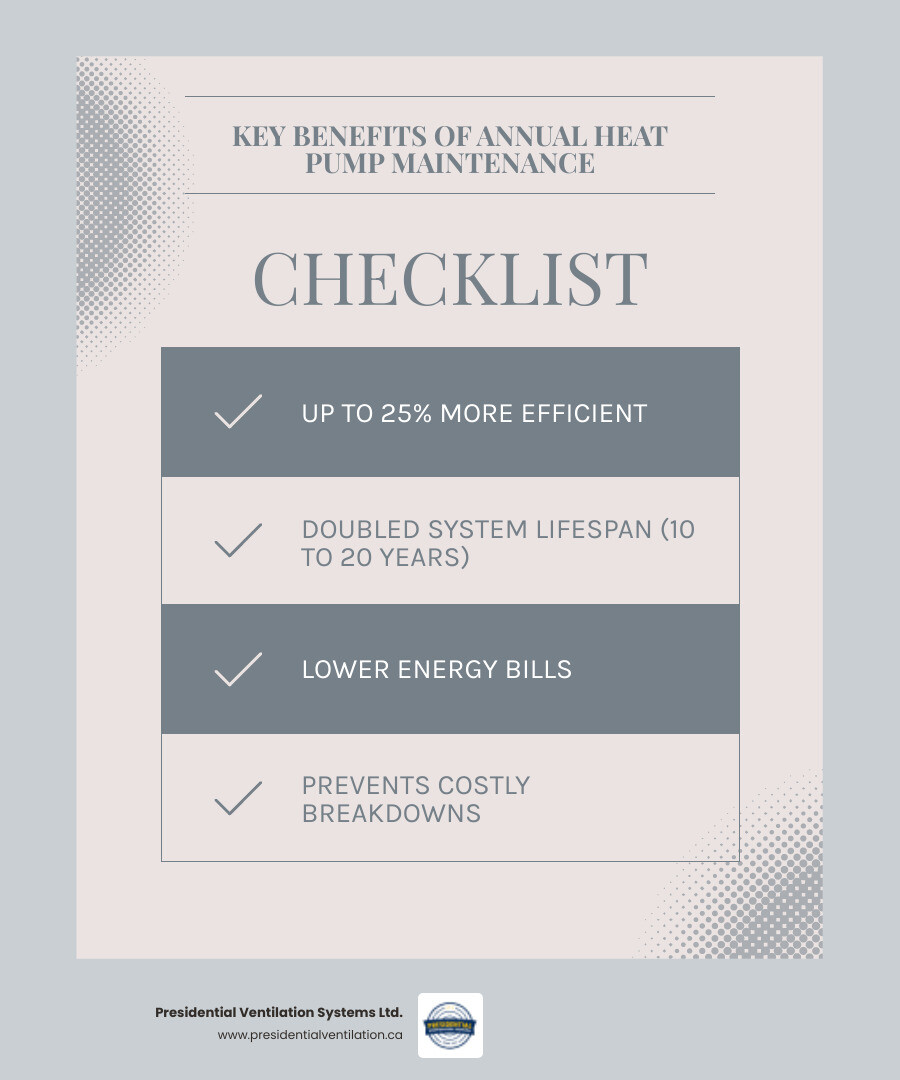
The research shows that regular tune-ups can make your heat pump up to 25% more efficient. Even more striking - a well-maintained heat pump can last 20 years, while a neglected one might only survive 10 years. That's potentially cutting your investment's lifespan in half.
Think of heat pump maintenance like changing your car's oil. Skip it, and you'll face expensive repairs or early replacement. Stay on top of it, and your system will reward you with reliable comfort and lower energy bills.
The difference between preventive care and reactive repairs is huge. Small issues caught during routine maintenance rarely turn into emergency breakdowns that leave you without heat in January or cooling in July.
When you think about heat pump annual maintenance, it's helpful to picture it like taking care of your car. You wouldn't skip oil changes and expect your vehicle to run smoothly for years, right? The same logic applies to your heat pump, especially since it works around the clock to keep your home comfortable.
Your heat pump is one of the hardest-working appliances in your home. While your furnace takes a break in summer and your air conditioner rests in winter, your heat pump keeps going year-round. This constant operation makes regular maintenance absolutely essential for protecting your investment.
System longevity is perhaps the most compelling reason to stay on top of maintenance. A well-cared-for heat pump can easily reach 20 years of reliable service. Skip the tune-ups, and you might be shopping for a replacement after just 10 years. That's literally half the lifespan you should expect from your system!
The energy efficiency benefits are equally impressive. When components get dirty, connections loosen, or refrigerant levels drop, your heat pump has to work much harder to do its job. This extra effort shows up directly on your utility bills. Regular maintenance can improve your system's efficiency by up to 25%, which means real cost savings month after month.
Beyond the financial benefits, consistent maintenance delivers improved home comfort. Your system will maintain more even temperatures, run more quietly, and provide better air quality throughout your home. You can learn more about how this all works in our guide on Regular Maintenance Heat Pump Efficiency.
Preventing breakdowns might be the most valuable benefit of all. There's nothing worse than losing heat during a January cold snap or having your cooling fail during a summer heat wave. Regular tune-ups catch small problems before they become big, expensive emergencies. Understanding what can go wrong helps you appreciate why prevention matters so much - check out our article on Top Reasons Heat Pumps Fail.
Skipping heat pump annual maintenance might seem like a money-saving strategy, but it's actually a costly gamble that rarely pays off. The consequences of neglect add up quickly and can hit your wallet hard.
Reduced lifespan is the most expensive consequence. Instead of enjoying 20 years of comfort from your investment, a neglected heat pump often struggles to make it past 10 years. That means you'll be facing the cost of a full system replacement much sooner than you should.
Higher utility bills start showing up almost immediately when maintenance is skipped. Dirty coils, clogged filters, and worn components force your system to work overtime. That 10-25% increase in energy consumption isn't just a number - it's real money coming out of your pocket every single month.
Unexpected repair costs are perhaps the most frustrating consequence. A simple issue like low refrigerant can put tremendous strain on your compressor, leading to a catastrophic failure that costs thousands to fix. These breakdowns always seem to happen at the worst possible times, leaving you scrambling for emergency service.
Poor air quality is an often-overlooked consequence of neglect. Dirty filters and coils become breeding grounds for mold, bacteria, and allergens that get circulated throughout your home. This can affect your family's health and comfort in ways that go far beyond temperature control.
The reality is that all of these problems are preventable with regular care. To understand what specific issues you might face, take a look at our guide to Common Heat Pump Issues. System failure doesn't have to be inevitable - it's usually the result of small problems that were ignored for too long.
Here's something many homeowners don't realize: skipping heat pump annual maintenance can actually void your warranty. This is a costly mistake that's completely avoidable with proper planning.
Manufacturer requirements are pretty clear on this point. Most heat pump warranties include language requiring regular professional maintenance to keep your coverage valid. They design their systems to perform optimally with proper care, and they expect you to hold up your end of the bargain.
Labor warranties from installers and service companies often have similar requirements. Even if the manufacturer covers the cost of a failed part, you could be stuck paying for expensive labor costs if you haven't maintained your service records.
Proof of service is your protection against warranty disputes. Keep detailed records of every maintenance visit, including dates, services performed, and technician information. This documentation becomes crucial if you ever need to make a warranty claim.
Avoiding voided coverage is simple when you stay on top of regular maintenance. The small investment in annual tune-ups protects the much larger investment in your heat pump system. Don't let a simple oversight cost you thousands in repair bills.
To better understand how maintenance affects your specific warranty coverage, visit our Warranty on Heat Pump page. Your warranty is valuable protection - make sure you don't accidentally give it up by skipping routine care.
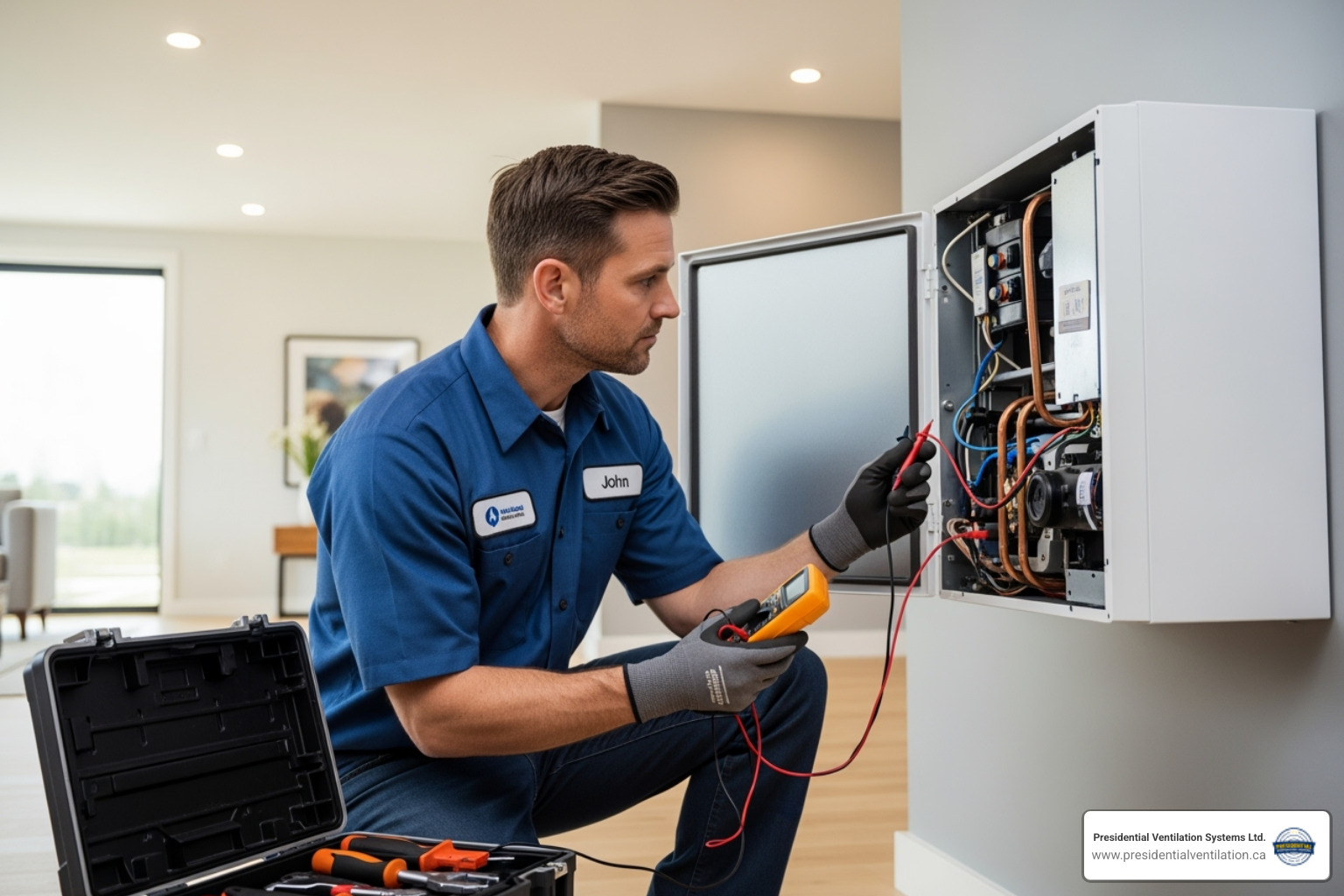
When you book a heat pump annual maintenance service with us, you're getting so much more than a quick once-over. Think of it as a complete physical exam for your home's comfort system. Our experienced technicians come equipped with specialized tools and the knowledge that comes from over 30 years in the business.
There's a world of difference between what you can check yourself and what professional eyes can spot. We catch the subtle signs that something isn't quite right before they turn into expensive headaches. That slight vibration that could mean a bearing is wearing out, or the barely noticeable ice buildup that signals a refrigerant issue – these are the things that separate a quick DIY check from comprehensive professional care.
Our thorough approach covers every critical component of your system. When we inspect and clean your coils, we're addressing one of the biggest efficiency killers. Dirty coils can slash your system's performance by up to 25%, making your heat pump work like it's running uphill. We carefully restore them to peak condition.
Checking refrigerant levels is another crucial step that requires professional expertise. Think of refrigerant as your heat pump's blood – without the right amount flowing properly, the whole system suffers. Low levels don't just hurt efficiency; they can actually damage your compressor, which is like the heart of the operation.
We also focus on lubricating motors and moving parts because friction is the enemy of any mechanical system. Proper lubrication keeps everything running smoothly and quietly while preventing premature wear. Tightening electrical connections might sound mundane, but loose connections can cause everything from poor performance to safety hazards.
The condensate drain inspection often surprises homeowners with its importance. As your heat pump removes humidity from your home, that moisture has to go somewhere. When drain lines get clogged with algae or debris, you can end up with water damage or even system shutdowns.
Thermostat calibration ensures your system's brain is sending the right signals, while our system controls and safety switch checks verify that all the protective mechanisms are working properly. Finally, we examine belts and blower components to ensure smooth, efficient airflow throughout your home.
You can learn more about our complete range of services at Heat Pump Services. When you trust us with your heat pump annual maintenance, you're investing in the long-term health and efficiency of your entire comfort system.
Between your professional heat pump annual maintenance visits, there are some simple things you can do at home to keep your system running like a dream. Think of it like brushing your teeth – you still need to see the dentist, but daily care makes a huge difference.
These tasks won't replace professional service, but they'll help your heat pump stay efficient and catch small problems before they become big headaches. The best part? Most of these tasks take just a few minutes and require no special tools or expertise.
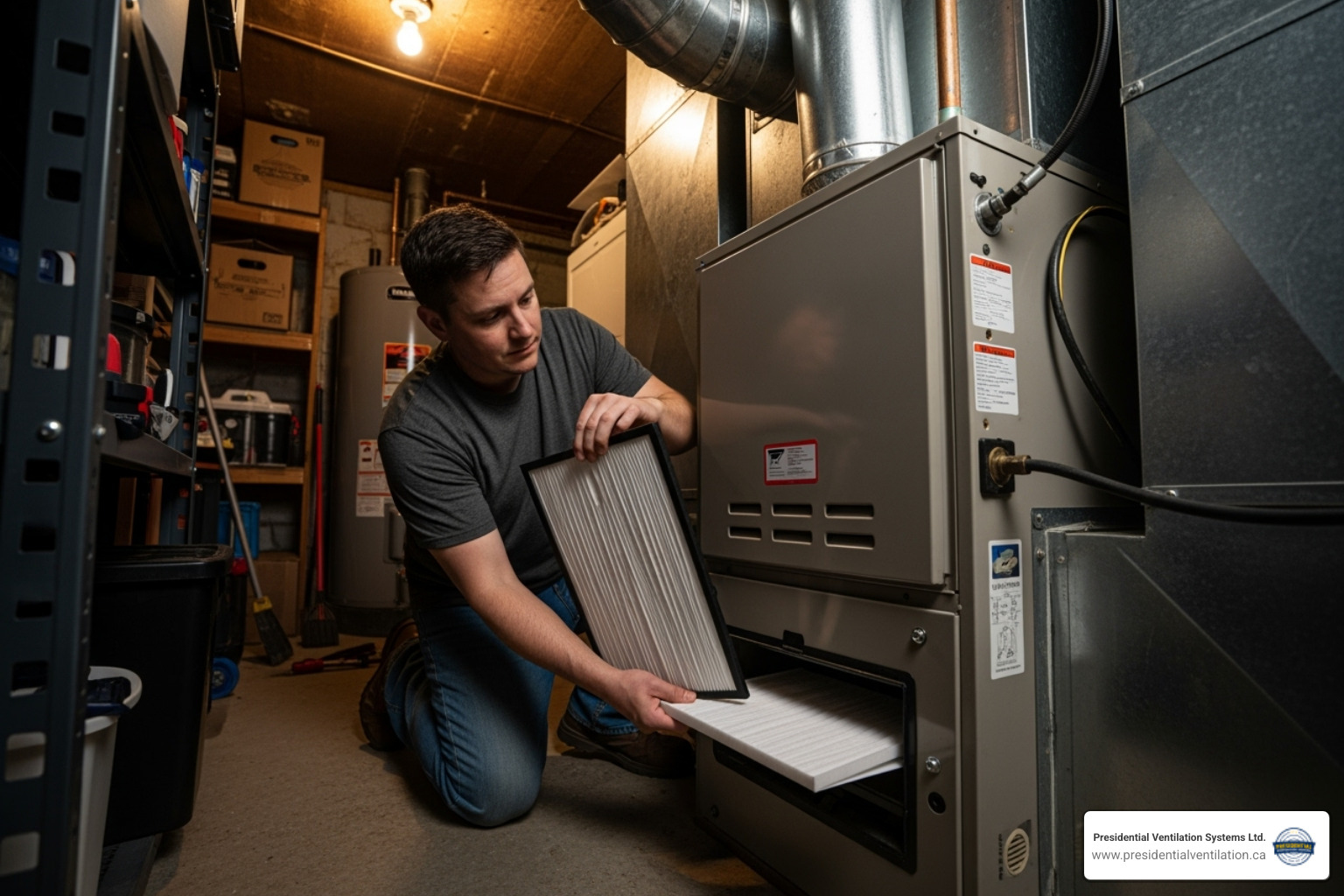
This is hands-down the most important thing you can do for your heat pump between professional visits. Your air filter is like a bouncer at a club – it decides what gets into your system and what doesn't.
When your filter gets clogged with dust, pet hair, and other particles, your heat pump has to work much harder to pull air through. It's like trying to breathe through a pillow – not fun for you or your system. A dirty filter can reduce your heat pump's efficiency and put unnecessary strain on the blower motor.
Clean filters also mean cleaner air in your home. They trap allergens, dust, and other particles that would otherwise circulate through your living spaces. If anyone in your family has allergies or asthma, keeping those filters fresh becomes even more important.
Most filters need attention every 1 to 3 months, but this can vary. If you have pets, live on a dusty road, or run your system constantly, you might need to check them more often. Some filters are washable and reusable, while others need to be replaced entirely.
Filter efficiency is measured using MERV ratings – higher numbers mean better filtration. Just remember that super-high efficiency filters might need more frequent changes. For step-by-step instructions on cleaning specific filter types, check out our guide on How to Clean Your Ductless Heat Pump Filters.
Your outdoor unit works hard in all kinds of weather, and it shows. Leaves, grass clippings, dirt, and even the occasional wayward toy can accumulate around the unit, blocking the airflow it desperately needs.
Keep at least two feet of clear space around your outdoor unit at all times. This gives it room to breathe and do its job efficiently. Regularly walk around and remove any debris that's collected nearby.
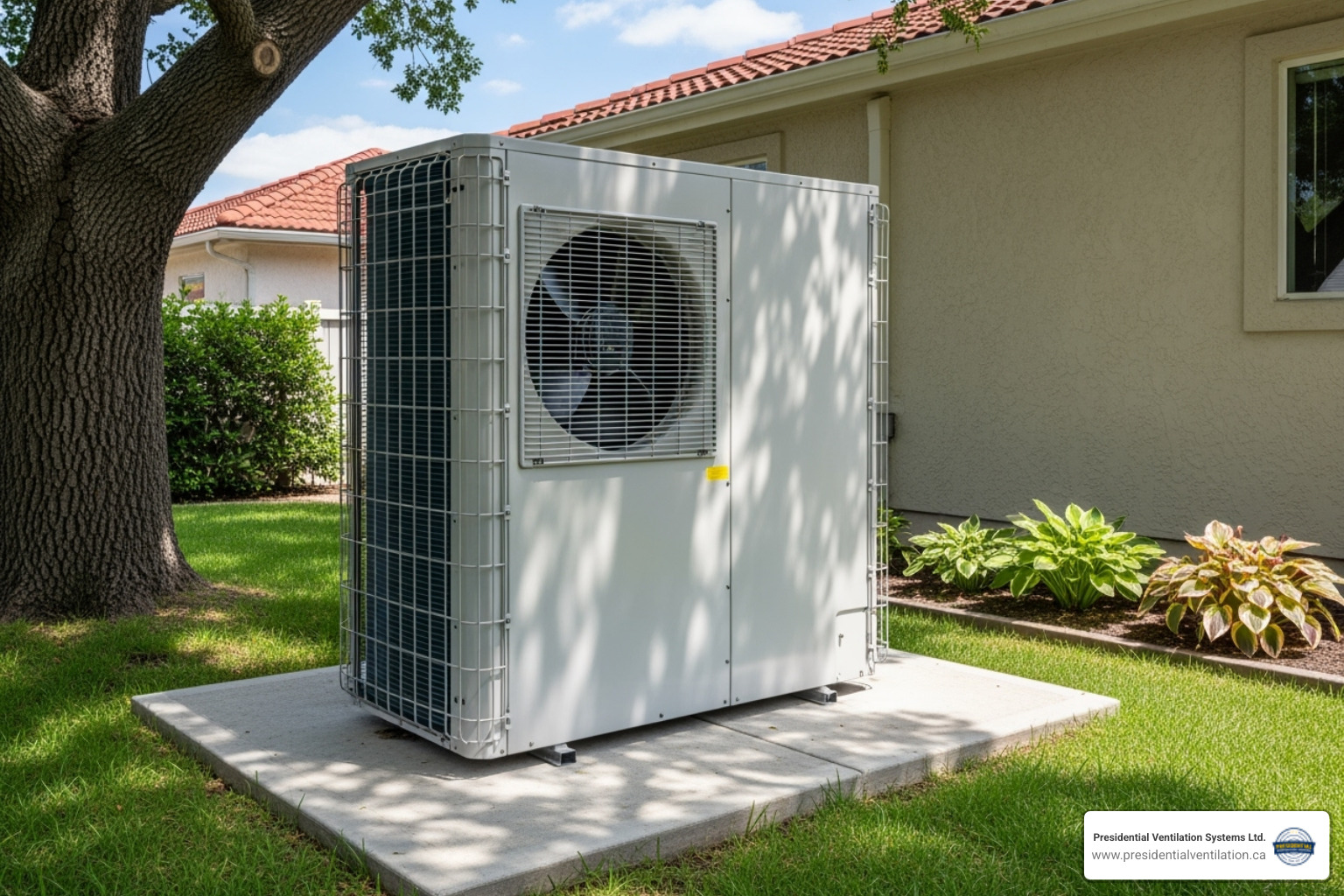
You can also gently hose down the coil fins to remove built-up dirt and grime. Just make sure to turn off the power at the breaker first – safety first! Use a gentle spray; those fins are delicate and can bend easily.
Here in Nova Scotia, winter brings its own challenges. Snow and ice can seriously impact your heat pump's performance. Heavy snow blocks airflow, while ice buildup can damage components. If you spot ice on your unit, pour some warm water over it to melt it away. Never use sharp objects to chip at the ice – you could damage the coils.
There are a few other simple checks you can do to stay on top of your heat pump's health. These small actions can help you catch problems early and keep your system running smoothly.
Check your indoor vents and registers regularly. Make sure they're all open and not blocked by furniture, curtains, or that pile of laundry you've been meaning to put away. Give them a quick dust or vacuum when they look grimy. If any of the fins are bent, gently straighten them out.
Listen to your heat pump when it's running. You'll get familiar with its normal sounds – the gentle hum of the fan, the occasional whoosh of the defrost cycle. When you hear something new – grinding, squealing, rattling, or strange bubbling sounds – pay attention. These noises are your heat pump's way of saying it needs help.
Keep an eye on performance too. Is your home taking longer to reach the temperature you want? Are your energy bills creeping up without explanation? These changes often signal that your system is working harder than it should. If you notice any concerning signs, our guide on Signs Heat Pump Needs Immediate Attention can help you decide when to call for professional help.
These simple tasks work hand-in-hand with your professional heat pump annual maintenance to keep your system efficient, reliable, and ready to keep your family comfortable year-round.
As a company that's been serving Nova Scotia homeowners for over 30 years, we've heard just about every question you can imagine about heat pump annual maintenance. These are the ones that come up most often during our service calls and phone conversations.
Here's the thing about heat pumps – they're workhorses. Unlike your old furnace that only kicked in during winter, your heat pump is on duty year-round, switching between heating and cooling as the seasons change. That constant operation means they need more attention than you might expect.
We recommend professional servicing twice a year – once in spring and once in fall. Think of it as preparing for battle before each extreme season hits. The spring tune-up gets your system ready for those hot, humid summer days when everyone's cranking up the air conditioning. The fall service ensures you're prepared for Nova Scotia's chilly winters.
Now, if twice a year feels like too much for your budget, once a year is the absolute minimum we'd recommend. But here's what we've learned after three decades in this business: customers who stick to the twice-yearly schedule almost always have fewer emergency calls and lower repair bills. Their systems also tend to last significantly longer.
The year-round usage really does make a difference. Your heat pump doesn't get those months of rest that a traditional heating system enjoys, so it needs that extra care to keep performing reliably. For more details on timing your maintenance with the seasons, check out our guide on Seasonal Considerations Heat Pump Maintenance.
We get this question a lot, and honestly, it's one of the smartest questions you can ask. Understanding the investment helps you plan and budget properly.
The cost varies depending on several factors – the type and size of your heat pump, your location in Nova Scotia, and what specific services are included in the maintenance visit. Some systems require more time and specialized attention than others.
Here's what influences the price: system complexity, accessibility of your outdoor unit, age of the equipment, and any additional services you might need during the visit. A basic ductless mini-split will typically cost less to service than a large central heat pump system.
Maintenance plans offer excellent value for most homeowners. These plans typically include two visits per year plus discounts on any repairs that might come up. They help you budget for maintenance and ensure your system gets consistent care. Many of our customers find that the peace of mind alone makes these plans worthwhile.
The key thing to remember is that maintenance costs are tiny compared to major repairs or early replacement. We've seen too many homeowners try to save money by skipping tune-ups, only to face a massive repair bill when their compressor fails. A well-maintained heat pump runs more efficiently, which means lower monthly energy bills that often offset the maintenance cost. You can explore our options on our Maintenance Plan page.
This might be the most important question of all. You're trusting someone with a major investment in your home's comfort system, so you want to choose wisely.
Start with certifications and training. Look for technicians who've completed programs through Energy Skilled-recognized certification programs. These certifications aren't just pieces of paper – they represent real knowledge and ongoing education in heat pump technology.
Experience matters tremendously in this field. Heat pump systems can be complex, and troubleshooting problems often requires the kind of intuition that only comes from years of hands-on work. A company that's been serving your community for decades has seen just about every issue that can arise.
Check their local reputation by reading online reviews and asking neighbors for recommendations. In Nova Scotia's tight-knit communities, word travels fast about both good and bad service experiences. A strong local reputation usually means the company stands behind their work.
Insurance and licensing are non-negotiable. Any legitimate HVAC company should carry proper insurance and hold all required licenses. This protects you if something goes wrong during service, and it's a sign that the company operates professionally.
At Presidential Ventilation Systems Ltd., we've built our reputation over more than 30 years of serving Nova Scotia families. Our technicians are certified, experienced, and committed to treating your home with the same care we'd show our own. We're proud to be a Daikin Comfort Pro Dealer, which means we meet strict standards for technical expertise and customer service. To learn more about what sets our team apart, read about why you should Choose Our Technicians Heat Pump Needs.
Your heat pump represents a significant investment in your home's comfort and value. After exploring the ins and outs of heat pump annual maintenance, one thing becomes crystal clear: regular professional care isn't just recommended – it's absolutely essential for protecting that investment.
Think about it this way: you wouldn't drive your car for years without an oil change, would you? Your heat pump works even harder than your car, running day and night through Nova Scotia's hot summers and cold winters. It deserves the same level of care and attention.
The benefits we've discussed aren't just marketing promises – they're real, measurable outcomes that our clients experience every day. When you commit to regular professional tune-ups, you're looking at potentially doubling your system's lifespan from 10 to 20 years. That's like getting a second heat pump for free! You'll also enjoy up to 25% better energy efficiency, which means lower utility bills month after month.
But perhaps the most valuable benefit is the peace of mind that comes with proactive care. There's nothing worse than waking up on a frigid January morning to find your heat pump has given up overnight. With regular maintenance, those emergency breakdowns become extremely rare. Small issues get caught and fixed before they turn into big, expensive problems.
At Presidential Ventilation Systems Ltd., we've been helping Nova Scotia families protect their HVAC investments for over 30 years. We've seen how proper maintenance transforms the ownership experience – fewer repairs, lower bills, and reliable comfort year after year.
Our team of certified technicians brings decades of combined experience to every service call. We use specialized tools and follow comprehensive checklists to ensure nothing gets missed. When we're done, you can be confident your system is ready to handle whatever Mother Nature throws at it.
Don't wait until something goes wrong to think about your heat pump. Proactive care is always more affordable and less stressful than reactive repairs. Your future self will thank you for taking action today.
Ready to give your heat pump the professional attention it deserves? Contact Us to schedule your heat pump annual maintenance service. And if you're already experiencing issues, don't hesitate to reach out for Heat Pump Repair in Halifax, NS – we're here to help keep your home comfortable all year long.
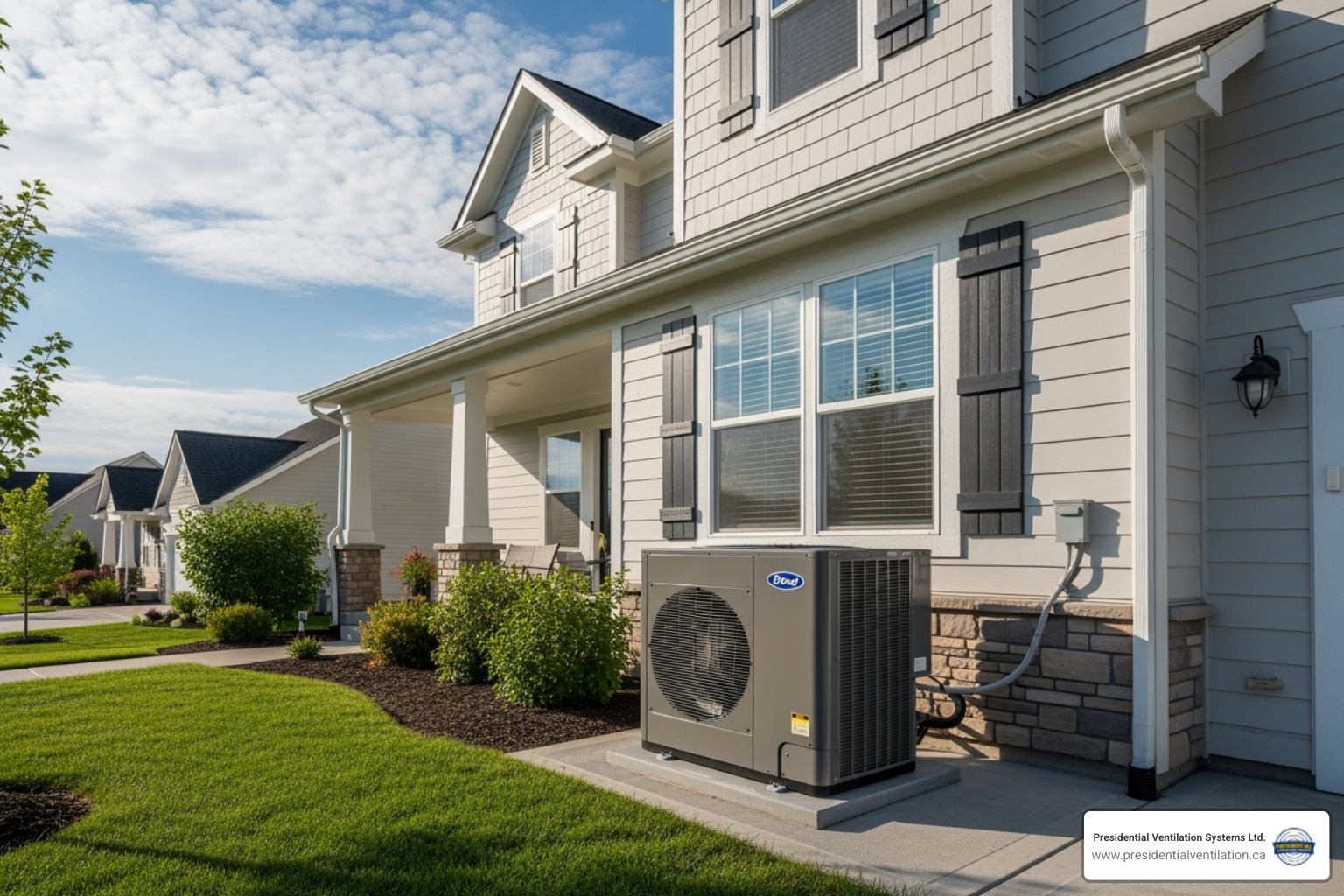

Heat pump annual maintenance is essential for keeping your system running efficiently and preventing costly breakdowns. Like any major investment in your home, your heat pump needs regular care to deliver the comfort and energy savings you expect.
Quick Answer: Heat pump annual maintenance should include:
Heat pumps work harder than most HVAC systems because they operate year-round, providing both heating and cooling. This constant use means they experience more wear and tear than single-season systems.
The research shows that regular tune-ups can make your heat pump up to 25% more efficient. Even more striking - a well-maintained heat pump can last 20 years, while a neglected one might only survive 10 years. That's potentially cutting your investment's lifespan in half.
Think of heat pump maintenance like changing your car's oil. Skip it, and you'll face expensive repairs or early replacement. Stay on top of it, and your system will reward you with reliable comfort and lower energy bills.
The difference between preventive care and reactive repairs is huge. Small issues caught during routine maintenance rarely turn into emergency breakdowns that leave you without heat in January or cooling in July.
When you think about heat pump annual maintenance, it's helpful to picture it like taking care of your car. You wouldn't skip oil changes and expect your vehicle to run smoothly for years, right? The same logic applies to your heat pump, especially since it works around the clock to keep your home comfortable.
Your heat pump is one of the hardest-working appliances in your home. While your furnace takes a break in summer and your air conditioner rests in winter, your heat pump keeps going year-round. This constant operation makes regular maintenance absolutely essential for protecting your investment.
System longevity is perhaps the most compelling reason to stay on top of maintenance. A well-cared-for heat pump can easily reach 20 years of reliable service. Skip the tune-ups, and you might be shopping for a replacement after just 10 years. That's literally half the lifespan you should expect from your system!
The energy efficiency benefits are equally impressive. When components get dirty, connections loosen, or refrigerant levels drop, your heat pump has to work much harder to do its job. This extra effort shows up directly on your utility bills. Regular maintenance can improve your system's efficiency by up to 25%, which means real cost savings month after month.
Beyond the financial benefits, consistent maintenance delivers improved home comfort. Your system will maintain more even temperatures, run more quietly, and provide better air quality throughout your home. You can learn more about how this all works in our guide on Regular Maintenance Heat Pump Efficiency.
Preventing breakdowns might be the most valuable benefit of all. There's nothing worse than losing heat during a January cold snap or having your cooling fail during a summer heat wave. Regular tune-ups catch small problems before they become big, expensive emergencies. Understanding what can go wrong helps you appreciate why prevention matters so much - check out our article on Top Reasons Heat Pumps Fail.
Skipping heat pump annual maintenance might seem like a money-saving strategy, but it's actually a costly gamble that rarely pays off. The consequences of neglect add up quickly and can hit your wallet hard.
Reduced lifespan is the most expensive consequence. Instead of enjoying 20 years of comfort from your investment, a neglected heat pump often struggles to make it past 10 years. That means you'll be facing the cost of a full system replacement much sooner than you should.
Higher utility bills start showing up almost immediately when maintenance is skipped. Dirty coils, clogged filters, and worn components force your system to work overtime. That 10-25% increase in energy consumption isn't just a number - it's real money coming out of your pocket every single month.
Unexpected repair costs are perhaps the most frustrating consequence. A simple issue like low refrigerant can put tremendous strain on your compressor, leading to a catastrophic failure that costs thousands to fix. These breakdowns always seem to happen at the worst possible times, leaving you scrambling for emergency service.
Poor air quality is an often-overlooked consequence of neglect. Dirty filters and coils become breeding grounds for mold, bacteria, and allergens that get circulated throughout your home. This can affect your family's health and comfort in ways that go far beyond temperature control.
The reality is that all of these problems are preventable with regular care. To understand what specific issues you might face, take a look at our guide to Common Heat Pump Issues. System failure doesn't have to be inevitable - it's usually the result of small problems that were ignored for too long.
Here's something many homeowners don't realize: skipping heat pump annual maintenance can actually void your warranty. This is a costly mistake that's completely avoidable with proper planning.
Manufacturer requirements are pretty clear on this point. Most heat pump warranties include language requiring regular professional maintenance to keep your coverage valid. They design their systems to perform optimally with proper care, and they expect you to hold up your end of the bargain.
Labor warranties from installers and service companies often have similar requirements. Even if the manufacturer covers the cost of a failed part, you could be stuck paying for expensive labor costs if you haven't maintained your service records.
Proof of service is your protection against warranty disputes. Keep detailed records of every maintenance visit, including dates, services performed, and technician information. This documentation becomes crucial if you ever need to make a warranty claim.
Avoiding voided coverage is simple when you stay on top of regular maintenance. The small investment in annual tune-ups protects the much larger investment in your heat pump system. Don't let a simple oversight cost you thousands in repair bills.
To better understand how maintenance affects your specific warranty coverage, visit our Warranty on Heat Pump page. Your warranty is valuable protection - make sure you don't accidentally give it up by skipping routine care.
When you book a heat pump annual maintenance service with us, you're getting so much more than a quick once-over. Think of it as a complete physical exam for your home's comfort system. Our experienced technicians come equipped with specialized tools and the knowledge that comes from over 30 years in the business.
There's a world of difference between what you can check yourself and what professional eyes can spot. We catch the subtle signs that something isn't quite right before they turn into expensive headaches. That slight vibration that could mean a bearing is wearing out, or the barely noticeable ice buildup that signals a refrigerant issue – these are the things that separate a quick DIY check from comprehensive professional care.
Our thorough approach covers every critical component of your system. When we inspect and clean your coils, we're addressing one of the biggest efficiency killers. Dirty coils can slash your system's performance by up to 25%, making your heat pump work like it's running uphill. We carefully restore them to peak condition.
Checking refrigerant levels is another crucial step that requires professional expertise. Think of refrigerant as your heat pump's blood – without the right amount flowing properly, the whole system suffers. Low levels don't just hurt efficiency; they can actually damage your compressor, which is like the heart of the operation.
We also focus on lubricating motors and moving parts because friction is the enemy of any mechanical system. Proper lubrication keeps everything running smoothly and quietly while preventing premature wear. Tightening electrical connections might sound mundane, but loose connections can cause everything from poor performance to safety hazards.
The condensate drain inspection often surprises homeowners with its importance. As your heat pump removes humidity from your home, that moisture has to go somewhere. When drain lines get clogged with algae or debris, you can end up with water damage or even system shutdowns.
Thermostat calibration ensures your system's brain is sending the right signals, while our system controls and safety switch checks verify that all the protective mechanisms are working properly. Finally, we examine belts and blower components to ensure smooth, efficient airflow throughout your home.
You can learn more about our complete range of services at Heat Pump Services. When you trust us with your heat pump annual maintenance, you're investing in the long-term health and efficiency of your entire comfort system.
Between your professional heat pump annual maintenance visits, there are some simple things you can do at home to keep your system running like a dream. Think of it like brushing your teeth – you still need to see the dentist, but daily care makes a huge difference.
These tasks won't replace professional service, but they'll help your heat pump stay efficient and catch small problems before they become big headaches. The best part? Most of these tasks take just a few minutes and require no special tools or expertise.
This is hands-down the most important thing you can do for your heat pump between professional visits. Your air filter is like a bouncer at a club – it decides what gets into your system and what doesn't.
When your filter gets clogged with dust, pet hair, and other particles, your heat pump has to work much harder to pull air through. It's like trying to breathe through a pillow – not fun for you or your system. A dirty filter can reduce your heat pump's efficiency and put unnecessary strain on the blower motor.
Clean filters also mean cleaner air in your home. They trap allergens, dust, and other particles that would otherwise circulate through your living spaces. If anyone in your family has allergies or asthma, keeping those filters fresh becomes even more important.
Most filters need attention every 1 to 3 months, but this can vary. If you have pets, live on a dusty road, or run your system constantly, you might need to check them more often. Some filters are washable and reusable, while others need to be replaced entirely.
Filter efficiency is measured using MERV ratings – higher numbers mean better filtration. Just remember that super-high efficiency filters might need more frequent changes. For step-by-step instructions on cleaning specific filter types, check out our guide on How to Clean Your Ductless Heat Pump Filters.
Your outdoor unit works hard in all kinds of weather, and it shows. Leaves, grass clippings, dirt, and even the occasional wayward toy can accumulate around the unit, blocking the airflow it desperately needs.
Keep at least two feet of clear space around your outdoor unit at all times. This gives it room to breathe and do its job efficiently. Regularly walk around and remove any debris that's collected nearby.
You can also gently hose down the coil fins to remove built-up dirt and grime. Just make sure to turn off the power at the breaker first – safety first! Use a gentle spray; those fins are delicate and can bend easily.
Here in Nova Scotia, winter brings its own challenges. Snow and ice can seriously impact your heat pump's performance. Heavy snow blocks airflow, while ice buildup can damage components. If you spot ice on your unit, pour some warm water over it to melt it away. Never use sharp objects to chip at the ice – you could damage the coils.
There are a few other simple checks you can do to stay on top of your heat pump's health. These small actions can help you catch problems early and keep your system running smoothly.
Check your indoor vents and registers regularly. Make sure they're all open and not blocked by furniture, curtains, or that pile of laundry you've been meaning to put away. Give them a quick dust or vacuum when they look grimy. If any of the fins are bent, gently straighten them out.
Listen to your heat pump when it's running. You'll get familiar with its normal sounds – the gentle hum of the fan, the occasional whoosh of the defrost cycle. When you hear something new – grinding, squealing, rattling, or strange bubbling sounds – pay attention. These noises are your heat pump's way of saying it needs help.
Keep an eye on performance too. Is your home taking longer to reach the temperature you want? Are your energy bills creeping up without explanation? These changes often signal that your system is working harder than it should. If you notice any concerning signs, our guide on Signs Heat Pump Needs Immediate Attention can help you decide when to call for professional help.
These simple tasks work hand-in-hand with your professional heat pump annual maintenance to keep your system efficient, reliable, and ready to keep your family comfortable year-round.
As a company that's been serving Nova Scotia homeowners for over 30 years, we've heard just about every question you can imagine about heat pump annual maintenance. These are the ones that come up most often during our service calls and phone conversations.
Here's the thing about heat pumps – they're workhorses. Unlike your old furnace that only kicked in during winter, your heat pump is on duty year-round, switching between heating and cooling as the seasons change. That constant operation means they need more attention than you might expect.
We recommend professional servicing twice a year – once in spring and once in fall. Think of it as preparing for battle before each extreme season hits. The spring tune-up gets your system ready for those hot, humid summer days when everyone's cranking up the air conditioning. The fall service ensures you're prepared for Nova Scotia's chilly winters.
Now, if twice a year feels like too much for your budget, once a year is the absolute minimum we'd recommend. But here's what we've learned after three decades in this business: customers who stick to the twice-yearly schedule almost always have fewer emergency calls and lower repair bills. Their systems also tend to last significantly longer.
The year-round usage really does make a difference. Your heat pump doesn't get those months of rest that a traditional heating system enjoys, so it needs that extra care to keep performing reliably. For more details on timing your maintenance with the seasons, check out our guide on Seasonal Considerations Heat Pump Maintenance.
We get this question a lot, and honestly, it's one of the smartest questions you can ask. Understanding the investment helps you plan and budget properly.
The cost varies depending on several factors – the type and size of your heat pump, your location in Nova Scotia, and what specific services are included in the maintenance visit. Some systems require more time and specialized attention than others.
Here's what influences the price: system complexity, accessibility of your outdoor unit, age of the equipment, and any additional services you might need during the visit. A basic ductless mini-split will typically cost less to service than a large central heat pump system.
Maintenance plans offer excellent value for most homeowners. These plans typically include two visits per year plus discounts on any repairs that might come up. They help you budget for maintenance and ensure your system gets consistent care. Many of our customers find that the peace of mind alone makes these plans worthwhile.
The key thing to remember is that maintenance costs are tiny compared to major repairs or early replacement. We've seen too many homeowners try to save money by skipping tune-ups, only to face a massive repair bill when their compressor fails. A well-maintained heat pump runs more efficiently, which means lower monthly energy bills that often offset the maintenance cost. You can explore our options on our Maintenance Plan page.
This might be the most important question of all. You're trusting someone with a major investment in your home's comfort system, so you want to choose wisely.
Start with certifications and training. Look for technicians who've completed programs through Energy Skilled-recognized certification programs. These certifications aren't just pieces of paper – they represent real knowledge and ongoing education in heat pump technology.
Experience matters tremendously in this field. Heat pump systems can be complex, and troubleshooting problems often requires the kind of intuition that only comes from years of hands-on work. A company that's been serving your community for decades has seen just about every issue that can arise.
Check their local reputation by reading online reviews and asking neighbors for recommendations. In Nova Scotia's tight-knit communities, word travels fast about both good and bad service experiences. A strong local reputation usually means the company stands behind their work.
Insurance and licensing are non-negotiable. Any legitimate HVAC company should carry proper insurance and hold all required licenses. This protects you if something goes wrong during service, and it's a sign that the company operates professionally.
At Presidential Ventilation Systems Ltd., we've built our reputation over more than 30 years of serving Nova Scotia families. Our technicians are certified, experienced, and committed to treating your home with the same care we'd show our own. We're proud to be a Daikin Comfort Pro Dealer, which means we meet strict standards for technical expertise and customer service. To learn more about what sets our team apart, read about why you should Choose Our Technicians Heat Pump Needs.
Your heat pump represents a significant investment in your home's comfort and value. After exploring the ins and outs of heat pump annual maintenance, one thing becomes crystal clear: regular professional care isn't just recommended – it's absolutely essential for protecting that investment.
Think about it this way: you wouldn't drive your car for years without an oil change, would you? Your heat pump works even harder than your car, running day and night through Nova Scotia's hot summers and cold winters. It deserves the same level of care and attention.
The benefits we've discussed aren't just marketing promises – they're real, measurable outcomes that our clients experience every day. When you commit to regular professional tune-ups, you're looking at potentially doubling your system's lifespan from 10 to 20 years. That's like getting a second heat pump for free! You'll also enjoy up to 25% better energy efficiency, which means lower utility bills month after month.
But perhaps the most valuable benefit is the peace of mind that comes with proactive care. There's nothing worse than waking up on a frigid January morning to find your heat pump has given up overnight. With regular maintenance, those emergency breakdowns become extremely rare. Small issues get caught and fixed before they turn into big, expensive problems.
At Presidential Ventilation Systems Ltd., we've been helping Nova Scotia families protect their HVAC investments for over 30 years. We've seen how proper maintenance transforms the ownership experience – fewer repairs, lower bills, and reliable comfort year after year.
Our team of certified technicians brings decades of combined experience to every service call. We use specialized tools and follow comprehensive checklists to ensure nothing gets missed. When we're done, you can be confident your system is ready to handle whatever Mother Nature throws at it.
Don't wait until something goes wrong to think about your heat pump. Proactive care is always more affordable and less stressful than reactive repairs. Your future self will thank you for taking action today.
Ready to give your heat pump the professional attention it deserves? Contact Us to schedule your heat pump annual maintenance service. And if you're already experiencing issues, don't hesitate to reach out for Heat Pump Repair in Halifax, NS – we're here to help keep your home comfortable all year long.
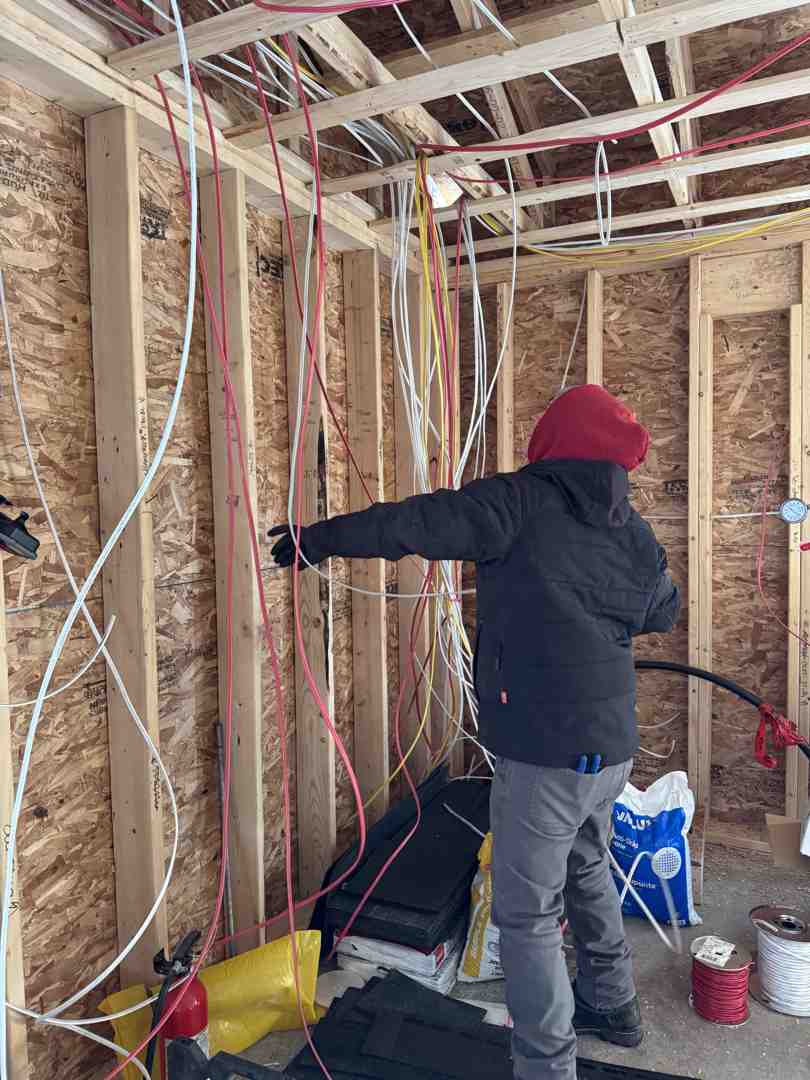
Electrical system installation in Kentville, NS is one of the most important investments you can make in your home or business. Whether you're upgrading an aging panel, wiring a new build, or adding circuits for modern appliances, getting it right from the start keeps your property safe, efficient, and code-compliant.
Kentville's climate puts real demands on electrical systems. Cold winters mean heavy heating loads. That puts pressure on panels, wiring, and circuits that weren't built for today's energy needs.
Here's a quick look at what electrical system installation in Kentville typically covers:
With over 56 electricians and contractors serving the Kentville area, finding the right certified professional matters more than ever.
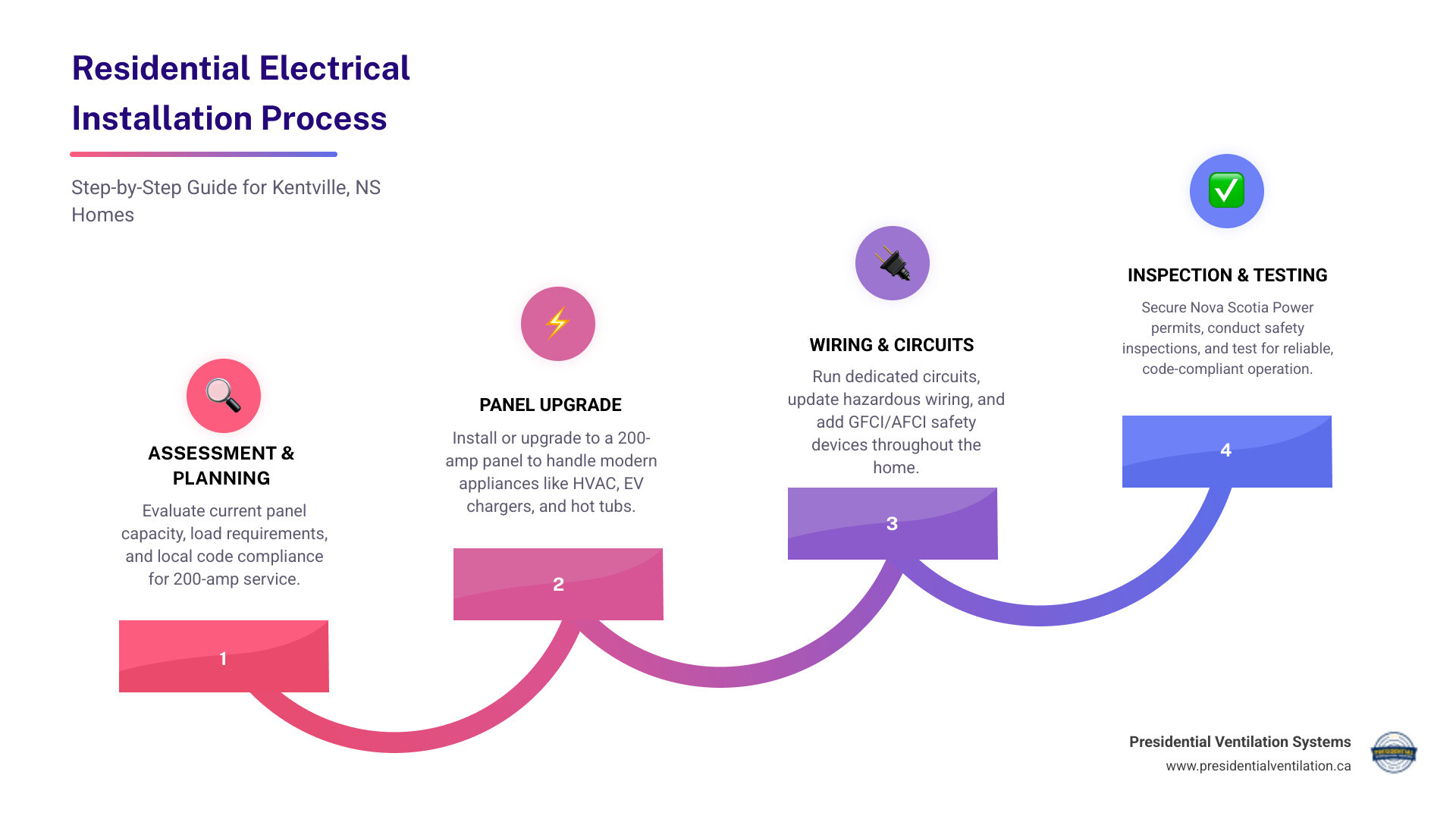
When we talk about electrical system installation in Kentville, NS, we aren't just talking about pulling wires through walls. In the Annapolis Valley, requirements have shifted significantly over the last decade. Many older homes in the area originally featured 60-amp or 100-amp services, which simply cannot keep up with the modern "connected" lifestyle.
Today, a 200-amp panel upgrade is the gold standard. This provides the necessary "headroom" or circuit capacity to run multiple high-draw appliances simultaneously without tripping breakers. Whether you are doing a full kitchen renovation or finishing a basement, ensuring your panel can handle the load is step one.
Our team often handles Electrical Services Kentville NS that involve complex wiring renovations. This includes removing hazardous "knob and tube" or aluminum wiring and replacing it with modern copper Romex. We also focus on appliance hook-ups for heavy hitters like electric ranges, dryers, and specialized workshop equipment that require dedicated lines to prevent interference with your home's lighting systems.
Adding a hot tub is a fantastic way to enjoy the crisp Kentville evenings, but it requires a very specific type of electrical system installation in Kentville, NS. Water and electricity are a dangerous mix, which is why the Canadian Electrical Code is so strict here.
Every hot tub installation must include a Ground Fault Circuit Interrupter (GFCI) protection device. This is usually housed in a "spa pack" or a manual disconnect switch located within sight of the tub but at a safe distance (usually at least 3 meters) to prevent someone from touching it while in the water. We ensure all outdoor wiring is rated for wet locations and encased in proper conduit to protect it from the elements and accidental damage. For a deeper dive into these requirements, check out our Electrical Kentville NS Complete Guide.
As more residents in the Valley transition to electric vehicles, the demand for Level 2 home charging stations has skyrocketed. A standard wall outlet (Level 1) can take days to charge a modern EV battery. A Level 2 charger requires a dedicated 240-volt circuit, similar to what a clothes dryer uses.
Integrating these into your existing system involves assessing your current load management. If your panel is already near capacity, we look at energy-efficient solutions or panel sub-divisions to ensure your car charges quickly without dimming the lights in your living room. Proper garage infrastructure planning today saves you from expensive retrofits tomorrow.
HVAC systems and large appliances are the largest energy consumers in any Kentville property. Because these systems cycle on and off frequently, they create significant "inrush" current. If the wiring isn't sized correctly, you'll experience voltage drops that can damage sensitive electronics and shorten the lifespan of your expensive equipment.
Professional electrical system installation in Kentville, NS for HVAC involves more than just a power connection. It requires a dedicated disconnect switch located near the outdoor unit. This allows a technician to safely cut power during maintenance without having to run back and forth to the main electrical panel. Using the right Electrical Services Kentville NS ensures your voltage stability remains constant, protecting the motors and compressors that keep your home comfortable.
Did you know that many manufacturers will void your equipment warranty if the electrical connection wasn't performed by a licensed professional? It’s true. If a component fails and the manufacturer discovers the wiring was undersized or the circuit wasn't dedicated, they may deny your claim.
By choosing certified connections, you ensure the installation meets the exact manufacturer specifications. This isn't just about red tape; it's about system efficiency. A properly wired unit runs cooler and lasts longer.
| Feature | Standard Home Wiring | Specialized HVAC/Appliance Wiring |
|---|---|---|
| Circuit Type | Shared (Lights/Outlets) | Dedicated (Single Equipment Only) |
| Wire Gauge | Typically 14 AWG | 12 AWG, 10 AWG, or larger |
| Protection | Standard Breaker | HACR Rated Breakers / Disconnects |
| Voltage | 120V | 240V (usually) |
| Control Wiring | N/A | Low-voltage thermostat integration |
A "dedicated circuit" is a wire that runs from your breaker panel to a single appliance and nothing else. This is vital for overload prevention. In older Kentville homes, you might find a toaster, a microwave, and the refrigerator all sharing one circuit. The moment you try to make toast while the fridge compressor kicks in, the breaker trips.
We recommend dedicated lines for:
In Nova Scotia, electrical work is governed by the Canadian Electrical Code (CEC) and overseen by Nova Scotia Power inspectors. You cannot simply "DIY" a major electrical system installation in Kentville, NS. Before any significant work begins, an electrical permit must be pulled.
Working with Red Seal electricians is the only way to ensure your project passes the final inspection. These professionals have thousands of hours of training and understand the specific nuances of local regulations. Once the work is finished, an inspector from Nova Scotia Power will visit the site to verify that everything—from the depth of buried cables to the tightness of the lugs in the panel—is 100% compliant. You can learn more about this process in our Electrical Kentville NS Complete Guide.
If you are upgrading your service from 100-amp to 200-amp, Nova Scotia Power often requires that you bring other parts of the home up to current safety standards. This is to ensure the "new" power doesn't cause issues with "old" infrastructure.
Common minimum requirements include:
Commercial properties in Kentville face even stricter building standards. From emergency exit lighting to fire alarm integration, the complexity increases significantly. Insurance companies also play a major role here; many will not provide coverage or will significantly increase premiums if they find that electrical work was done without professional certification.
Our site assessments look at the big picture. We don't just fix the immediate problem; we look for potential code violations that could hold up a future sale or insurance claim.
The most obvious sign is frequent circuit breaker tripping. If you find yourself walking to the basement to flip a switch every time you use the hairdryer, your panel is struggling. Other red flags include flickering lights when the furnace kicks on, a "crackling" sound coming from the panel box, or the presence of a fuse box instead of modern breakers. If your home still runs on a 100-amp service and you plan to add a large appliance or a hot tub, an upgrade is almost certainly necessary.
Modern electrical system installation in Kentville, NS prioritizes three main safety technologies:
A Red Seal certification is the national standard of excellence in Canada. It means the electrician has completed a rigorous four-year apprenticeship and passed a comprehensive national exam. This level of trade expertise ensures that your project isn't just "working," but is built to the highest safety assurance and quality workmanship standards. It gives you peace of mind that your home is protected from the leading cause of residential fires: faulty wiring.
At Presidential Ventilation Systems, we’ve spent over 30 years helping homeowners across the Annapolis Valley stay comfortable and safe. We know that a reliable home starts with a rock-solid electrical foundation. Whether you’re dealing with an old heritage home in the heart of Kentville or building a brand-new commercial space, our team of certified professionals brings the experience and local knowledge needed to do the job right.
From 200-amp panel upgrades to specialized wiring for your new outdoor oasis, we handle it all with a focus on energy efficiency and long-term reliability. Don't leave your safety to chance—choose the experts who understand the unique demands of the Nova Scotia climate.
Ready to brighten up your property? Explore our full range of Electrical Services Kentville NS and let us help you power your home for the future.
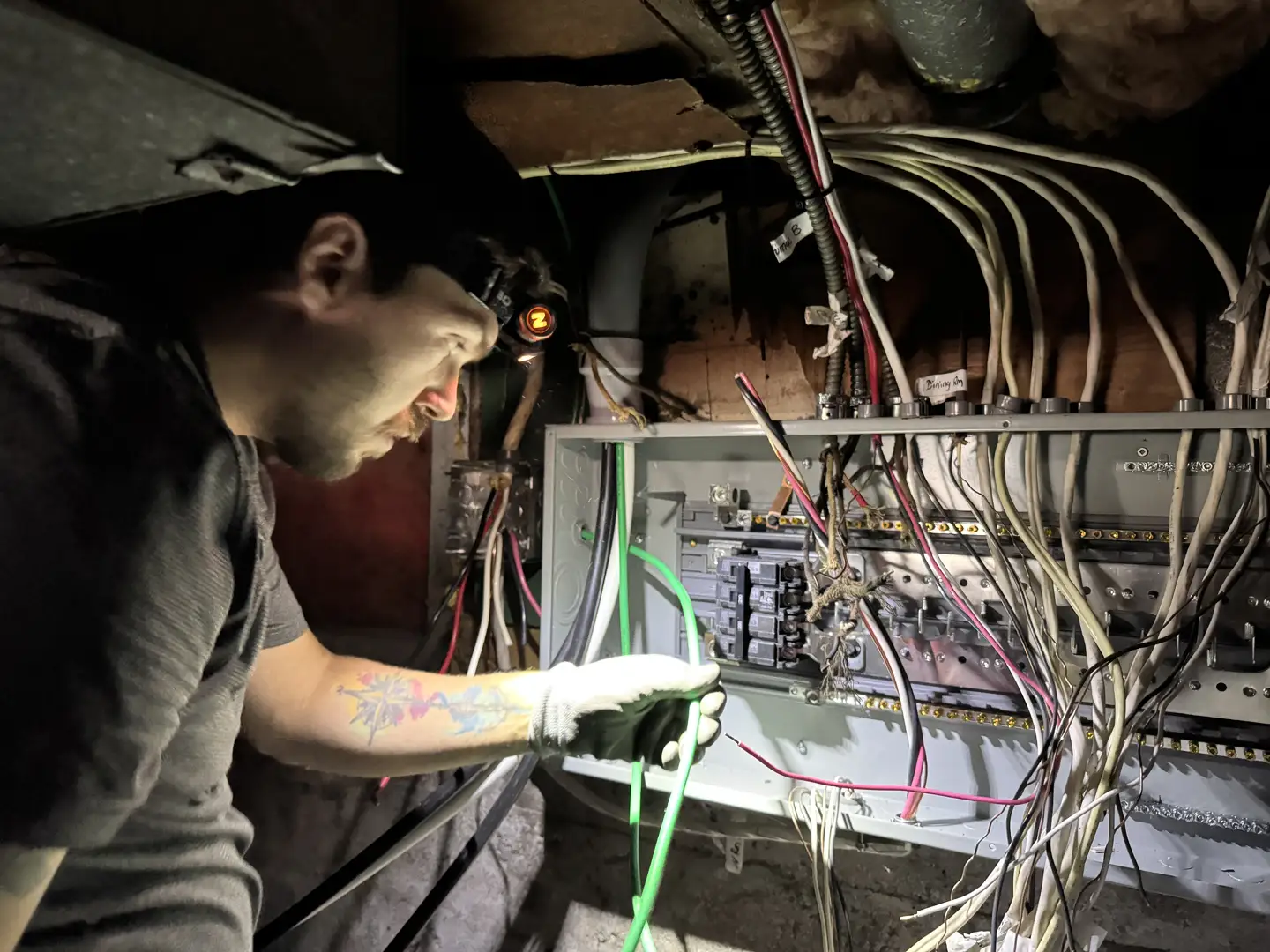
If you're looking for the best electrical in Fall River, NS, here's a quick overview of what to look for in a top-rated local electrician:
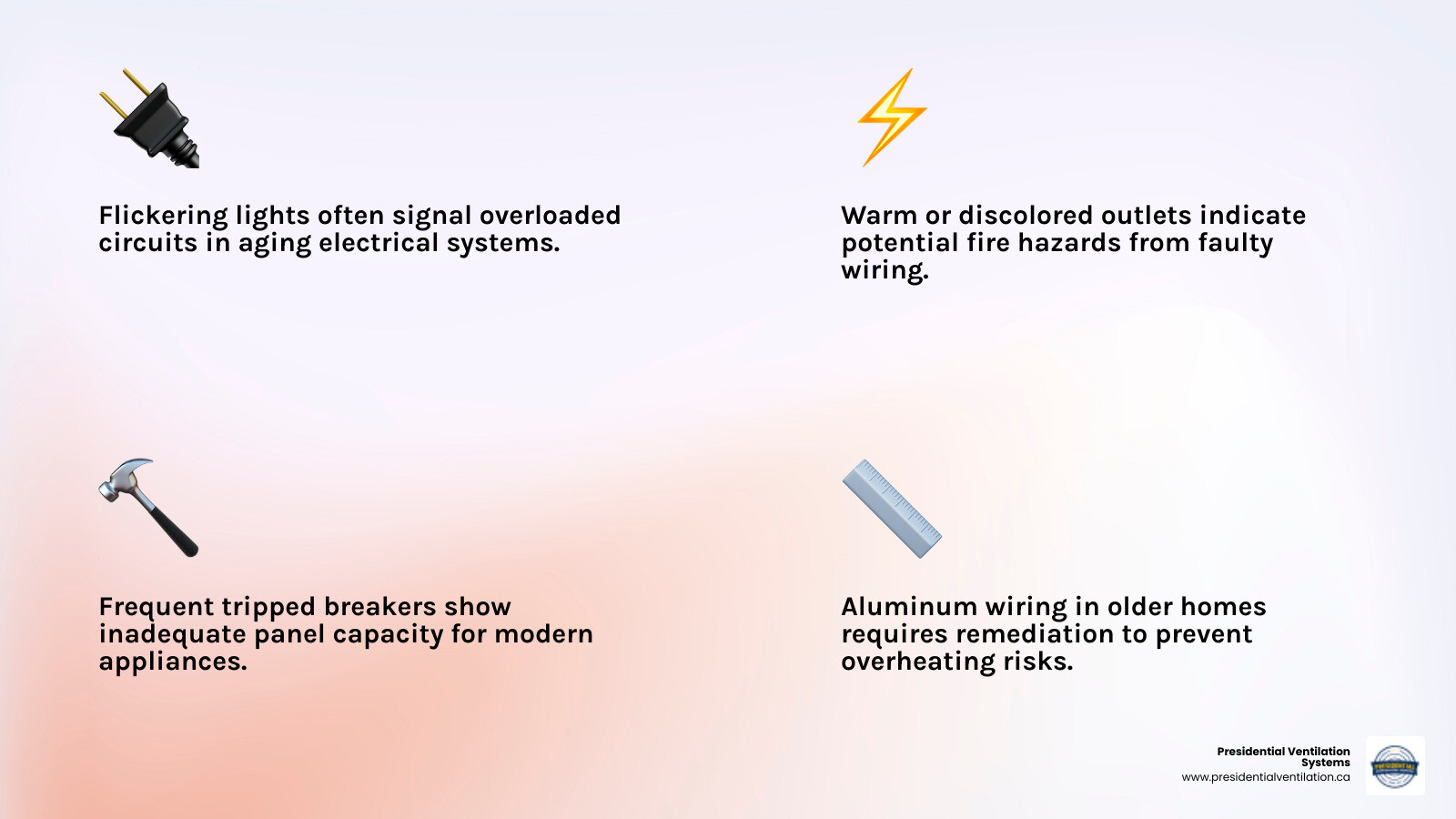
Many Fall River homeowners don't realize their electrical system is outdated until something goes wrong — a tripped breaker, flickering lights, or an outlet that runs warm to the touch. Older homes in the area are especially prone to these issues, since electrical panels and wiring that were standard decades ago simply weren't built to handle today's power demands.
Finding the right electrician isn't just about getting the job done. It's about making sure the work is safe, up to code, and built to last. That matters even more in a community like Fall River, where a mix of newer builds and older homes means electrical needs can vary a lot from one property to the next.
When we talk about the best electrical in Fall River, NS, we aren't just talking about someone who can swap out a light fixture. We are talking about professionals who hold the gold standard of the trade: Red Seal certification. In Canada, a Red Seal signifies that an electrician has completed a rigorous four-year apprenticeship and passed a national exam. This ensures they have the deep technical knowledge required to navigate the complexities of both residential and commercial systems.
Safety is the cornerstone of quality electrical work. For homeowners in Fall River, this means hiring contractors who adhere strictly to the Canadian Electrical Code and local Nova Scotia Power (NSP) regulations. Whether it is a quick repair or a massive renovation, the best providers prioritize Electrical Services Safety Canada to prevent fire hazards and equipment failure.
Local expertise also matters. Fall River has a unique landscape of properties, from lakeside retreats to sprawling suburban lots. A contractor familiar with the specific challenges of the area—such as well pump electrical requirements or exterior lighting for large properties—is invaluable. At Presidential Ventilation, we bring over 30 years of experience to every job, ensuring that our Electrical Services Fall River NS meet the highest possible standards for reliability and longevity.
The scope of work for a high-quality electrician is broad. It starts with the "heart" of your home’s electrical system: the panel. Many older homes in the Halifax Regional Municipality still rely on outdated fuse boxes. While these were sufficient in the 1970s, they often struggle with modern electronics and high-draw appliances.
One of the most common requests we see is a Panel Upgrade. Switching from a fuse box to a modern breaker panel isn't just a matter of convenience; it’s a significant safety improvement. Breakers are more sensitive to overloads and much easier to reset than replacing a blown fuse. Furthermore, many insurance companies now require a transition to breakers before they will provide or renew a home policy.
If your home was built between the mid-1960s and the late 1970s, there is a chance it contains aluminum wiring. While not inherently "bad," aluminum requires specific termination methods to prevent overheating at connection points. The best electrical in Fall River, NS involves thorough inspections to identify these risks. We provide comprehensive Electrical Services Halifax NS Complete Guide resources to help homeowners understand when a full rewire or simple remediation is necessary.
Beyond safety, electrical experts help enhance the beauty and functionality of your home. This includes installing recessed "pot" lights, under-cabinet lighting in kitchens, and sophisticated exterior security lighting.
| Feature | Old Fuse Box | Modern Breaker Panel |
|---|---|---|
| Safety Mechanism | Wire filament melts (fuse blows) | Mechanical switch trips |
| Capacity | Often limited to 60A or 100A | Regularly 200A or higher |
| Expansion | Very difficult to add new circuits | Easy to add circuits for renovations |
| Insurance | May lead to higher premiums | Preferred by all insurers |
| User Friendly | Requires keeping spare fuses | Simple flip of a switch |
As we move toward a more "electric" lifestyle—think electric vehicle (EV) chargers and high-efficiency appliances—the standard 100A service is becoming obsolete. Upgrading to a 200A service provides the "headroom" your home needs to grow.
This process often involves more than just a new box on the wall. It may require an electrical mast repair or replacement to ensure the wires coming from the street are safely secured to your home. Whether you are looking for Electrical Services Bedford NS or Electrical Services Dartmouth NS, a 200A upgrade is considered one of the best ways to future-proof your property's value and utility.
Modern homes have specialized needs that require dedicated circuits. A dedicated circuit is a single path of electricity that serves only one appliance. This prevents your microwave from tripping the breaker every time the toaster starts.
Our Electrical Hookup Services cover a wide range of needs:
In Nova Scotia, electrical work isn't a "DIY" project. It is strictly regulated by Nova Scotia Power (NSP). Any significant change to your system requires a permit and a subsequent inspection by an NSP representative.
A critical document in our industry is Bulletin B-02-022. This bulletin outlines the specific requirements that must be met when a homeowner upgrades their service. For example, if you upgrade your panel, the code often requires you to bring other parts of the house up to current safety standards. This might include:
Whether we are providing Electrical Services Truro NS or Electrical Services Mount Uniacke NS, we handle the entire permitting process for our clients. We know exactly what the inspectors are looking for, which prevents unnecessary delays and ensures your home is safe for your family.
The actual physical work of swapping a panel usually takes about one full day for a team of two electricians. However, the "total" time can be longer. Because the power must be disconnected by Nova Scotia Power and then inspected before it is reconnected, we are often at the mercy of NSP’s scheduling. In some cases, scheduling the inspection can take anywhere from a few weeks to a few months. When we provide Electrical Services Upper Sackville NS, we always advise clients to plan ahead to account for these external timelines.
Think of a Red Seal as a master’s degree in electricity. It means the technician has thousands of hours of on-the-job training and has proven their knowledge of national standards. This certification is your best defense against "shortcut" contractors who might leave you with hidden fire hazards. Our Electrical Experts Beaver Bank NS Guide further explains why choosing certified pros is the only way to ensure your insurance remains valid and your home remains safe.
If your home is more than 25 years old, we recommend a safety evaluation every 3 to 5 years. Electrical components, like anything else, wear out over time. Connections can loosen, insulation on wires can become brittle, and older panels can lose their ability to trip reliably. A preventative maintenance check can catch these issues before they turn into emergencies. For more tips on maintaining your home, check out our Electrical Beaver Bank NS Guide.
Choosing the best electrical in Fall River, NS comes down to trust, experience, and a commitment to doing things the right way. Your home’s electrical system is far too important to leave to chance or uncertified "handymen."
At Presidential Ventilation Systems, we’ve spent over three decades building a reputation for excellence across Nova Scotia. We don't just fix wires; we provide peace of mind. From the moment you call us for a quote to the final NSP inspection, our team of Red Seal professionals treats your home with the respect and care it deserves.
If you are ready to upgrade your panel, install a new appliance, or simply want to ensure your older home is safe, we are here to help. Contact us today to experience the professional standard of Electrical Services Fall River NS.