


What makes Daikin systems different comes down to a handful of core advantages that set them apart in a crowded market:
If you live in Nova Scotia, where winters are long and utility expenses climb fast, those differences aren't just marketing — they translate directly into a warmer home, lower energy usage, and a system built to last.
Most climate control systems work like a light switch: fully on or fully off. Daikin systems work more like a dimmer, constantly fine-tuning output to match what your home actually needs at any given moment. The result is steadier temperatures, quieter operation, and less wear on the equipment over time.
With over 100 years of HVAC innovation and more than one million units supplied annually to homes and businesses worldwide, Daikin has earned its reputation as a global leader — and Nova Scotia homeowners are increasingly discovering why.
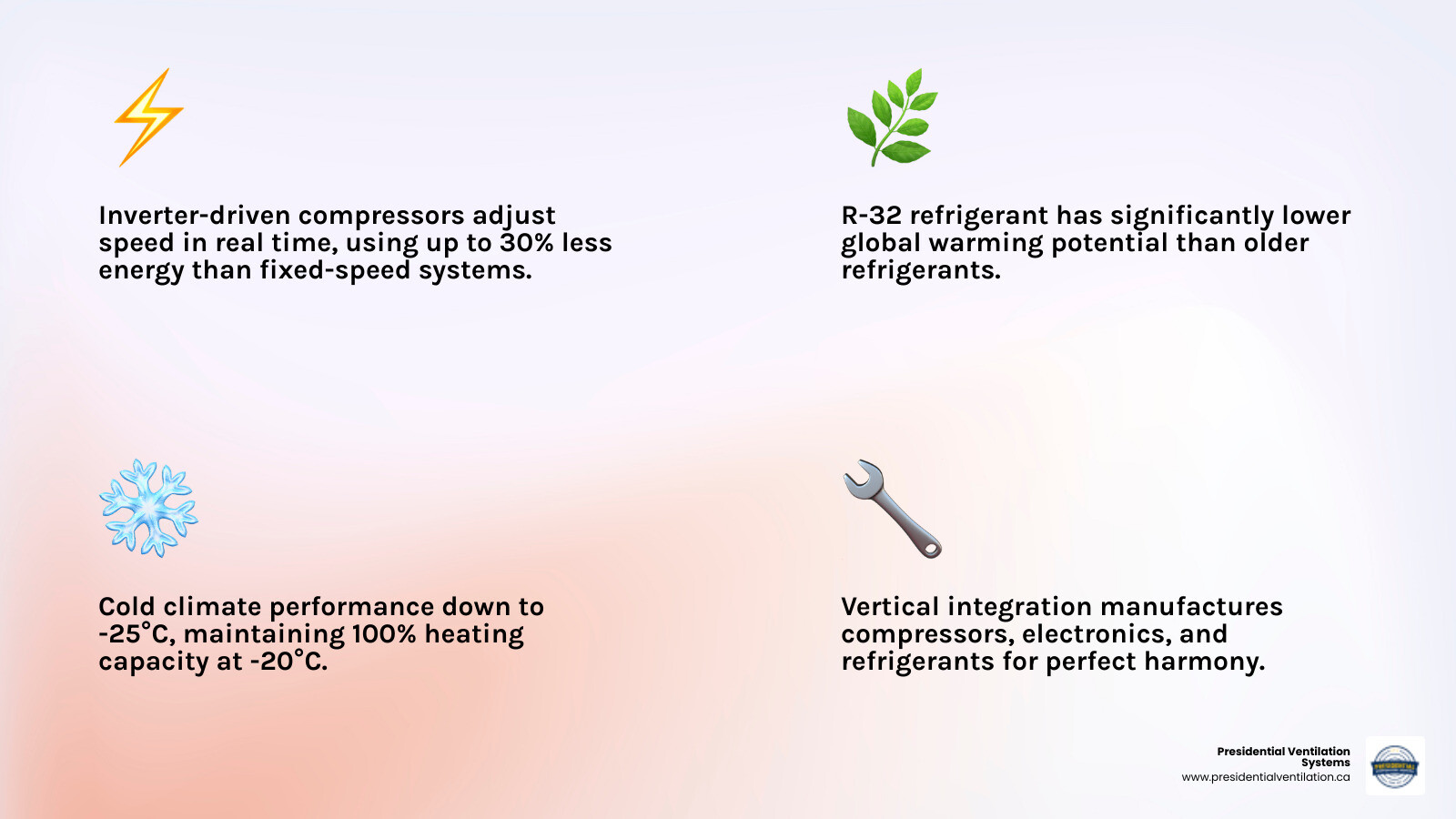
When we look at the HVAC industry in April 2026, it is clear that not all systems are created equal. At the heart of Why Daikin stands a philosophy of total control. Unlike many other brands that assemble parts from various third-party suppliers, Daikin practices "vertical integration." This means they design and manufacture their own compressors, electronic boards, and even the refrigerants that circulate through the coils.
This level of oversight is a major part of what makes daikin systems different. By controlling every proprietary component, Daikin ensures that the motor, the software, and the chemistry of the refrigerant work in perfect harmony. With over 100 years of innovation, they have moved beyond simply "generating" warmth. Instead, they utilize advanced thermal transfer technology to move existing energy from the outside air into your home. Even when it feels freezing outside in Halifax or Dartmouth, there is still thermal energy present in the air. Daikin’s systems are engineered to extract that energy with incredible precision, providing a sustainable, energy-saving solution that reduces your carbon footprint while keeping your living room cozy.
If you’ve ever lived in a home with a traditional furnace, you know the "on-off" cycle well. The warmth blasts on, the house gets too hot, the system shuts off, and then you shiver until it kicks back in. This is where the Daikin Fit System changes the game.
The Daikin FIT is a side-discharge, compact outdoor unit that utilizes an inverter-driven compressor. Think of it like a professional runner: a non-inverter system is like a sprinter who runs at 100% speed, stops to rest, and then sprints again—a very inefficient way to travel. A Daikin inverter is like a marathon runner who maintains a steady, efficient pace. By modulating the motor speed, the system uses up to 30% less power than traditional units.
Furthermore, the FIT series is incredibly quiet. In quiet mode, it operates as low as 45dBA. To put that in perspective, that is quieter than a common electric toothbrush! This makes it ideal for homes in Bedford or Sackville where houses might be closer together, ensuring you don't disturb your neighbors while staying cool in the summer or warm in the winter. For those asking What is a Daikin Fit, it is essentially the intersection of premium performance and space-saving design.
Beyond just saving power, the inverter technology significantly improves indoor air quality and comfort. Because the system runs more consistently at lower speeds, it provides superior humidity control. Instead of quick bursts that leave the air feeling "clammier," the steady airflow allows the coils to pull more moisture out of the air during our humid Nova Scotia summers. This constant operation also leads to less wear and tear on the internal components, as the system avoids the high-stress "hard starts" associated with traditional HVAC units. To keep these advanced systems running at peak performance, we always recommend regular Daikin System Maintenance to ensure filters are clean and the refrigeration cycle is unobstructed.
In our region, "cold climate performance" isn't a luxury—it’s a necessity. This is where the Aurora Series truly shines. While some standard systems begin to lose their effectiveness as the temperature drops toward zero, the Daikin Aurora is built for the "True North."
It can maintain 100% performance capacity at temperatures as low as -20°C (-4°F) and continues to operate efficiently down to -25°C. With an HSPF2 rating of 12.5, it is one of the most efficient ways to manage temperature in a home in the Daikin Atlantic Halifax NS region. This means you can rely on all-electric operation throughout the vast majority of the winter without needing to switch over to expensive backup energy sources.
Daikin is leading the industry’s shift toward more environmentally friendly refrigerants. Most older systems use R-410A, but Daikin has pioneered the use of R-32. Why does this matter? R-32 has a Global Warming Potential (GWP) that is one-third that of R-410A. It is also more efficient, providing up to 12% more cooling and 18% more thermal capacity than older models.
| Feature | R-32 Refrigerant | Traditional R-410A |
|---|---|---|
| Global Warming Potential | Low (Approx. 675) | High (Approx. 2,088) |
| Cooling Efficiency | 12% Higher | Standard |
| Thermal Efficiency | 18% Higher | Standard |
| Material Usage | Less Refrigerant Needed | Higher Volume Needed |
To manage this high-tech hardware, Daikin offers the Daikin One+ smart thermostat. This isn't just a basic wall dial; it features two-way communication. The thermostat "talks" to the outdoor unit and the indoor air handler, sharing data in real-time. This allows for remote monitoring and even remote troubleshooting. If you are managing a property in Burnside or a home in Fall River, you can adjust your settings from your smartphone, ensuring your home is the perfect temperature the moment you walk through the door. For business owners, our Daikin Commercial Systems Guide highlights how these smart controls can scale to manage larger spaces with the same precision.
Every home in Nova Scotia is unique. A historic home in the South End of Halifax might not have the space for ductwork, while a new build in Indigo Shores might be designed for a full central air system. What makes daikin systems different is the sheer variety of configurations available.
Whether you are looking for Daikin Halifax NS solutions for a single room or a hybrid system that pairs a modern unit with your existing furnace for the ultimate safety net, there is a Daikin model designed to fit the task.
Choosing a climate control system is a long-term investment, and you want to know that the company stands behind their product. Daikin offers an industry-leading Up to 12-Year Parts Limited Warranty on many of their residential models. However, the technology is only as good as the installation.
At Presidential Ventilation Systems, we have over 30 years of experience serving the Halifax Regional Municipality. As a Daikin Comfort Pro Dealer Halifax NS, we are held to the highest standards of service and technical expertise. Our Daikin Technicians undergo rigorous training to ensure they understand the nuances of inverter technology and R-32 refrigerant handling.
We don't just install the unit and disappear. We provide comprehensive Daikin Warranty Service to ensure your system remains efficient for its entire 15 to 20-year lifespan. From Upper Sackville to Eastern Passage, we pride ourselves on being the local experts that homeowners trust for reliable, year-round comfort.
Traditional electric baseboard heaters and oil furnaces operate at roughly 100% efficiency at best (1kW of energy in = 1kW of thermal output). Daikin systems move energy rather than creating it, allowing them to deliver 4kW of thermal energy for every 1kW of power used. This results in up to 4X the efficiency and can save homeowners up to 50% on their annual utility expenses.
Yes! Daikin’s Air-to-Water technology is a specialized solution that can provide both space temperature management and domestic warm water. The Residential High Temperature models can warm water up to 80°C, which is sufficient for high-temperature radiators and all your shower and kitchen needs.
Daikin systems are among the quietest in the industry. The Daikin FIT, for example, operates at sound levels as low as 45dBA in quiet mode. For comparison, a typical conversation is about 60dBA. This is achieved through inverter technology, which allows the fans and compressors to ramp up and down slowly rather than clattering to a start at full speed.
In home comfort, what makes daikin systems different is a relentless commitment to innovation, sustainability, and user experience. By combining advanced inverter technology with environmentally friendly R-32 refrigerant and robust cold-climate engineering, Daikin provides a level of comfort that traditional systems simply cannot match.
Whether you are in Bedford, Cole Harbour, or Timberlea, upgrading to a Daikin system means choosing a future of lower utility costs, quieter nights, and a smaller carbon footprint. With premium features like the Aurora Series’ deep-freeze performance and the smart connectivity of the Daikin One+ thermostat, you aren't just buying a solution—you're investing in a smarter way to live.
Ready to experience the Daikin difference for yourself? Contact a Daikin Halifax NS expert today at Presidential Ventilation Systems, and let us help you find the perfect fit for your home.

What makes Daikin systems different comes down to a handful of core advantages that set them apart in a crowded market:
If you live in Nova Scotia, where winters are long and utility expenses climb fast, those differences aren't just marketing — they translate directly into a warmer home, lower energy usage, and a system built to last.
Most climate control systems work like a light switch: fully on or fully off. Daikin systems work more like a dimmer, constantly fine-tuning output to match what your home actually needs at any given moment. The result is steadier temperatures, quieter operation, and less wear on the equipment over time.
With over 100 years of HVAC innovation and more than one million units supplied annually to homes and businesses worldwide, Daikin has earned its reputation as a global leader — and Nova Scotia homeowners are increasingly discovering why.
When we look at the HVAC industry in April 2026, it is clear that not all systems are created equal. At the heart of Why Daikin stands a philosophy of total control. Unlike many other brands that assemble parts from various third-party suppliers, Daikin practices "vertical integration." This means they design and manufacture their own compressors, electronic boards, and even the refrigerants that circulate through the coils.
This level of oversight is a major part of what makes daikin systems different. By controlling every proprietary component, Daikin ensures that the motor, the software, and the chemistry of the refrigerant work in perfect harmony. With over 100 years of innovation, they have moved beyond simply "generating" warmth. Instead, they utilize advanced thermal transfer technology to move existing energy from the outside air into your home. Even when it feels freezing outside in Halifax or Dartmouth, there is still thermal energy present in the air. Daikin’s systems are engineered to extract that energy with incredible precision, providing a sustainable, energy-saving solution that reduces your carbon footprint while keeping your living room cozy.
If you’ve ever lived in a home with a traditional furnace, you know the "on-off" cycle well. The warmth blasts on, the house gets too hot, the system shuts off, and then you shiver until it kicks back in. This is where the Daikin Fit System changes the game.
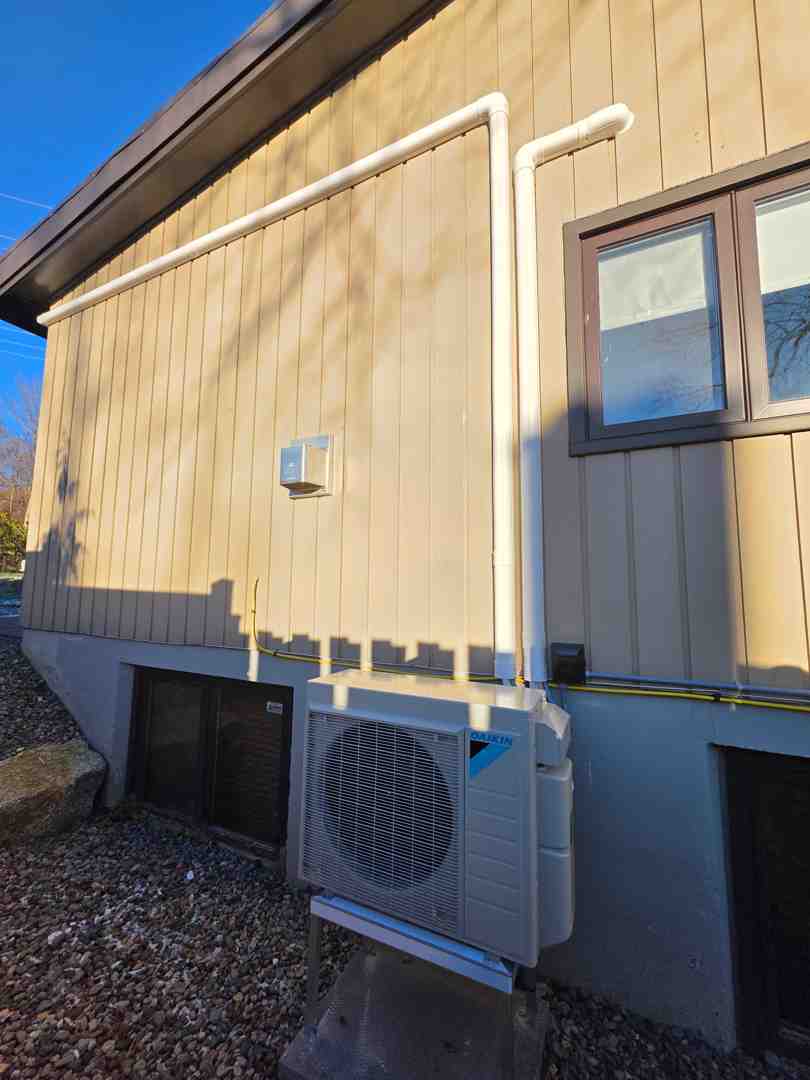
The Daikin FIT is a side-discharge, compact outdoor unit that utilizes an inverter-driven compressor. Think of it like a professional runner: a non-inverter system is like a sprinter who runs at 100% speed, stops to rest, and then sprints again—a very inefficient way to travel. A Daikin inverter is like a marathon runner who maintains a steady, efficient pace. By modulating the motor speed, the system uses up to 30% less power than traditional units.
Furthermore, the FIT series is incredibly quiet. In quiet mode, it operates as low as 45dBA. To put that in perspective, that is quieter than a common electric toothbrush! This makes it ideal for homes in Bedford or Sackville where houses might be closer together, ensuring you don't disturb your neighbors while staying cool in the summer or warm in the winter. For those asking What is a Daikin Fit, it is essentially the intersection of premium performance and space-saving design.
Beyond just saving power, the inverter technology significantly improves indoor air quality and comfort. Because the system runs more consistently at lower speeds, it provides superior humidity control. Instead of quick bursts that leave the air feeling "clammier," the steady airflow allows the coils to pull more moisture out of the air during our humid Nova Scotia summers. This constant operation also leads to less wear and tear on the internal components, as the system avoids the high-stress "hard starts" associated with traditional HVAC units. To keep these advanced systems running at peak performance, we always recommend regular Daikin System Maintenance to ensure filters are clean and the refrigeration cycle is unobstructed.
In our region, "cold climate performance" isn't a luxury—it’s a necessity. This is where the Aurora Series truly shines. While some standard systems begin to lose their effectiveness as the temperature drops toward zero, the Daikin Aurora is built for the "True North."
It can maintain 100% performance capacity at temperatures as low as -20°C (-4°F) and continues to operate efficiently down to -25°C. With an HSPF2 rating of 12.5, it is one of the most efficient ways to manage temperature in a home in the Daikin Atlantic Halifax NS region. This means you can rely on all-electric operation throughout the vast majority of the winter without needing to switch over to expensive backup energy sources.
Daikin is leading the industry’s shift toward more environmentally friendly refrigerants. Most older systems use R-410A, but Daikin has pioneered the use of R-32. Why does this matter? R-32 has a Global Warming Potential (GWP) that is one-third that of R-410A. It is also more efficient, providing up to 12% more cooling and 18% more thermal capacity than older models.
| Feature | R-32 Refrigerant | Traditional R-410A |
|---|---|---|
| Global Warming Potential | Low (Approx. 675) | High (Approx. 2,088) |
| Cooling Efficiency | 12% Higher | Standard |
| Thermal Efficiency | 18% Higher | Standard |
| Material Usage | Less Refrigerant Needed | Higher Volume Needed |
To manage this high-tech hardware, Daikin offers the Daikin One+ smart thermostat. This isn't just a basic wall dial; it features two-way communication. The thermostat "talks" to the outdoor unit and the indoor air handler, sharing data in real-time. This allows for remote monitoring and even remote troubleshooting. If you are managing a property in Burnside or a home in Fall River, you can adjust your settings from your smartphone, ensuring your home is the perfect temperature the moment you walk through the door. For business owners, our Daikin Commercial Systems Guide highlights how these smart controls can scale to manage larger spaces with the same precision.
Every home in Nova Scotia is unique. A historic home in the South End of Halifax might not have the space for ductwork, while a new build in Indigo Shores might be designed for a full central air system. What makes daikin systems different is the sheer variety of configurations available.
Whether you are looking for Daikin Halifax NS solutions for a single room or a hybrid system that pairs a modern unit with your existing furnace for the ultimate safety net, there is a Daikin model designed to fit the task.
Choosing a climate control system is a long-term investment, and you want to know that the company stands behind their product. Daikin offers an industry-leading Up to 12-Year Parts Limited Warranty on many of their residential models. However, the technology is only as good as the installation.
At Presidential Ventilation Systems, we have over 30 years of experience serving the Halifax Regional Municipality. As a Daikin Comfort Pro Dealer Halifax NS, we are held to the highest standards of service and technical expertise. Our Daikin Technicians undergo rigorous training to ensure they understand the nuances of inverter technology and R-32 refrigerant handling.
We don't just install the unit and disappear. We provide comprehensive Daikin Warranty Service to ensure your system remains efficient for its entire 15 to 20-year lifespan. From Upper Sackville to Eastern Passage, we pride ourselves on being the local experts that homeowners trust for reliable, year-round comfort.
Traditional electric baseboard heaters and oil furnaces operate at roughly 100% efficiency at best (1kW of energy in = 1kW of thermal output). Daikin systems move energy rather than creating it, allowing them to deliver 4kW of thermal energy for every 1kW of power used. This results in up to 4X the efficiency and can save homeowners up to 50% on their annual utility expenses.
Yes! Daikin’s Air-to-Water technology is a specialized solution that can provide both space temperature management and domestic warm water. The Residential High Temperature models can warm water up to 80°C, which is sufficient for high-temperature radiators and all your shower and kitchen needs.
Daikin systems are among the quietest in the industry. The Daikin FIT, for example, operates at sound levels as low as 45dBA in quiet mode. For comparison, a typical conversation is about 60dBA. This is achieved through inverter technology, which allows the fans and compressors to ramp up and down slowly rather than clattering to a start at full speed.
In home comfort, what makes daikin systems different is a relentless commitment to innovation, sustainability, and user experience. By combining advanced inverter technology with environmentally friendly R-32 refrigerant and robust cold-climate engineering, Daikin provides a level of comfort that traditional systems simply cannot match.
Whether you are in Bedford, Cole Harbour, or Timberlea, upgrading to a Daikin system means choosing a future of lower utility costs, quieter nights, and a smaller carbon footprint. With premium features like the Aurora Series’ deep-freeze performance and the smart connectivity of the Daikin One+ thermostat, you aren't just buying a solution—you're investing in a smarter way to live.
Ready to experience the Daikin difference for yourself? Contact a Daikin Halifax NS expert today at Presidential Ventilation Systems, and let us help you find the perfect fit for your home.
When it comes to what HVAC brands perform best in a new construction home in Atlantic Canada, the answer depends on a few key factors: cold-climate performance, coastal durability, and long-term energy efficiency. Atlantic Canada's winters are cold, its air is humid, and its coastal conditions are hard on equipment. Choosing the wrong brand — or the wrong system type — means years of higher energy bills, uncomfortable rooms, and costly repairs.
Here are the top HVAC brands consistently recommended for new construction homes in Atlantic Canada:
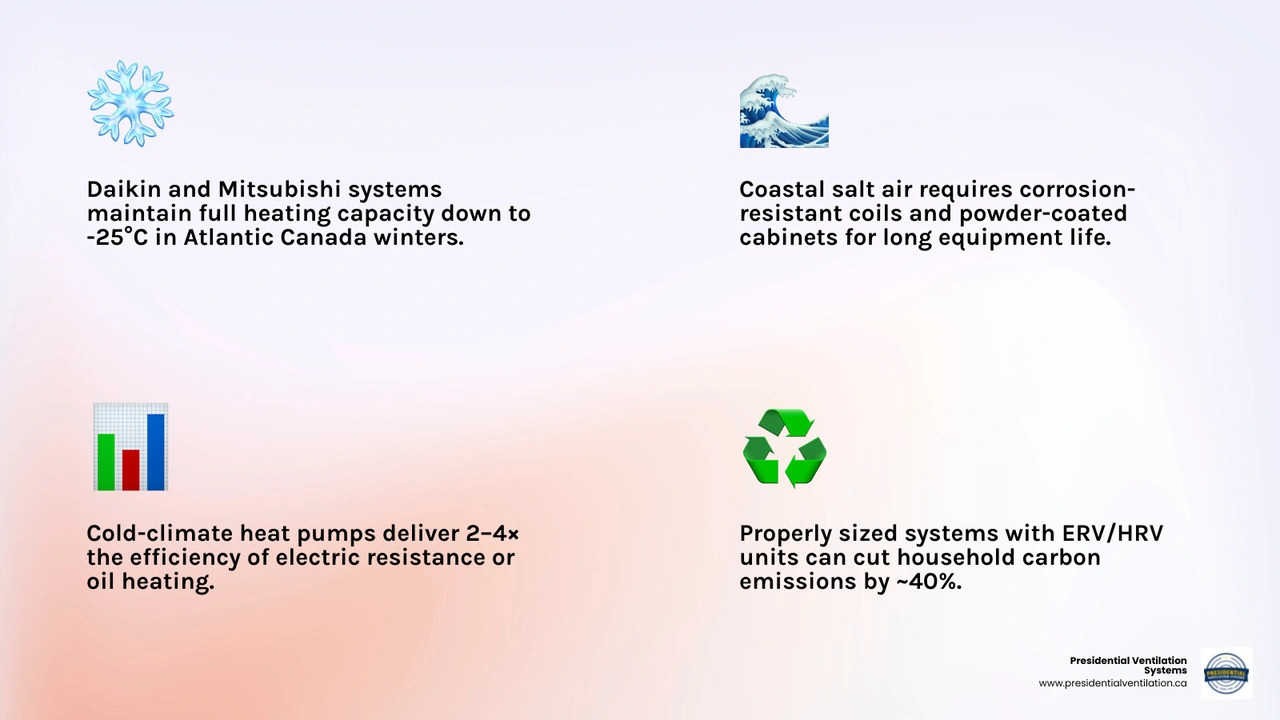
The best choice for most new Atlantic Canadian builds is a Daikin or Mitsubishi cold-climate system, paired with properly designed ductwork and an HRV or ERV unit for fresh air ventilation. Modern high-efficiency systems are two to four times more efficient than traditional oil or electric resistance heating, and they can reduce household carbon emissions by roughly 40 percent compared to conventional systems.
That said, brand alone does not guarantee performance. Installation quality, proper system sizing, and duct design are just as important as the nameplate on the equipment.
What hvac brands perform best in a new construction home in atlantic canada terms you need:
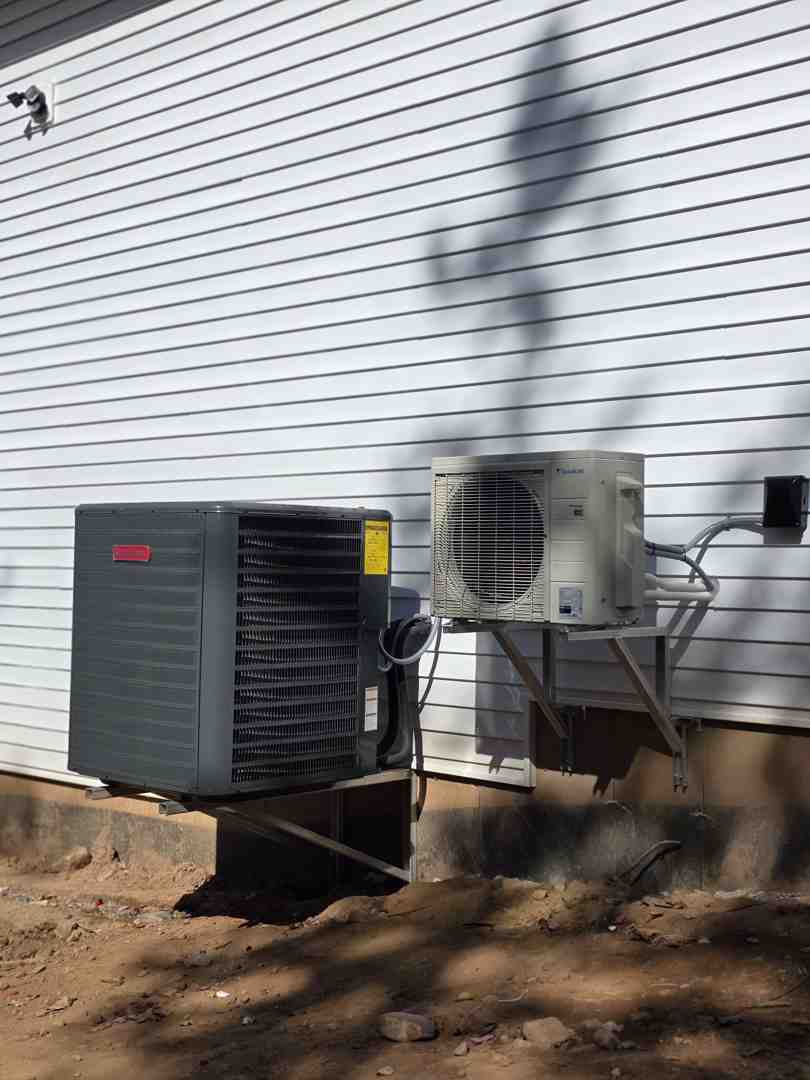
When building a new home in coastal communities like Halifax, Dartmouth, Bedford, or Fall River, the local climate presents unique challenges. The air is heavily saturated with moisture and salt, which can accelerate corrosion on standard outdoor condenser units. To withstand these harsh maritime elements, selecting a brand with superior build quality and specialized protective coatings is essential.
In our three decades of serving homeowners across the Halifax Regional Municipality and surrounding areas, we have analyzed how different manufacturers hold up to our local elements. While several major manufacturers offer reliable options, their performance under real-world coastal conditions varies significantly.
To help you make an informed decision for your new build, we have compiled a detailed comparison of the top five HVAC brands in Canada, evaluating their strengths, weaknesses, and ideal applications:
| Brand | Heating Efficiency (HSPF2) | Cooling Efficiency (SEER2) | Key Strengths | Best For |
|---|---|---|---|---|
| Daikin | Up to 12.5 | Up to 23.0 | 12-year parts & compressor warranty, exceptional cold-climate performance, advanced inverter technology | Premium whole-home ducted & ductless systems in coastal areas |
| Mitsubishi Electric | Up to 12.5 | Up to 23.1 | Extreme cold-weather operation (down to -30°C), legendary mechanical reliability, extensive service network | Custom new builds in exposed, high-wind locations |
| Fujitsu | Up to 11.0 | Up to 22.0 | Consistent performance, compact outdoor footprints, reliable parts distribution | Homes with limited outdoor installation space |
| Lennox | Up to 10.3 | Up to 28.0 | High-end cooling efficiency, sophisticated smart home integration, precise humidity controls | Large, multi-zone ducted custom homes |
| Goodman | Up to 8.8 | Up to 22.5 | Solid basic performance, widely available parts, straightforward mechanical designs | Standard builds focusing on simple, reliable comfort |
Selecting the right manufacturer is only the first step. To ensure your new home remains comfortable year-round, you must also understand how to evaluate the specific performance metrics that matter most in our region. For a deeper look at brand selection, you can read our guide on Choosing the Right HVAC Brand for Nova Scotia.
To determine what hvac brands perform best in a new construction home in atlantic canada, we must look beyond marketing claims and focus on standardized industry ratings. In recent years, testing standards in Canada transitioned to the more rigorous SEER2 and HSPF2 metrics. These updated standards provide a more accurate representation of how equipment performs under real-world static pressure and fluctuating outdoor temperatures.
When evaluating systems for a new build in areas like Sackville, Cole Harbour, or Eastern Passage, keep these key specifications in mind:
By focusing on these metrics, you can select a system that delivers consistent comfort during freezing winter nights and humid summer afternoons.
Daikin consistently stands out as a top performer for new construction projects in Nova Scotia. As the world's largest HVAC manufacturer, Daikin invests heavily in research and development to design systems specifically optimized for extreme climates. Their proprietary inverter compressor technology allows the system to adjust its output continuously, matching the precise thermal needs of your home rather than cycling on and off like traditional systems.
One of the most significant advantages of choosing Daikin for your new build is their unmatched warranty protection. When installed by a certified professional, Daikin offers a 12-year parts and compressor warranty, providing long-term peace of mind. To understand why this brand is highly regarded, explore our article on Why Daikin and learn What Makes Daikin Systems Different.
For new construction projects, the Daikin Fit system is particularly effective. Its side-discharge design has a much smaller footprint than traditional top-discharge systems, making it easy to install in tight spaces. It also operates at whisper-quiet noise levels, ensuring your outdoor living areas remain peaceful. You can read more about how this technology performs locally in our detailed breakdown of How Daikin Fit Ducted Systems Work in a New Construction Home in Nova Scotia.
A high-quality HVAC brand can only perform as well as the ductwork supporting it. In a new construction home, the design and installation of your air distribution system are critical to achieving balanced temperatures, quiet operation, and optimal energy efficiency. Poorly designed ducts can restrict airflow, increase system wear, and lead to drafty or uncomfortable rooms.
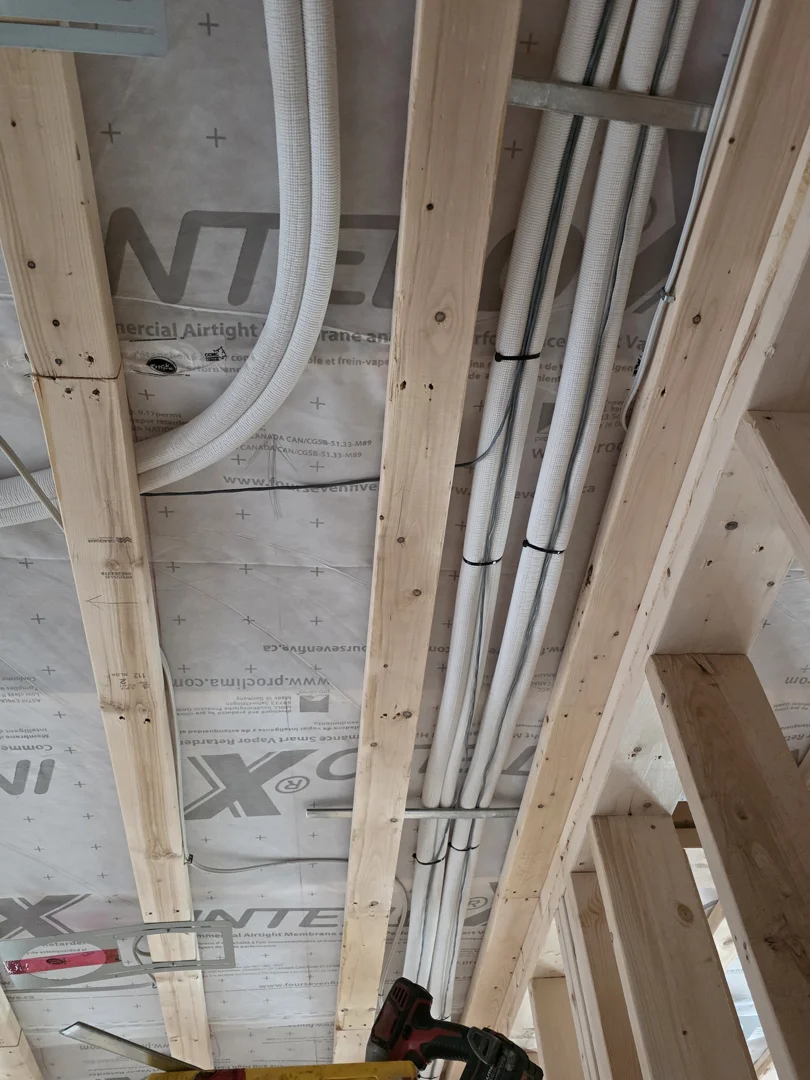
At Presidential Ventilation, we specialize in custom duct design and sheet metal fabrication for residential new builds. Our team ensures that every duct run is sized correctly, sealed tightly, and routed efficiently to minimize static pressure resistance. Proper planning during the early stages of your build is key to achieving a high-performance home. To learn more about optimizing your system layout, read our guide on How to Plan Your New Build HVAC in Nova Scotia.
When designing your new home in communities like Timberlea, Prospect, or Hubbards, you must decide between a central ducted system or a ductless multi-split layout. Both configurations offer distinct advantages depending on your architectural plans, layout requirements, and comfort preferences:
Choosing the right configuration depends on your home's unique layout and your family's lifestyle. For an in-depth comparison to help you choose, read our article on How to Decide Between Ducted and Ductless When Building a New Home in Nova Scotia.
A successful new construction project requires seamless coordination between different trades. The installation of modern, high-efficiency HVAC equipment must be carefully synchronized with your electrical contractor to ensure your main electrical panel has sufficient capacity and that all wiring is routed correctly.
In Nova Scotia, new homes typically require a 200-amp electrical service to comfortably accommodate modern climate control systems alongside other household appliances. Coordinating these installations early in the construction phase prevents costly delays and ensures that your outdoor units, indoor air handlers, and auxiliary heating elements are safely integrated. For a step-by-step overview of how to manage this process, see our guide on How to Coordinate Electrical and HVAC Installation in a New Build in Nova Scotia.
Modern building codes require new construction homes to be highly insulated and tightly sealed to prevent energy loss. While this tight envelope is excellent for energy efficiency, it can trap stale air, moisture, and indoor pollutants if the home lacks proper mechanical ventilation. In the humid coastal environments of Peggy's Cove, Shearwater, and Eastern Passage, managing indoor air quality is essential to prevent moisture buildup and maintain a healthy living environment.
Without continuous fresh air exchange, everyday activities like cooking, bathing, and cleaning can cause relative humidity levels to rise. This excess moisture can lead to condensation on windows, musty odors, and potential mold growth behind walls. Incorporating a dedicated ventilation system is critical to keeping your new home healthy and comfortable.
To maintain excellent indoor air quality without sacrificing energy efficiency, modern homes rely on mechanical ventilation systems. The two primary options are Heat Recovery Ventilators (HRVs) and Energy Recovery Ventilators (ERVs). Both systems exchange stale indoor air for fresh outdoor air while pre-conditioning the incoming air stream:
For most coastal homes in our service area, an ERV is highly recommended to help manage seasonal humidity.
Proper installation of an HRV or ERV system requires professional air balancing. This process involves measuring and adjusting the airflow rates of the supply and exhaust ducts to ensure the system operates under neutral pressure. If a home is under negative pressure, it can draw unfiltered outdoor air, moisture, and soil gases into the living space. If it is under positive pressure, warm, moist indoor air can be forced into wall cavities, where it can condense and cause structural damage.
Our technicians use specialized diagnostic equipment to balance your ventilation system during commissioning. This precise calibration ensures optimal moisture control, reliable fresh air distribution, and long-term protection for your home's structure.
The primary difference lies in how they handle moisture. An HRV (Heat Recovery Ventilator) only transfers sensible heat between the incoming and outgoing air streams. An ERV (Energy Recovery Ventilator) transfers both sensible heat and latent heat (moisture).
In Atlantic Canada, where summer humidity can be high, an ERV helps keep indoor humidity levels comfortable by preventing outdoor moisture from entering the home through the ventilation system. In contrast, during dry winter months, an ERV can help retain a comfortable level of indoor humidity.
Coastal humidity can elevate indoor relative humidity levels above the recommended 30% to 50% range. High indoor humidity creates an ideal environment for dust mites, allergens, and mold growth. It can also cause condensation on windows and cool surfaces, potentially damaging drywall and wood framing.
To maintain healthy indoor air quality in coastal areas like Halifax and Dartmouth, new homes require a combination of efficient cooling systems to remove moisture and balanced mechanical ventilation (such as an ERV) to introduce fresh, pre-dehumidified air.
Professional duct design ensures that your heating and cooling system can distribute air quietly and efficiently to every room. Proper design involves calculating the heating and cooling load of each space, determining the correct duct sizes, and minimizing bends and restrictions that increase static pressure.
Poorly designed ductwork can cause the system to work harder, leading to premature equipment wear, increased energy consumption, and noisy airflow. Custom sheet metal fabrication and professional installation ensure your system performs exactly as designed.
Building a new home in Atlantic Canada is an exciting journey, and choosing the right HVAC and ventilation system is one of the most important decisions you will make. By selecting a high-performing brand like Daikin, investing in professional duct design, and incorporating a balanced ERV or HRV system, you can ensure your new home remains comfortable, healthy, and energy-efficient for decades to come.
As a leading Daikin Comfort Pro Dealer with over 30 years of experience, Presidential Ventilation Systems Ltd. is proud to serve homeowners across the Halifax Regional Municipality, from Bedford and Sackville to Cole Harbour and Tantallon. Our team of skilled professionals specializes in custom duct fabrication, precise system commissioning, and high-quality installations tailored to our unique coastal climate.
To learn more about the advantages of working with our certified team, read about the Benefits of Choosing a Daikin Comfort Pro Dealer and see how we compare in Daikin Comfort Pro vs Standard HVAC Contractor. Ready to design the perfect climate control system for your new build? Explore Ducted and Ductless Solutions with Presidential Ventilation today.
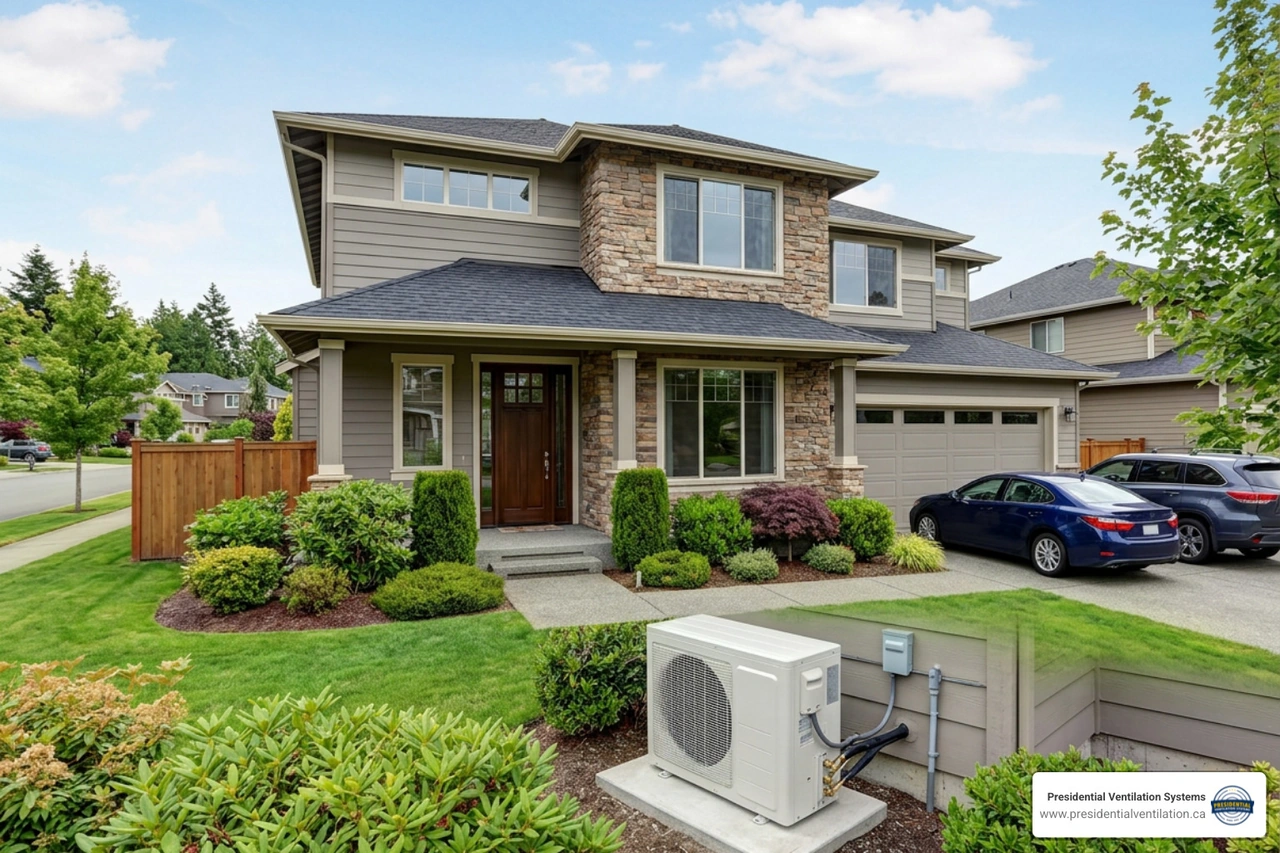
Understanding what Daikin or Lennox systems qualify for Efficiency Nova Scotia new construction programs is one of the most important steps you can take before breaking ground on a new build. Choose the right equipment and you unlock a tiered incentive structure worth significant savings. Choose the wrong one and you may miss eligibility entirely.
Here is a quick-reference answer to get you started:
Daikin Systems That Commonly Qualify:
Lennox Systems That Commonly Qualify:
Key Eligibility Thresholds to Know:
The Efficiency Nova Scotia Custom New Construction program rewards projects that outperform provincial baseline standards, and the HVAC system you specify plays a central role in hitting those targets. Whether you are building a single large commercial facility, a multi-unit residential building, or a long-term care facility, the path to qualifying runs through your equipment selection, your energy model, and your documentation.
This guide walks you through exactly what you need to know - from specific performance criteria for Daikin and Lennox systems, to modeling requirements, to how federal incentives layer on top of provincial ones.

To qualify for the Custom New Construction program administered by Efficiency Nova Scotia, projects must meet strict structural and energy-use criteria. This program is specifically tailored for commercial, industrial, institutional, and multi-unit residential buildings (MURBs).
To prove these savings, developers must submit a comprehensive whole-building energy model. This model simulates the building’s hourly energy performance over a full year, accounting for local weather patterns. The program accepts energy modeling completed in the following approved software platforms:
The energy model compares your proposed design—incorporating high-efficiency Daikin or Lennox heating, cooling, and ventilation equipment—against an NECB 2017 baseline building. The baseline HVAC system is determined automatically by the software based on your building type, size, and fuel source.
Navigating these modeling standards early in your design phase is crucial. By working with experienced professionals, you can structure your mechanical plans to maximize your eligible incentives.
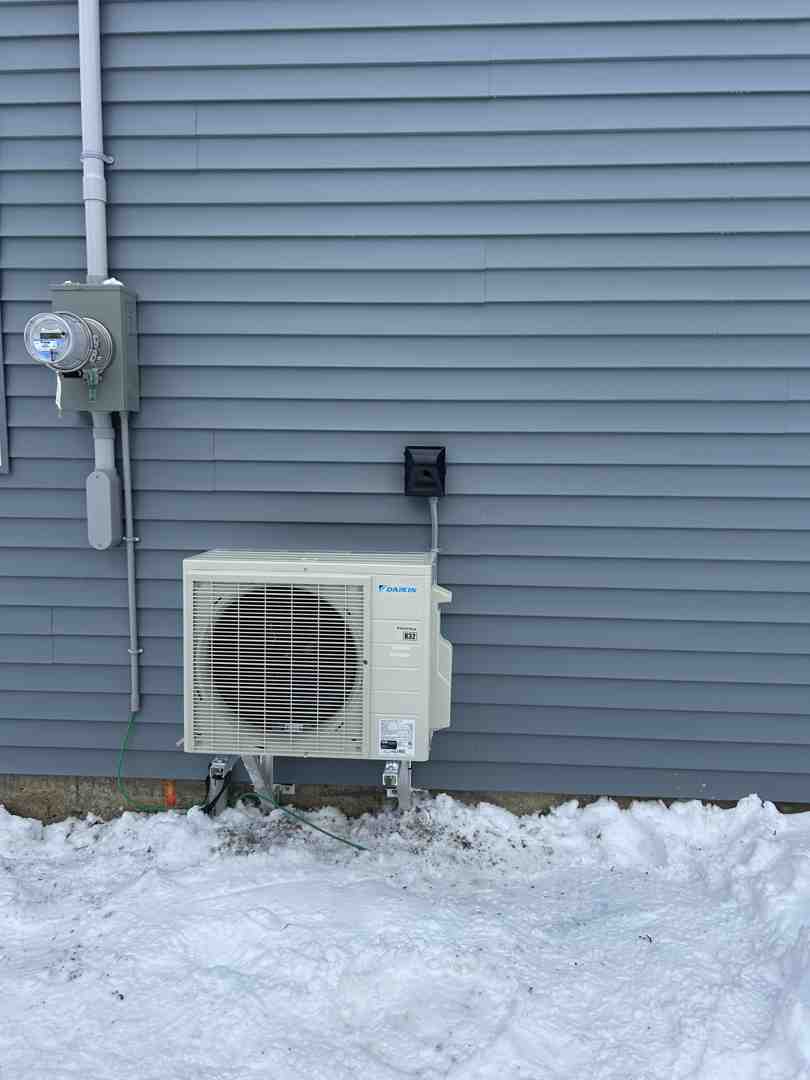
When selecting equipment to meet the 25% energy savings threshold, mechanical engineers and builders frequently turn to Daikin and Lennox. Both manufacturers offer advanced inverter-driven systems that deliver high seasonal efficiency and maintain capacity during cold winters.
To determine what Daikin or Lennox systems qualify for Efficiency Nova Scotia new construction programs, energy modelers look at specific performance metrics:
Every qualifying system must possess a valid Air-Conditioning, Heating, and Refrigeration Institute (AHRI) reference number to verify these ratings. Additionally, Lennox systems use a Qualified Manufacturer Identification Number (QMID)—specifically L7S0—to verify tax and efficiency compliance across all Lennox-owned brands.
For ducted and light commercial applications, specific product lines stand out for meeting or exceeding the rigorous standards required by energy models:
The Daikin Fit is a smart, ducted comfort system utilizing an inverter-driven outdoor compressor. Unlike traditional single-stage systems that cycle on and off, the Daikin Fit constantly adjusts its speed to match the heating or cooling load of the building.
The Lennox Ultimate Comfort System represents the pinnacle of Lennox engineering, pairing variable-capacity outdoor units with highly efficient air handlers.
Multi-unit residential buildings (MURBs), long-term care facilities, and mixed-fuel commercial spaces require specialized HVAC designs. For these larger projects, Variable Refrigerant Flow (VRF) systems are highly effective. VRF systems allow a single outdoor condensing unit to connect to multiple indoor zones, sharing heating and cooling energy across the building.
To help you evaluate your options for commercial and multi-unit designs, refer to the comparison table below:
| Feature / Specification | Daikin VRV Series (Variable Refrigerant Volume) | Lennox VRF Series |
|---|---|---|
| Compressor Technology | Inverter-driven scroll compressor | Inverter-driven scroll compressor |
| Zoning Capability | Up to 64 indoor units per outdoor circuit | Up to 64 indoor units per outdoor circuit |
| Heat Recovery Options | Yes (Simultaneous heating & cooling) | Yes (Simultaneous heating & cooling) |
| Low-Temp Heating Limit | Operation down to -13°F (-25°C) or lower | Operation down to -13°F (-25°C) or lower |
| Integration | Integrates with Daikin mini-splits and air handlers | Integrates with Lennox mini-splits and ducted coils |
| Common Applications | Large offices, MURBs, hotels, institutional | Offices, retail spaces, schools, MURBs |
Successfully qualifying a Daikin or Lennox system for the Custom New Construction program requires precise energy modeling that goes beyond simply inputting equipment efficiency ratings. The modeling professional must accurately account for real-world building physics and system interactions.
Under the Custom New Construction guidelines, simple R-value calculations for walls and roofs are insufficient. Modeling must incorporate detailed thermal bridging calculations. This accounts for heat loss through structural steel, concrete slab edges, and window frames. High thermal bridging increases the building’s heating load, which means your Daikin or Lennox system will need to work harder. Accurately modeling these thermal bridges ensures your HVAC system is sized correctly and that the energy savings are not overestimated.
To maintain indoor air quality while minimizing energy loss, continuously operating ventilation systems in commercial and multi-family buildings must include energy recovery.
For advanced designs incorporating geothermal loops or hybrid systems (e.g., a VRF system backed up by a boiler or fluid cooler), specialized modeling is required. The software must simulate ground heat exchanger temperatures over a multi-year period to ensure the Daikin or Lennox systems operate within their designed temperature envelopes.
One of the most common reasons energy models fail to gain approval from Efficiency Nova Scotia is excessive "unmet heating hours." An unmet hour occurs when the simulated HVAC system cannot maintain the indoor temperature setpoint within a specific thermal zone.
To qualify for the Custom New Construction program, a project must achieve a minimum of 25% total energy consumption reduction compared to a baseline building designed to NECB 2017 standards. Additionally, the building must demonstrate at least 100,000 kWh of annual electrical savings.
While the Energy Efficient Home Improvement Tax Credit (Section 25C) is a federal initiative under the U.S. Inflation Reduction Act, it provides an excellent framework for understanding how manufacturers certify high-efficiency equipment.
For projects with cross-border design teams or those utilizing equipment certified under these standard federal programs, manufacturer documentation is highly integrated. For example, Lennox uses a Qualified Manufacturer Identification Number (QMID) of L7S0 for IRS Form 5695 filings.
In Canada, and specifically within Nova Scotia, provincial incentives from Efficiency Nova Scotia act as the primary funding mechanism for new construction. While US-specific tax credits cannot be claimed on Canadian tax returns, the AHRI certificates and technical specifications required to qualify for those federal programs are the exact same documents used to prove eligibility to Efficiency Nova Scotia.
To successfully claim your incentives, you must provide a complete documentation package at various stages of the project:
Designing a high-performance new construction project requires balancing building envelope design, ventilation requirements, and heating and cooling equipment. Specifying qualifying Daikin or Lennox systems ensures your building meets the strict 25% energy savings and 100,000 kWh electrical reduction thresholds required by Efficiency Nova Scotia.
At Presidential Ventilation Systems Ltd., we bring over 30 years of experience to every project across the Halifax Regional Municipality and surrounding areas—including Dartmouth, Bedford, Lower Sackville, Waverley, Fall River, Mount Uniacke, and Timberlea. We understand the technical details of energy modeling, equipment selection, and system commissioning.
Whether you are designing a multi-unit residential building, a modern commercial space, or a large institutional facility, our team is here to help you select, install, and commission the ideal HVAC and ventilation systems for your project.