


How electrical planning for new construction differs from retrofit work in Atlantic Canada comes down to one core reality: starting fresh gives you total control, while working inside an existing building means working around what's already there.
Here's a quick comparison to answer that directly:
| Factor | New Construction | Retrofit |
|---|---|---|
| System design | Built from scratch to meet current code | Constrained by existing wiring, panels, and structure |
| Load calculations | Planned for full modern demand upfront | Must account for existing loads and capacity limits |
| Permitting | Single coordinated permit process | Triggered by scope of changes; varies by province |
| AFCI/GFCI requirements | Applied to all new circuits by default | Triggered when circuits are added or modified |
| Electrification integration | Designed in from day one | May require panel upgrades and structural workarounds |
| Budget predictability | More predictable | Higher risk of hidden surprises |
| Energy efficiency | Optimized from the start | Depends on envelope upgrades done alongside electrical work |
Atlantic Canada has some of the oldest housing stock in the country. Maritime provinces carry higher rates of residential oil heating than almost anywhere else in Canada, and buildings here account for a significant share of total greenhouse gas emissions — particularly in Nova Scotia. That means the pressure to electrify and upgrade is real, and growing fast.
Whether you're building new or upgrading an existing home, getting the electrical planning right from the beginning is what separates a smooth project from a complicated one. This guide breaks down exactly where those two paths diverge — and what it means for homeowners and builders across New Brunswick, Nova Scotia, PEI, and Newfoundland.
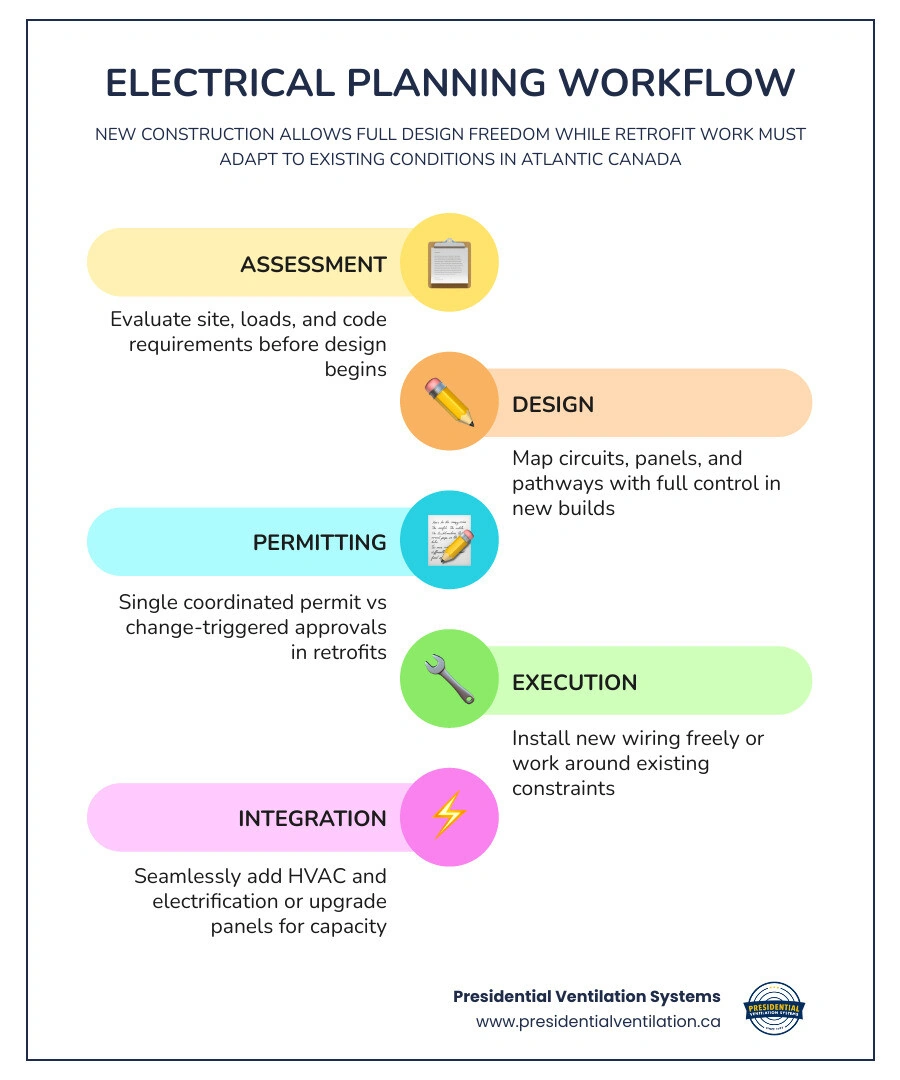
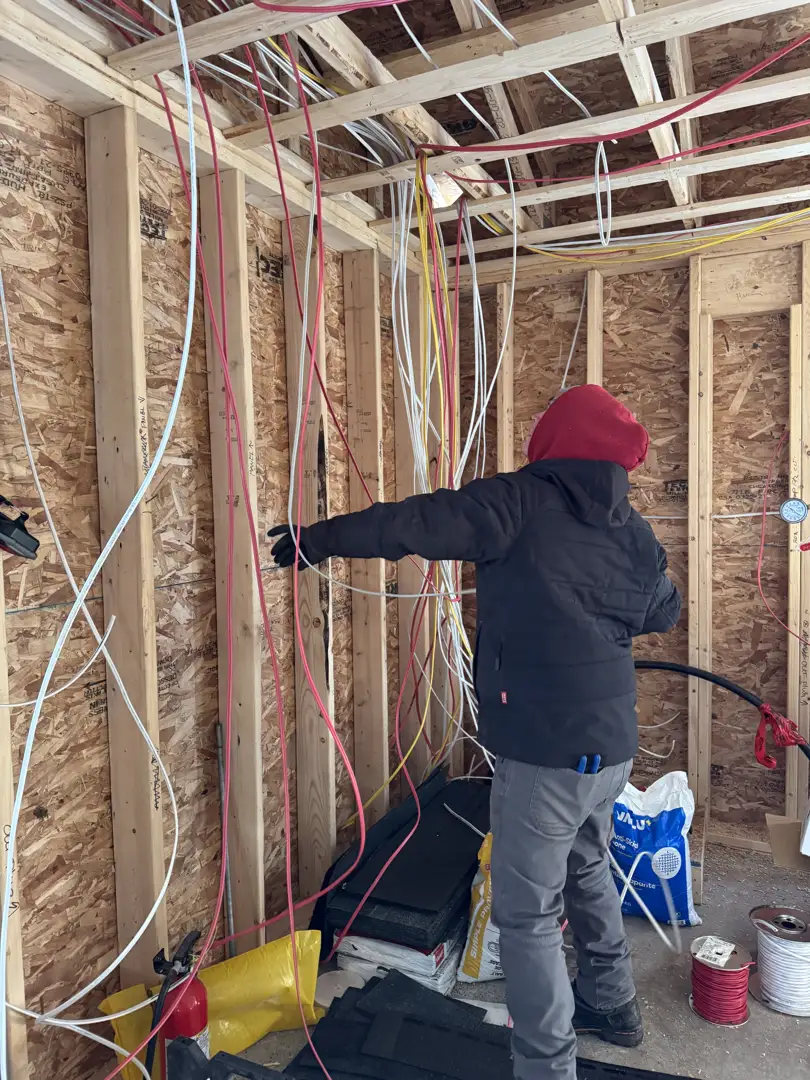
When we look at new construction, we are starting with a blank slate. System design is highly coordinated. We can map out the exact path of every wire, the precise location of the main electrical panel, and the distribution of subpanels without having to dodge existing plumbing, structural walls, or historical plaster.
For new builds, load calculations are straightforward. We calculate the total anticipated demand based on modern living: high-efficiency electric heating, ventilation systems, electric vehicle (EV) charging stations, and multiple heavy appliances. The grid capacity is assessed by the utility company upfront, and the service entrance is sized appropriately from day one—usually starting at 200 amps. To understand the baseline standards for modern wiring, our Electrical Wiring Guide 2025 details how these systems are structured under modern electrical codes.
In contrast, retrofit planning is an exercise in creative problem-solving. Instead of designing the ideal system, we must work backward from the existing infrastructure. Many older homes in historic neighborhoods of Halifax or Dartmouth still operate on older 100-amp services. When planning a retrofit, we must perform a detailed load calculation of the existing home to determine if the current system can handle any new electrical demands. If the panel is maxed out, we have to plan for a substantial system overhaul.
| Planning Step | New Construction | Retrofit Work |
|---|---|---|
| System Design | Fully optimized layout; unlimited routing paths behind open framing. | Constrained by finished walls, historic plaster, and existing utility paths. |
| Load Calculations | Based on known, newly specified appliances and modern heating systems. | Must balance existing historical loads with newly added electric appliances. |
| Grid Connection | Sized and approved by the utility prior to construction. | May require upgrading the physical service drop and meter base on an older exterior. |
| Trade Coordination | Scheduled sequentially (framing, rough-in electrical, insulation, drywall). | Often requires delicate coordination to minimize disruption to occupied spaces. |
As Atlantic Canadians shift away from fossil fuels, integrating modern ventilation, air handling, and electric heating systems has become a top priority. However, how we plan the electrical support for these systems depends entirely on the age of the building.
In a new construction project, we design the electrical system and the HVAC layout hand-in-hand. We can designate dedicated circuits for central air handlers, energy recovery ventilators (ERVs), and supplementary electric heating units right on the blueprint. This ensures that the main panel has ample space and that the wiring runs are as short and efficient as possible. If you need professional assistance with these setups, our Electrical Hookup Services ensure that all major climate control equipment is safely connected. For a deeper look at regional specifications, you can also explore our Electrical Halifax NS Complete Guide.
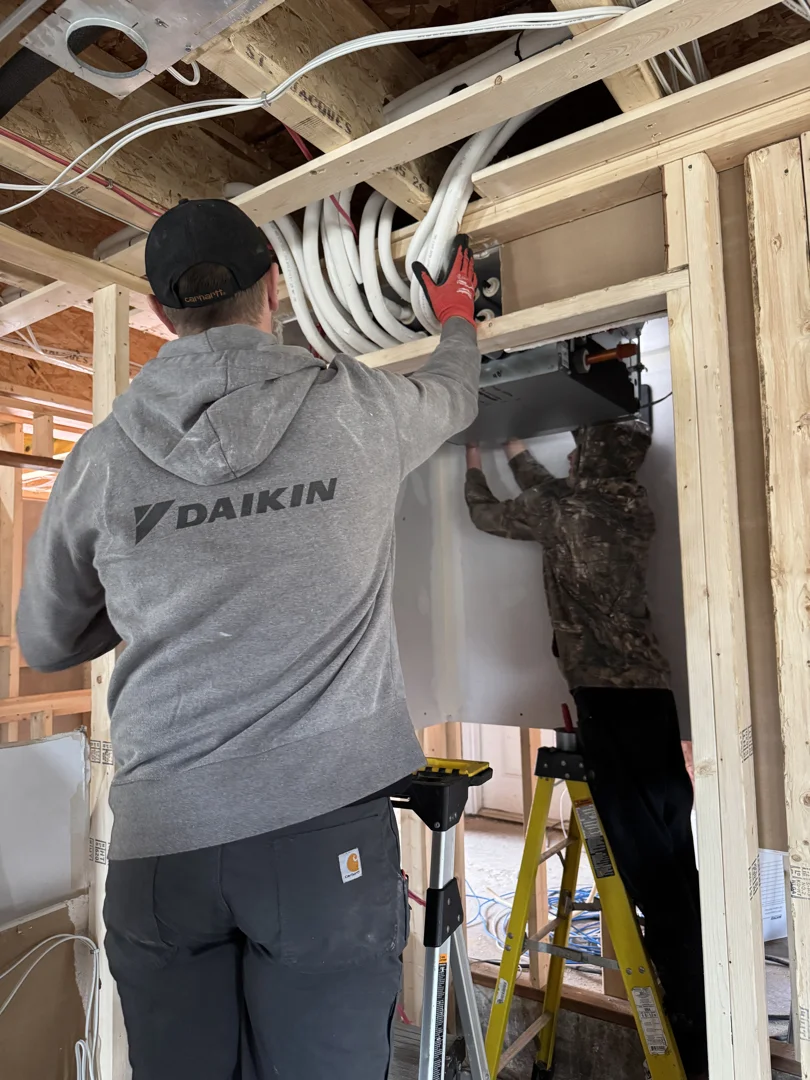
In retrofits, installing modern ventilation or central climate control systems often runs straight into physical and electrical roadblocks. Many older homes were built with radiator heating and lack the ductwork or structural space required for central air handling systems.
From an electrical perspective, adding a new central air handler or a sophisticated ventilation system to an older home requires dedicated, high-amperage circuits. If the existing panel is full, we cannot simply hook up the new equipment. We must map out a path from the basement to the upper floors to run new heavy-duty cables without destroying historical finishes. For detailed guidance on navigating these challenges in specific communities, refer to our Electrical Dartmouth NS Complete Guide.
In existing homes throughout communities like Bedford or Fall River, space constraints are a major hurdle. Unlike new construction, where wires are easily run through open stud bays, retrofitting requires fishing wires through finished walls.
Older homes often feature lath-and-plaster walls, solid wood timber framing, or fire-blocking inside the wall cavities. These structural elements make running new electrical lines incredibly labor-intensive. In some cases, we must plan for strategic drywall cuts or use specialized low-profile conduit solutions to deliver power where it is needed. Planning ahead for these structural quirks is essential, as explained in our Electrical Bedford NS Complete Guide.
Compliance with the Canadian Electrical Code (CEC) is mandatory across Atlantic Canada, but how the code is applied and inspected varies significantly between new builds and retrofits. In Nova Scotia, for instance, the provincial building code adopts the National Building Code with local amendments, and electrical work must be performed by qualified professionals. If you are starting a project, hiring a Licensed Electrician in Truro NS ensures that your work meets all provincial and municipal requirements.
For new construction, the permitting process is highly structured. A master electrical permit is pulled at the start of the project. The work is subject to at least two main inspections:
Importantly, in Nova Scotia, utility companies will not perform a service connection or energize a new build until the building is verified as weathertight (with doors, windows, and roof complete) and has passed a service entrance inspection.
For retrofits, permits are required for major system changes, service upgrades, or adding new circuits. However, the inspection process is often compressed. An inspector may only need to review the specific modifications made rather than the entire home, provided the older existing wiring remains untouched and safe. Ensuring overall electrical safety during these transitions is paramount, which is why we offer comprehensive Electrical Safety Services Canada to keep your property fully compliant.
One of the most common surprises for homeowners during a renovation is the Canadian Electrical Code’s strict rules regarding Arc Fault Circuit Interrupters (AFCIs). In new construction, AFCI breakers are installed by default on almost all branch circuits supplying outlets in residential units.
In retrofits, however, the rules can be a bit of a gray area depending on the scope of your project:
Because AFCI breakers are more sensitive than standard breakers, installing them on older, existing wiring can sometimes lead to nuisance tripping due to shared neutrals or minor insulation wear in the walls. Navigating this successfully requires professional diagnostics and often a strategic Panel Upgrade to ensure the system is stable.
In modern electrical planning, we no longer look at the electrical system in isolation. It is deeply connected to the building's thermal envelope—including insulation levels, window performance, and air tightness.
In new construction, high-efficiency building standards (such as those outlined in the higher tiers of the National Building Code) mean that new homes require far less energy to heat and cool. Because the thermal envelope is so tight, we can specify smaller heating and ventilation systems. This, in turn, reduces the overall electrical load, allowing us to optimize the sizing of the main service and distribution panels.
In a retrofit scenario, upgrading the electrical system without addressing the home's insulation is a missed opportunity. If a homeowner upgrades their heating system but lives in a drafty, uninsulated 19th-century home, the electrical system must be sized to handle massive peak heating loads.
However, if we combine electrical upgrades with envelope improvements (such as adding exterior insulation or upgrading drafty windows), the peak heating load drops dramatically. This energy efficiency upgrade can prevent the need for an expensive service size increase, allowing the existing electrical capacity to go much further. When planning these comprehensive upgrades, consulting our guides on an Electrical Service Upgrade and our Electrical Truro NS Complete Guide can help you size your system perfectly.
Yes. Any major change to your electrical system, including upgrading your breaker panel or service entrance, requires an electrical permit in Nova Scotia. This permit must be pulled by a licensed electrical contractor. Once the work is complete, it must be inspected by the appropriate regulatory authority (such as Nova Scotia Power or municipal inspectors) to ensure it complies with the Canadian Electrical Code. To learn more about what goes into planning a panel replacement, read our guide on Breaker Panel Upgrades.
Building age is one of the most critical factors in retrofit planning. Homes built before the 1950s may still contain active knob-and-tube wiring, which lacks a grounding conductor and is incompatible with modern AFCI/GFCI requirements. Homes from the 1960s and 1970s may feature aluminum wiring, which requires specialized connectors to prevent fire hazards. When we plan a retrofit in older communities, we must carefully assess the existing wiring methods and plan for targeted rewiring where safety issues exist. For practical tips on managing older homes, check out our Electrical Mount Uniacke NS Tips 2026.
Absolutely. In fact, planning for EV charging during new construction is highly recommended because running the heavy-gauge wire from the main panel to the garage or driveway is incredibly simple before the drywall goes up. We recommend installing a dedicated 50-amp circuit or running a vacant conduit from your panel to your preferred charging location. This future-proofs your home and avoids the need for complex wall cuts down the road. For more advice on future-proofing your home's electrical system, take a look at our Electrical Experts Beaver Bank NS Guide.
Whether you are breaking ground on a brand-new home or carefully updating a historic Maritime property, understanding how electrical planning for new construction differs from retrofit work in Atlantic Canada is key to a successful project. New construction offers the luxury of seamless integration and optimized design, while retrofits demand deep technical expertise to safely navigate structural limits and evolving electrical codes.
At Presidential Ventilation Systems Ltd., we bring over 30 years of experience to every project. Serving homeowners across Halifax, Dartmouth, Bedford, Sackville, Mount Uniacke, and surrounding areas, we specialize in residential and commercial HVAC, ventilation, and electrical systems. We are here to help you design a safe, efficient, and future-ready home.
Ready to start planning your next project? Get More info about Mount Uniacke electrical services and let our expert team guide you through every step of the process.

How electrical planning for new construction differs from retrofit work in Atlantic Canada comes down to one core reality: starting fresh gives you total control, while working inside an existing building means working around what's already there.
Here's a quick comparison to answer that directly:
| Factor | New Construction | Retrofit |
|---|---|---|
| System design | Built from scratch to meet current code | Constrained by existing wiring, panels, and structure |
| Load calculations | Planned for full modern demand upfront | Must account for existing loads and capacity limits |
| Permitting | Single coordinated permit process | Triggered by scope of changes; varies by province |
| AFCI/GFCI requirements | Applied to all new circuits by default | Triggered when circuits are added or modified |
| Electrification integration | Designed in from day one | May require panel upgrades and structural workarounds |
| Budget predictability | More predictable | Higher risk of hidden surprises |
| Energy efficiency | Optimized from the start | Depends on envelope upgrades done alongside electrical work |
Atlantic Canada has some of the oldest housing stock in the country. Maritime provinces carry higher rates of residential oil heating than almost anywhere else in Canada, and buildings here account for a significant share of total greenhouse gas emissions — particularly in Nova Scotia. That means the pressure to electrify and upgrade is real, and growing fast.
Whether you're building new or upgrading an existing home, getting the electrical planning right from the beginning is what separates a smooth project from a complicated one. This guide breaks down exactly where those two paths diverge — and what it means for homeowners and builders across New Brunswick, Nova Scotia, PEI, and Newfoundland.
When we look at new construction, we are starting with a blank slate. System design is highly coordinated. We can map out the exact path of every wire, the precise location of the main electrical panel, and the distribution of subpanels without having to dodge existing plumbing, structural walls, or historical plaster.
For new builds, load calculations are straightforward. We calculate the total anticipated demand based on modern living: high-efficiency electric heating, ventilation systems, electric vehicle (EV) charging stations, and multiple heavy appliances. The grid capacity is assessed by the utility company upfront, and the service entrance is sized appropriately from day one—usually starting at 200 amps. To understand the baseline standards for modern wiring, our Electrical Wiring Guide 2025 details how these systems are structured under modern electrical codes.
In contrast, retrofit planning is an exercise in creative problem-solving. Instead of designing the ideal system, we must work backward from the existing infrastructure. Many older homes in historic neighborhoods of Halifax or Dartmouth still operate on older 100-amp services. When planning a retrofit, we must perform a detailed load calculation of the existing home to determine if the current system can handle any new electrical demands. If the panel is maxed out, we have to plan for a substantial system overhaul.
| Planning Step | New Construction | Retrofit Work |
|---|---|---|
| System Design | Fully optimized layout; unlimited routing paths behind open framing. | Constrained by finished walls, historic plaster, and existing utility paths. |
| Load Calculations | Based on known, newly specified appliances and modern heating systems. | Must balance existing historical loads with newly added electric appliances. |
| Grid Connection | Sized and approved by the utility prior to construction. | May require upgrading the physical service drop and meter base on an older exterior. |
| Trade Coordination | Scheduled sequentially (framing, rough-in electrical, insulation, drywall). | Often requires delicate coordination to minimize disruption to occupied spaces. |
As Atlantic Canadians shift away from fossil fuels, integrating modern ventilation, air handling, and electric heating systems has become a top priority. However, how we plan the electrical support for these systems depends entirely on the age of the building.
In a new construction project, we design the electrical system and the HVAC layout hand-in-hand. We can designate dedicated circuits for central air handlers, energy recovery ventilators (ERVs), and supplementary electric heating units right on the blueprint. This ensures that the main panel has ample space and that the wiring runs are as short and efficient as possible. If you need professional assistance with these setups, our Electrical Hookup Services ensure that all major climate control equipment is safely connected. For a deeper look at regional specifications, you can also explore our Electrical Halifax NS Complete Guide.
In retrofits, installing modern ventilation or central climate control systems often runs straight into physical and electrical roadblocks. Many older homes were built with radiator heating and lack the ductwork or structural space required for central air handling systems.
From an electrical perspective, adding a new central air handler or a sophisticated ventilation system to an older home requires dedicated, high-amperage circuits. If the existing panel is full, we cannot simply hook up the new equipment. We must map out a path from the basement to the upper floors to run new heavy-duty cables without destroying historical finishes. For detailed guidance on navigating these challenges in specific communities, refer to our Electrical Dartmouth NS Complete Guide.
In existing homes throughout communities like Bedford or Fall River, space constraints are a major hurdle. Unlike new construction, where wires are easily run through open stud bays, retrofitting requires fishing wires through finished walls.
Older homes often feature lath-and-plaster walls, solid wood timber framing, or fire-blocking inside the wall cavities. These structural elements make running new electrical lines incredibly labor-intensive. In some cases, we must plan for strategic drywall cuts or use specialized low-profile conduit solutions to deliver power where it is needed. Planning ahead for these structural quirks is essential, as explained in our Electrical Bedford NS Complete Guide.
Compliance with the Canadian Electrical Code (CEC) is mandatory across Atlantic Canada, but how the code is applied and inspected varies significantly between new builds and retrofits. In Nova Scotia, for instance, the provincial building code adopts the National Building Code with local amendments, and electrical work must be performed by qualified professionals. If you are starting a project, hiring a Licensed Electrician in Truro NS ensures that your work meets all provincial and municipal requirements.
For new construction, the permitting process is highly structured. A master electrical permit is pulled at the start of the project. The work is subject to at least two main inspections:
Importantly, in Nova Scotia, utility companies will not perform a service connection or energize a new build until the building is verified as weathertight (with doors, windows, and roof complete) and has passed a service entrance inspection.
For retrofits, permits are required for major system changes, service upgrades, or adding new circuits. However, the inspection process is often compressed. An inspector may only need to review the specific modifications made rather than the entire home, provided the older existing wiring remains untouched and safe. Ensuring overall electrical safety during these transitions is paramount, which is why we offer comprehensive Electrical Safety Services Canada to keep your property fully compliant.
One of the most common surprises for homeowners during a renovation is the Canadian Electrical Code’s strict rules regarding Arc Fault Circuit Interrupters (AFCIs). In new construction, AFCI breakers are installed by default on almost all branch circuits supplying outlets in residential units.
In retrofits, however, the rules can be a bit of a gray area depending on the scope of your project:
Because AFCI breakers are more sensitive than standard breakers, installing them on older, existing wiring can sometimes lead to nuisance tripping due to shared neutrals or minor insulation wear in the walls. Navigating this successfully requires professional diagnostics and often a strategic Panel Upgrade to ensure the system is stable.
In modern electrical planning, we no longer look at the electrical system in isolation. It is deeply connected to the building's thermal envelope—including insulation levels, window performance, and air tightness.
In new construction, high-efficiency building standards (such as those outlined in the higher tiers of the National Building Code) mean that new homes require far less energy to heat and cool. Because the thermal envelope is so tight, we can specify smaller heating and ventilation systems. This, in turn, reduces the overall electrical load, allowing us to optimize the sizing of the main service and distribution panels.
In a retrofit scenario, upgrading the electrical system without addressing the home's insulation is a missed opportunity. If a homeowner upgrades their heating system but lives in a drafty, uninsulated 19th-century home, the electrical system must be sized to handle massive peak heating loads.
However, if we combine electrical upgrades with envelope improvements (such as adding exterior insulation or upgrading drafty windows), the peak heating load drops dramatically. This energy efficiency upgrade can prevent the need for an expensive service size increase, allowing the existing electrical capacity to go much further. When planning these comprehensive upgrades, consulting our guides on an Electrical Service Upgrade and our Electrical Truro NS Complete Guide can help you size your system perfectly.
Yes. Any major change to your electrical system, including upgrading your breaker panel or service entrance, requires an electrical permit in Nova Scotia. This permit must be pulled by a licensed electrical contractor. Once the work is complete, it must be inspected by the appropriate regulatory authority (such as Nova Scotia Power or municipal inspectors) to ensure it complies with the Canadian Electrical Code. To learn more about what goes into planning a panel replacement, read our guide on Breaker Panel Upgrades.
Building age is one of the most critical factors in retrofit planning. Homes built before the 1950s may still contain active knob-and-tube wiring, which lacks a grounding conductor and is incompatible with modern AFCI/GFCI requirements. Homes from the 1960s and 1970s may feature aluminum wiring, which requires specialized connectors to prevent fire hazards. When we plan a retrofit in older communities, we must carefully assess the existing wiring methods and plan for targeted rewiring where safety issues exist. For practical tips on managing older homes, check out our Electrical Mount Uniacke NS Tips 2026.
Absolutely. In fact, planning for EV charging during new construction is highly recommended because running the heavy-gauge wire from the main panel to the garage or driveway is incredibly simple before the drywall goes up. We recommend installing a dedicated 50-amp circuit or running a vacant conduit from your panel to your preferred charging location. This future-proofs your home and avoids the need for complex wall cuts down the road. For more advice on future-proofing your home's electrical system, take a look at our Electrical Experts Beaver Bank NS Guide.
Whether you are breaking ground on a brand-new home or carefully updating a historic Maritime property, understanding how electrical planning for new construction differs from retrofit work in Atlantic Canada is key to a successful project. New construction offers the luxury of seamless integration and optimized design, while retrofits demand deep technical expertise to safely navigate structural limits and evolving electrical codes.
At Presidential Ventilation Systems Ltd., we bring over 30 years of experience to every project. Serving homeowners across Halifax, Dartmouth, Bedford, Sackville, Mount Uniacke, and surrounding areas, we specialize in residential and commercial HVAC, ventilation, and electrical systems. We are here to help you design a safe, efficient, and future-ready home.
Ready to start planning your next project? Get More info about Mount Uniacke electrical services and let our expert team guide you through every step of the process.
What does a new construction electrical installation include in nova scotia? Here's a quick overview:
| Phase | What's Included |
|---|---|
| Service Entrance | Meterbase, point of attachment, grounding electrode, panelboard |
| Rough-In Wiring | Branch circuits, wire support, cable stapling, outlet placement |
| Devices & Protection | GFCI outlets, AFCI breakers, smoke alarms, CO detectors, lighting |
| Inspections | Rough-in inspection, service entrance inspection, final inspection |
| Coordination | Nova Scotia Power connection, wiring permits, municipal permit |
| Modern Additions | EV charger wiring, ventilation system circuits, sub panels |
Building a new home in Nova Scotia means navigating a detailed electrical process that goes well beyond simply running wire through walls. From the moment your foundation is poured to the day Nova Scotia Power flips the switch, your electrical system must meet strict provincial standards, pass multiple inspections, and be completed by a certified professional. Getting any part of this wrong can delay your project, affect your insurance, and create real safety risks for the people who will live in the home.
The rules around who can do the work, what permits are required, and what each phase of installation must include are clearly defined under Nova Scotia's Electrical Installation and Inspection Act and the Canadian Electrical Code. Understanding these requirements upfront saves builders and homeowners from costly surprises down the road.
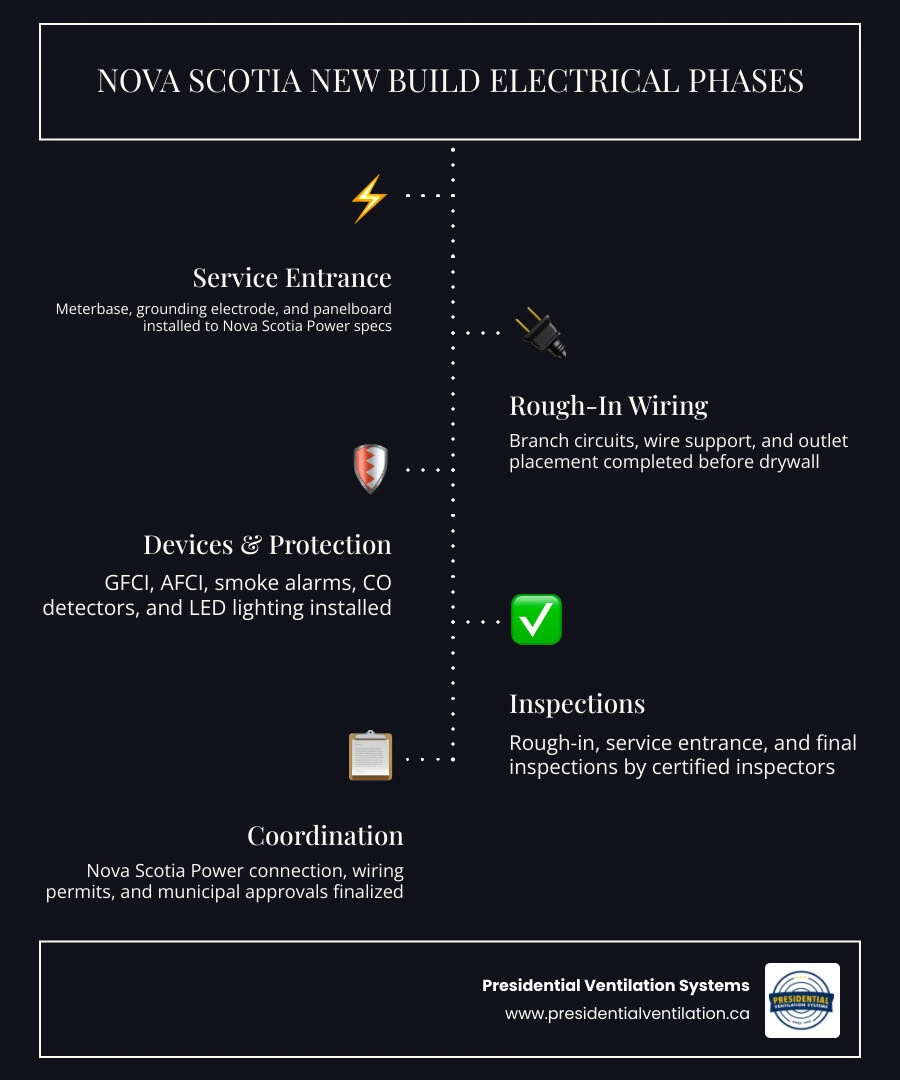
Basic what does a new construction electrical installation include in nova scotia terms:
When you are planning a new build, you cannot simply buy a roll of Romex wire and start stringing it up. The legal framework in Nova Scotia is highly regulated to prevent fire and shock hazards. The provincial standard is based on the Canadian Electrical Code (CEC), Part I, which is updated regularly to reflect the latest safety advancements.
In Nova Scotia, safety regulations dictate that every new construction project must have an active electrical wiring permit before any work starts. This permit acts as a formal registration of the work with the inspection authority—which in our province is managed by Nova Scotia Power. Without this permit, you cannot legally connect your new home to the electrical grid, and your local municipality will not issue an occupancy permit.
To protect homeowners and properties, the province of Nova Scotia mandates that only qualified professionals can perform electrical installations on new construction. Construction Electrician is a compulsory certified Red Seal trade in Nova Scotia. This means it is illegal for anyone to perform this work unless they hold a valid Certificate of Qualification issued by the provincial government, or they are a registered apprentice working under the direct supervision of a certified journeyperson.
Hiring a certified construction electrician ensures that your home is wired to handle modern electrical loads safely. They understand the complexities of the Canadian Electrical Code and maintain the proper liability insurance to protect your investment. If you want to dive deeper into the general standards of modern residential wiring, you can check out our Electrical Wiring Guide 2025.
The permitting process begins with a formal wiring permit application submitted to the Nova Scotia Power Wiring Permit Centre. Only a certified electrical contractor or an eligible certified electrician can pull this permit.
For a typical new build, the permitting process includes coordinating with your local municipality. You must first secure a municipal building permit and obtain a municipal permit number. Nova Scotia Power will not begin planning your service connection or processing your electrical files until this municipal number is provided.
Are there any permit exemptions? In Nova Scotia, very minor maintenance tasks are exempt from permits—such as replacing an existing light fixture, changing an identical wall switch, or replacing a plug receptacle in an existing home. However, for new construction, there are absolutely no permit exemptions. Every single wire, box, panel, and connection in a brand-new build must be covered under an official wiring permit and undergo formal inspections. To understand how we structure these services for new residential projects, read more about our New Construction Electrical Services in Nova Scotia.
An electrical installation for a new home is a multi-layered process. It is a highly structured system designed to bring power safely from the street, distribute it to your appliances, and protect your family from electrical faults.
Every piece of equipment, from the main panel down to the smallest wire nut, must be approved and certified for use in Canada. This means looking for recognized certification marks such as CSA, cUL, or QPS. The Department of Labour and Advanced Education strictly regulates these standards, and inspectors will reject any unapproved equipment.
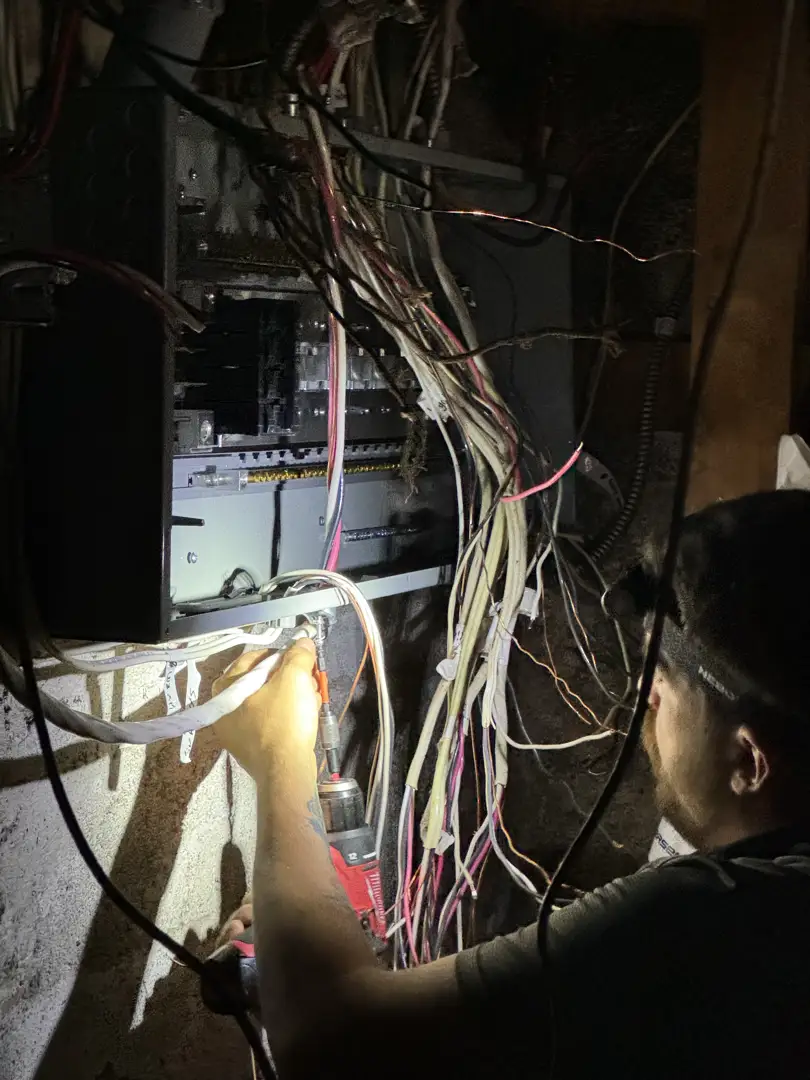
Understanding the scope of a new build's electrical system helps you plan your layout more effectively. For a detailed breakdown of how this initial layout phase differs from working on an existing home, see our guide on how electrical planning for new construction differs from retrofit work in atlantic canada.
The service entrance is the gateway for electricity entering your home. Nova Scotia has strict physical and geographical requirements for these installations:
If you are planning a large home with high power demands, ensuring you install a panel with adequate capacity is essential. To learn more about modern panel capacities, read our resource on Electrical Service Upgrade.
The rough-in phase occurs after the home is framed and sheathed, but before the insulation and drywall are installed. This is when the electrician runs cables through the studs and ceiling joists.
For those building in the surrounding regions, we have localized resources such as our guide on Electrical System Installation in Truro NS.
Modern electrical systems rely heavily on advanced safety devices to prevent fires and electrocution.
For more information on modern residential device layouts, check out our Electrical System Installation Guide Kentville NS.
No new construction electrical installation is complete without passing formal inspections. In Nova Scotia, this is a multi-step process designed to verify safety at every major milestone of the build.
Before any drywall is hung or insulation is placed, the rough-in inspection must occur. The inspector will visit the site to check all box placements, wire routing, cable stapling, and grounding connections. No wiring may be concealed until the inspector has officially signed off on the rough-in.
At this stage, the service entrance inspection is also conducted to ensure the meter base, conduit, and main panel are correctly positioned. During this phase, you or your contractor will coordinate with a Nova Scotia Power planner. If you require overhead lines, Nova Scotia Power provides up to 92 meters of pole and service line installation under normal circumstances. However, you must clear a right-of-way (12 meters of clearance for high-voltage lines and 5 meters for standard service lines) of any tall trees or brush before they will run the line. If you need power during construction, the inspector must also approve a temporary power pole setup.
The final inspection occurs when the home is fully finished—drywall is painted, plates are on the outlets, light fixtures are hung, and the primary heating system is fully wired and operational.
During the final walk-through, the inspector will verify:
Once the inspector is satisfied, they will apply an official final inspection sticker to the electrical meter base. This sticker signals to Nova Scotia Power that it is safe to permanently energize the home.
A major component of modern home construction is the integration of mechanical systems. Your home's ventilation system—including custom duct design, air handling units, and Energy Recovery Ventilators (ERVs) or Heat Recovery Ventilators (HRVs)—requires careful electrical coordination to operate efficiently.
To maintain excellent indoor air quality and prevent drafts, modern homes rely on dedicated ventilation systems. These mechanical systems require their own dedicated electrical circuits and control wiring.
When building, we work closely with your framing and electrical teams to ensure that:
Proper coordination prevents scheduling conflicts and ensures your mechanical systems operate at peak efficiency. To learn more about how we manage this process, see our guides on how to coordinate electrical and HVAC installation in a new build in nova scotia and how to decide between ducted and ductless when building a new home in nova scotia.
Modern homes must be built to handle future energy demands. This means planning your electrical system to accommodate high-draw devices like electric vehicle (EV) chargers and advanced ventilation equipment.
During the rough-in phase, it is highly recommended to run dedicated conduit and wiring for an EV charging station in your garage or driveway, even if you do not own an electric vehicle yet. Retrofitting these lines through finished drywall later is far more difficult. Installing a 200-amp main panel—or adding a sub-panel in a detached garage—ensures your home has the electrical capacity to power these systems safely.
No. Under Nova Scotia's Electrical Installation and Inspection Act, homeowners are not legally permitted to perform electrical wiring installations on new construction projects. Because of the high safety risks associated with improper wiring, all new construction electrical work must be performed by a certified construction electrician holding a valid provincial license.
All electrical equipment, devices, and materials installed in Nova Scotia must bear an approved certification mark from an accredited testing agency recognized by the Province of Nova Scotia and the Department of Labour. Common acceptable marks include CSA (Canadian Standards Association), cUL (Underwriters Laboratories of Canada), and QPS. Unapproved equipment will be rejected by the electrical inspector.
According to the Canadian Electrical Code, a standard 15-amp residential branch circuit can supply a maximum of 12 outlets. This includes any combination of general-purpose plug receptacles and permanent lighting fixtures. Dedicated circuits are required for major appliances such as refrigerators, microwaves, and laundry machines.
A successful new construction electrical installation requires planning, professional expertise, and strict adherence to provincial safety codes. From securing the initial wiring permits to the final inspection walk-through, every step must be handled with precision to ensure your new home is safe, efficient, and ready for the future.
At Presidential Ventilation Systems Ltd., we bring over 30 years of experience to residential and commercial projects across mainland Nova Scotia—including Halifax, Dartmouth, Bedford, Sackville, and Mount Uniacke. Our expert team is here to help you coordinate your electrical layout, ventilation systems, and custom duct designs seamlessly.
If you are planning a new build and want to ensure your systems are installed safely and professionally, contact us today. For residents in the Mount Uniacke area, you can connect directly with our local team through our Electrical Services in Mount Uniacke, NS page to discuss your upcoming project.
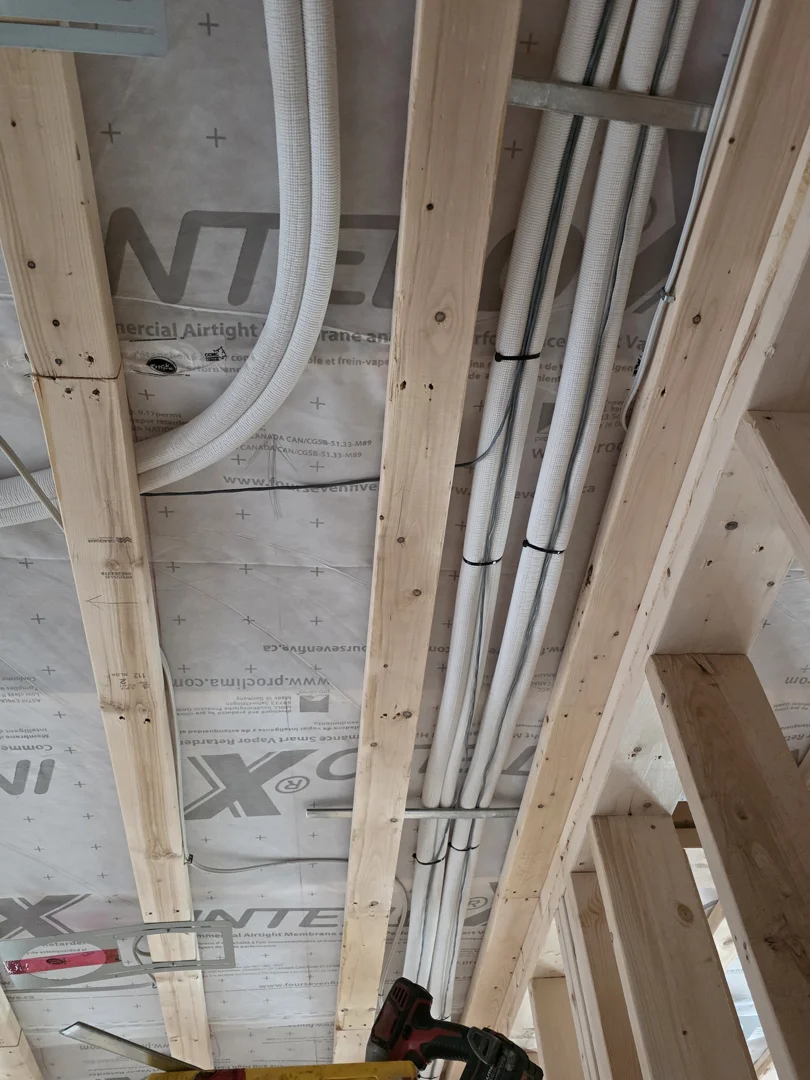
When it comes to what HVAC brands perform best in a new construction home in Atlantic Canada, the answer depends on a few key factors: cold-climate performance, coastal durability, and long-term energy efficiency. Atlantic Canada's winters are cold, its air is humid, and its coastal conditions are hard on equipment. Choosing the wrong brand — or the wrong system type — means years of higher energy bills, uncomfortable rooms, and costly repairs.
Here are the top HVAC brands consistently recommended for new construction homes in Atlantic Canada:
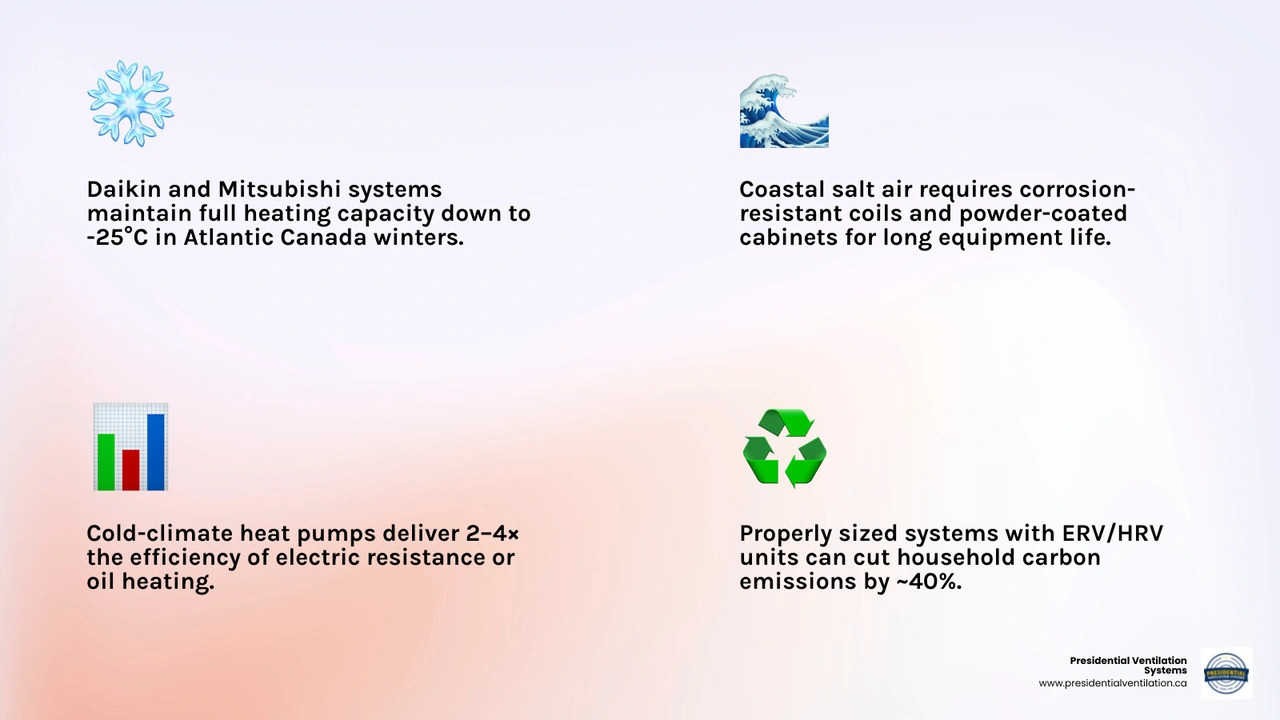
The best choice for most new Atlantic Canadian builds is a Daikin or Mitsubishi cold-climate system, paired with properly designed ductwork and an HRV or ERV unit for fresh air ventilation. Modern high-efficiency systems are two to four times more efficient than traditional oil or electric resistance heating, and they can reduce household carbon emissions by roughly 40 percent compared to conventional systems.
That said, brand alone does not guarantee performance. Installation quality, proper system sizing, and duct design are just as important as the nameplate on the equipment.
What hvac brands perform best in a new construction home in atlantic canada terms you need:
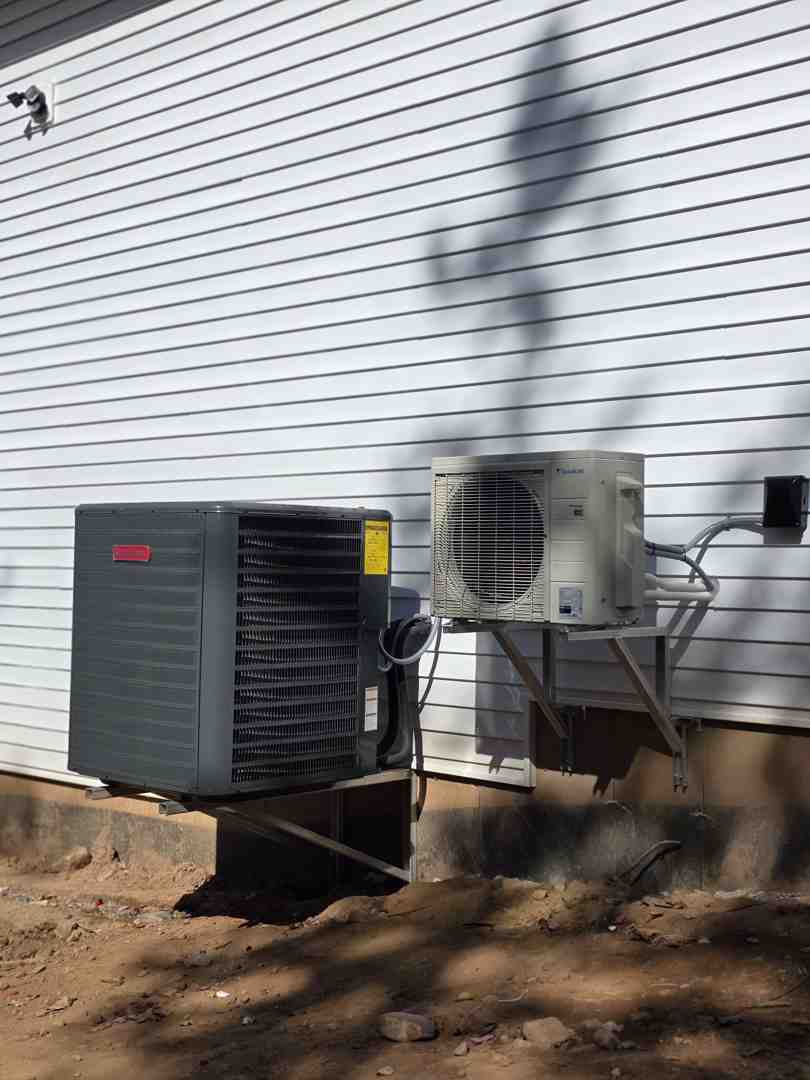
When building a new home in coastal communities like Halifax, Dartmouth, Bedford, or Fall River, the local climate presents unique challenges. The air is heavily saturated with moisture and salt, which can accelerate corrosion on standard outdoor condenser units. To withstand these harsh maritime elements, selecting a brand with superior build quality and specialized protective coatings is essential.
In our three decades of serving homeowners across the Halifax Regional Municipality and surrounding areas, we have analyzed how different manufacturers hold up to our local elements. While several major manufacturers offer reliable options, their performance under real-world coastal conditions varies significantly.
To help you make an informed decision for your new build, we have compiled a detailed comparison of the top five HVAC brands in Canada, evaluating their strengths, weaknesses, and ideal applications:
| Brand | Heating Efficiency (HSPF2) | Cooling Efficiency (SEER2) | Key Strengths | Best For |
|---|---|---|---|---|
| Daikin | Up to 12.5 | Up to 23.0 | 12-year parts & compressor warranty, exceptional cold-climate performance, advanced inverter technology | Premium whole-home ducted & ductless systems in coastal areas |
| Mitsubishi Electric | Up to 12.5 | Up to 23.1 | Extreme cold-weather operation (down to -30°C), legendary mechanical reliability, extensive service network | Custom new builds in exposed, high-wind locations |
| Fujitsu | Up to 11.0 | Up to 22.0 | Consistent performance, compact outdoor footprints, reliable parts distribution | Homes with limited outdoor installation space |
| Lennox | Up to 10.3 | Up to 28.0 | High-end cooling efficiency, sophisticated smart home integration, precise humidity controls | Large, multi-zone ducted custom homes |
| Goodman | Up to 8.8 | Up to 22.5 | Solid basic performance, widely available parts, straightforward mechanical designs | Standard builds focusing on simple, reliable comfort |
Selecting the right manufacturer is only the first step. To ensure your new home remains comfortable year-round, you must also understand how to evaluate the specific performance metrics that matter most in our region. For a deeper look at brand selection, you can read our guide on Choosing the Right HVAC Brand for Nova Scotia.
To determine what hvac brands perform best in a new construction home in atlantic canada, we must look beyond marketing claims and focus on standardized industry ratings. In recent years, testing standards in Canada transitioned to the more rigorous SEER2 and HSPF2 metrics. These updated standards provide a more accurate representation of how equipment performs under real-world static pressure and fluctuating outdoor temperatures.
When evaluating systems for a new build in areas like Sackville, Cole Harbour, or Eastern Passage, keep these key specifications in mind:
By focusing on these metrics, you can select a system that delivers consistent comfort during freezing winter nights and humid summer afternoons.
Daikin consistently stands out as a top performer for new construction projects in Nova Scotia. As the world's largest HVAC manufacturer, Daikin invests heavily in research and development to design systems specifically optimized for extreme climates. Their proprietary inverter compressor technology allows the system to adjust its output continuously, matching the precise thermal needs of your home rather than cycling on and off like traditional systems.
One of the most significant advantages of choosing Daikin for your new build is their unmatched warranty protection. When installed by a certified professional, Daikin offers a 12-year parts and compressor warranty, providing long-term peace of mind. To understand why this brand is highly regarded, explore our article on Why Daikin and learn What Makes Daikin Systems Different.
For new construction projects, the Daikin Fit system is particularly effective. Its side-discharge design has a much smaller footprint than traditional top-discharge systems, making it easy to install in tight spaces. It also operates at whisper-quiet noise levels, ensuring your outdoor living areas remain peaceful. You can read more about how this technology performs locally in our detailed breakdown of How Daikin Fit Ducted Systems Work in a New Construction Home in Nova Scotia.
A high-quality HVAC brand can only perform as well as the ductwork supporting it. In a new construction home, the design and installation of your air distribution system are critical to achieving balanced temperatures, quiet operation, and optimal energy efficiency. Poorly designed ducts can restrict airflow, increase system wear, and lead to drafty or uncomfortable rooms.
At Presidential Ventilation, we specialize in custom duct design and sheet metal fabrication for residential new builds. Our team ensures that every duct run is sized correctly, sealed tightly, and routed efficiently to minimize static pressure resistance. Proper planning during the early stages of your build is key to achieving a high-performance home. To learn more about optimizing your system layout, read our guide on How to Plan Your New Build HVAC in Nova Scotia.
When designing your new home in communities like Timberlea, Prospect, or Hubbards, you must decide between a central ducted system or a ductless multi-split layout. Both configurations offer distinct advantages depending on your architectural plans, layout requirements, and comfort preferences:
Choosing the right configuration depends on your home's unique layout and your family's lifestyle. For an in-depth comparison to help you choose, read our article on How to Decide Between Ducted and Ductless When Building a New Home in Nova Scotia.
A successful new construction project requires seamless coordination between different trades. The installation of modern, high-efficiency HVAC equipment must be carefully synchronized with your electrical contractor to ensure your main electrical panel has sufficient capacity and that all wiring is routed correctly.
In Nova Scotia, new homes typically require a 200-amp electrical service to comfortably accommodate modern climate control systems alongside other household appliances. Coordinating these installations early in the construction phase prevents costly delays and ensures that your outdoor units, indoor air handlers, and auxiliary heating elements are safely integrated. For a step-by-step overview of how to manage this process, see our guide on How to Coordinate Electrical and HVAC Installation in a New Build in Nova Scotia.
Modern building codes require new construction homes to be highly insulated and tightly sealed to prevent energy loss. While this tight envelope is excellent for energy efficiency, it can trap stale air, moisture, and indoor pollutants if the home lacks proper mechanical ventilation. In the humid coastal environments of Peggy's Cove, Shearwater, and Eastern Passage, managing indoor air quality is essential to prevent moisture buildup and maintain a healthy living environment.
Without continuous fresh air exchange, everyday activities like cooking, bathing, and cleaning can cause relative humidity levels to rise. This excess moisture can lead to condensation on windows, musty odors, and potential mold growth behind walls. Incorporating a dedicated ventilation system is critical to keeping your new home healthy and comfortable.
To maintain excellent indoor air quality without sacrificing energy efficiency, modern homes rely on mechanical ventilation systems. The two primary options are Heat Recovery Ventilators (HRVs) and Energy Recovery Ventilators (ERVs). Both systems exchange stale indoor air for fresh outdoor air while pre-conditioning the incoming air stream:
For most coastal homes in our service area, an ERV is highly recommended to help manage seasonal humidity.
Proper installation of an HRV or ERV system requires professional air balancing. This process involves measuring and adjusting the airflow rates of the supply and exhaust ducts to ensure the system operates under neutral pressure. If a home is under negative pressure, it can draw unfiltered outdoor air, moisture, and soil gases into the living space. If it is under positive pressure, warm, moist indoor air can be forced into wall cavities, where it can condense and cause structural damage.
Our technicians use specialized diagnostic equipment to balance your ventilation system during commissioning. This precise calibration ensures optimal moisture control, reliable fresh air distribution, and long-term protection for your home's structure.
The primary difference lies in how they handle moisture. An HRV (Heat Recovery Ventilator) only transfers sensible heat between the incoming and outgoing air streams. An ERV (Energy Recovery Ventilator) transfers both sensible heat and latent heat (moisture).
In Atlantic Canada, where summer humidity can be high, an ERV helps keep indoor humidity levels comfortable by preventing outdoor moisture from entering the home through the ventilation system. In contrast, during dry winter months, an ERV can help retain a comfortable level of indoor humidity.
Coastal humidity can elevate indoor relative humidity levels above the recommended 30% to 50% range. High indoor humidity creates an ideal environment for dust mites, allergens, and mold growth. It can also cause condensation on windows and cool surfaces, potentially damaging drywall and wood framing.
To maintain healthy indoor air quality in coastal areas like Halifax and Dartmouth, new homes require a combination of efficient cooling systems to remove moisture and balanced mechanical ventilation (such as an ERV) to introduce fresh, pre-dehumidified air.
Professional duct design ensures that your heating and cooling system can distribute air quietly and efficiently to every room. Proper design involves calculating the heating and cooling load of each space, determining the correct duct sizes, and minimizing bends and restrictions that increase static pressure.
Poorly designed ductwork can cause the system to work harder, leading to premature equipment wear, increased energy consumption, and noisy airflow. Custom sheet metal fabrication and professional installation ensure your system performs exactly as designed.
Building a new home in Atlantic Canada is an exciting journey, and choosing the right HVAC and ventilation system is one of the most important decisions you will make. By selecting a high-performing brand like Daikin, investing in professional duct design, and incorporating a balanced ERV or HRV system, you can ensure your new home remains comfortable, healthy, and energy-efficient for decades to come.
As a leading Daikin Comfort Pro Dealer with over 30 years of experience, Presidential Ventilation Systems Ltd. is proud to serve homeowners across the Halifax Regional Municipality, from Bedford and Sackville to Cole Harbour and Tantallon. Our team of skilled professionals specializes in custom duct fabrication, precise system commissioning, and high-quality installations tailored to our unique coastal climate.
To learn more about the advantages of working with our certified team, read about the Benefits of Choosing a Daikin Comfort Pro Dealer and see how we compare in Daikin Comfort Pro vs Standard HVAC Contractor. Ready to design the perfect climate control system for your new build? Explore Ducted and Ductless Solutions with Presidential Ventilation today.