


Commercial heat pumps not working in mount uniacke ns can bring your business to a standstill, leading to lost productivity, unhappy customers, and potential emergency repairs. When your system fails during extreme weather, the disruption can be significant.
Quick answer: If your commercial heat pump isn't working, start with these checks:
Mount Uniacke's climate, with its extreme cold, high humidity, salt air, and frequent temperature fluctuations, puts significant stress on HVAC systems. Commercial heat pumps work harder than residential units, making them more vulnerable to wear and tear, especially if maintenance is neglected.
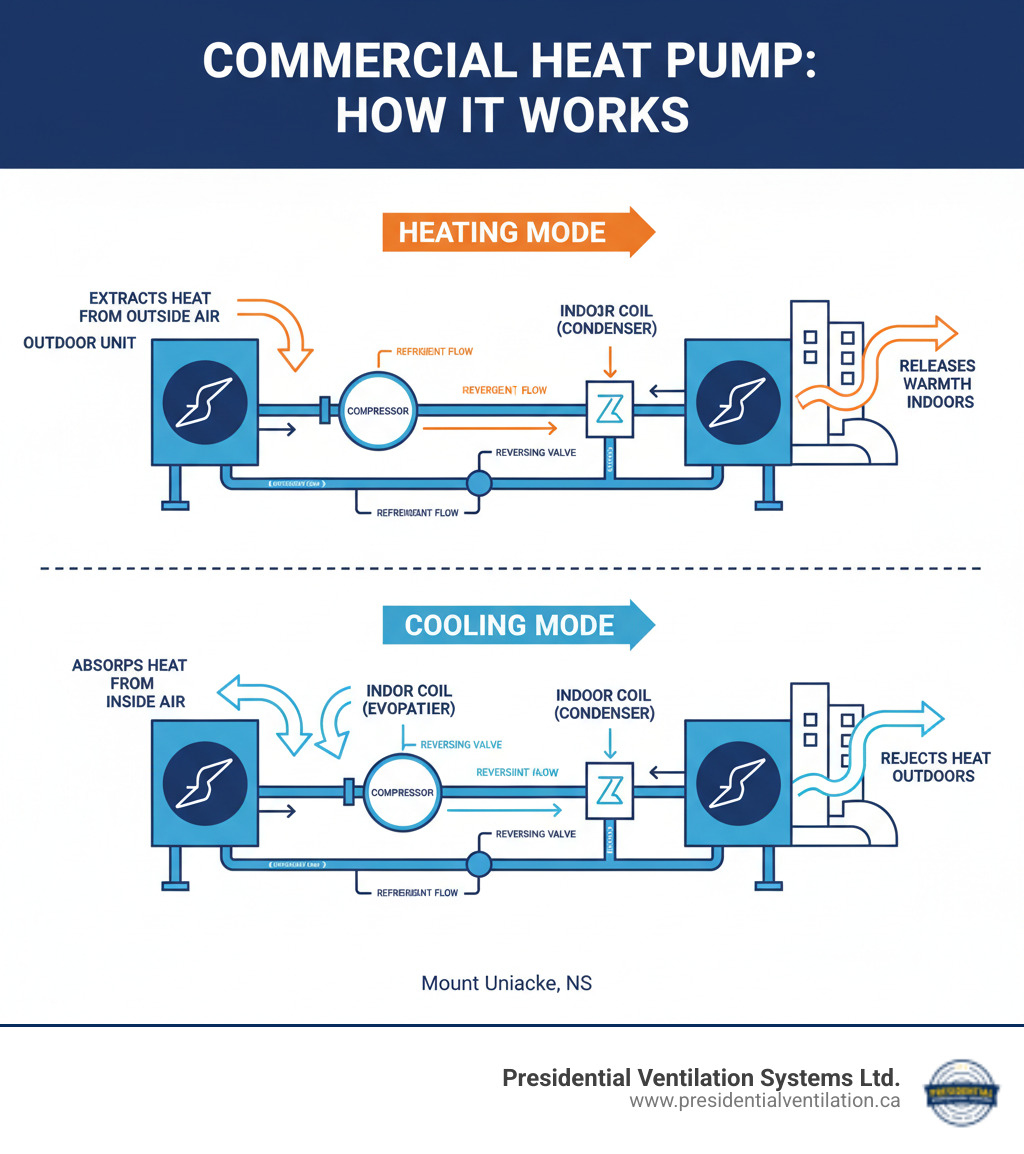
Heat pumps are energy-efficient because they transfer heat rather than generating it. In winter, they move heat from the outside air indoors; in summer, they reverse the process. This efficiency depends on many components working together, and a single failure can shut down the entire system. Understanding common failure points helps minimize downtime and protect your investment.
When your commercial heat pumps not working in mount uniacke ns, don't panic. Before calling for emergency service, perform a few quick, safe checks that can often resolve common issues and save you time and money. This information also helps our technicians diagnose the problem faster if a service call is needed.
Check the thermostat: Ensure it's set to the correct mode ("Heat" or "Cool") and a logical temperature. Accidental adjustments are a common cause of issues. Also, look for any error codes on the display. Write down any codes you see, as they provide valuable diagnostic information for our technicians.
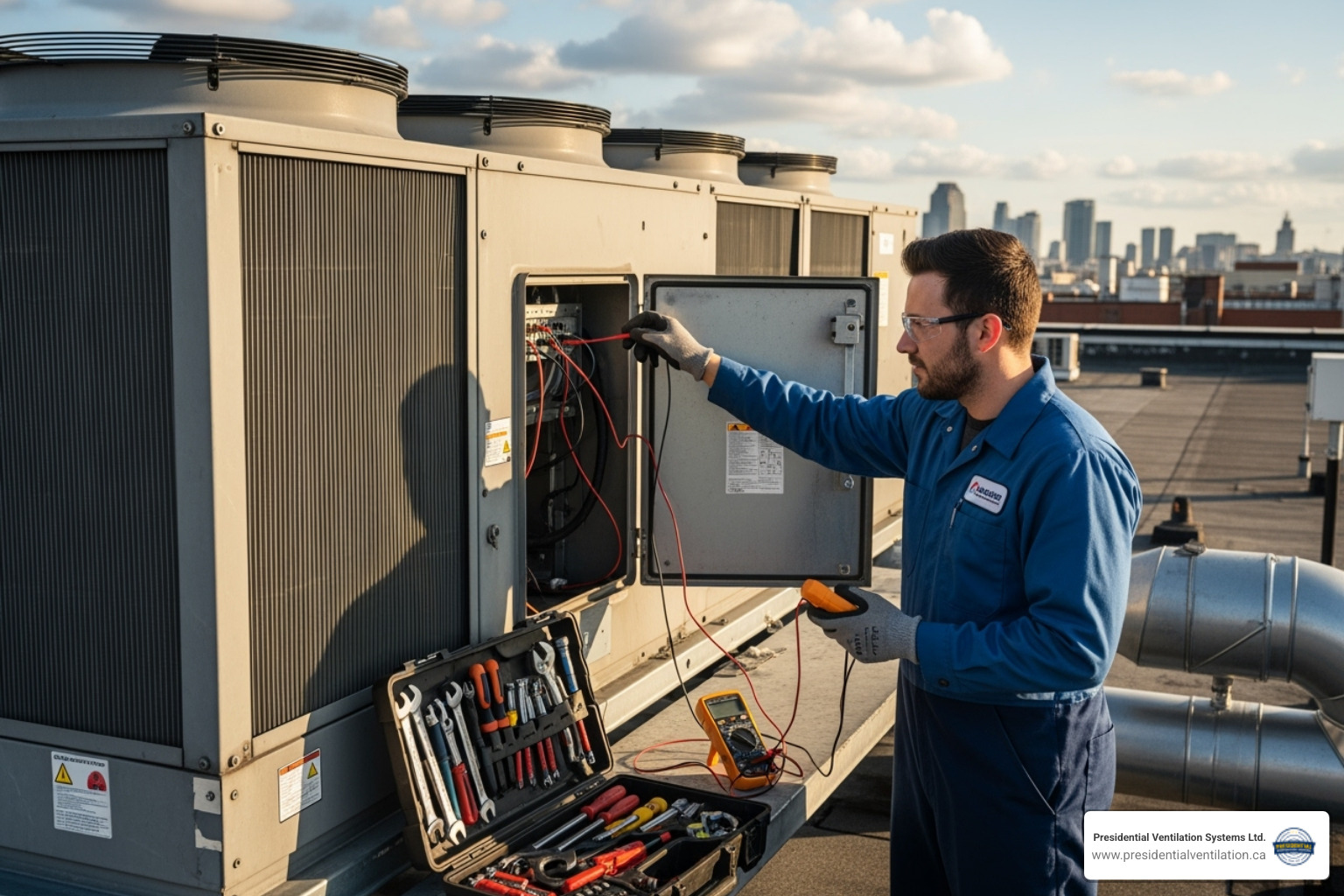
Check the power supply: Look for a tripped breaker in your electrical panel. Flip it completely off, then back on. If it trips again, there's a serious electrical issue that requires a professional. Also, verify the outdoor disconnect switch near the unit is in the "on" position.
Inspect air filters: Clogged filters are a primary cause of poor performance. They restrict airflow, forcing the system to work harder and potentially causing it to overheat or freeze. A simple filter change can often restore proper function. Learn more in our heat pump filter replacement guide.
Inspect the outdoor unit: Clear away any leaves, branches, snow, or debris blocking the coils and fan. In winter, some frost is normal, but heavy ice buildup can signal a problem like low refrigerant or a faulty defrost system. Do not chip ice off the coils, as this can cause damage.
Check for blocked vents: Make sure indoor supply and return vents are not obstructed by furniture, boxes, or other items. Blocked vents restrict airflow just like a dirty filter.
If these steps don't resolve the problem, it's time to call a professional. For more guidance, see our page on when to heat pump troubleshooting call our technicians.
Mount Uniacke's climate presents unique challenges for HVAC equipment. If you're dealing with commercial heat pumps not working in Mount Uniacke NS, our local weather is often a contributing factor.
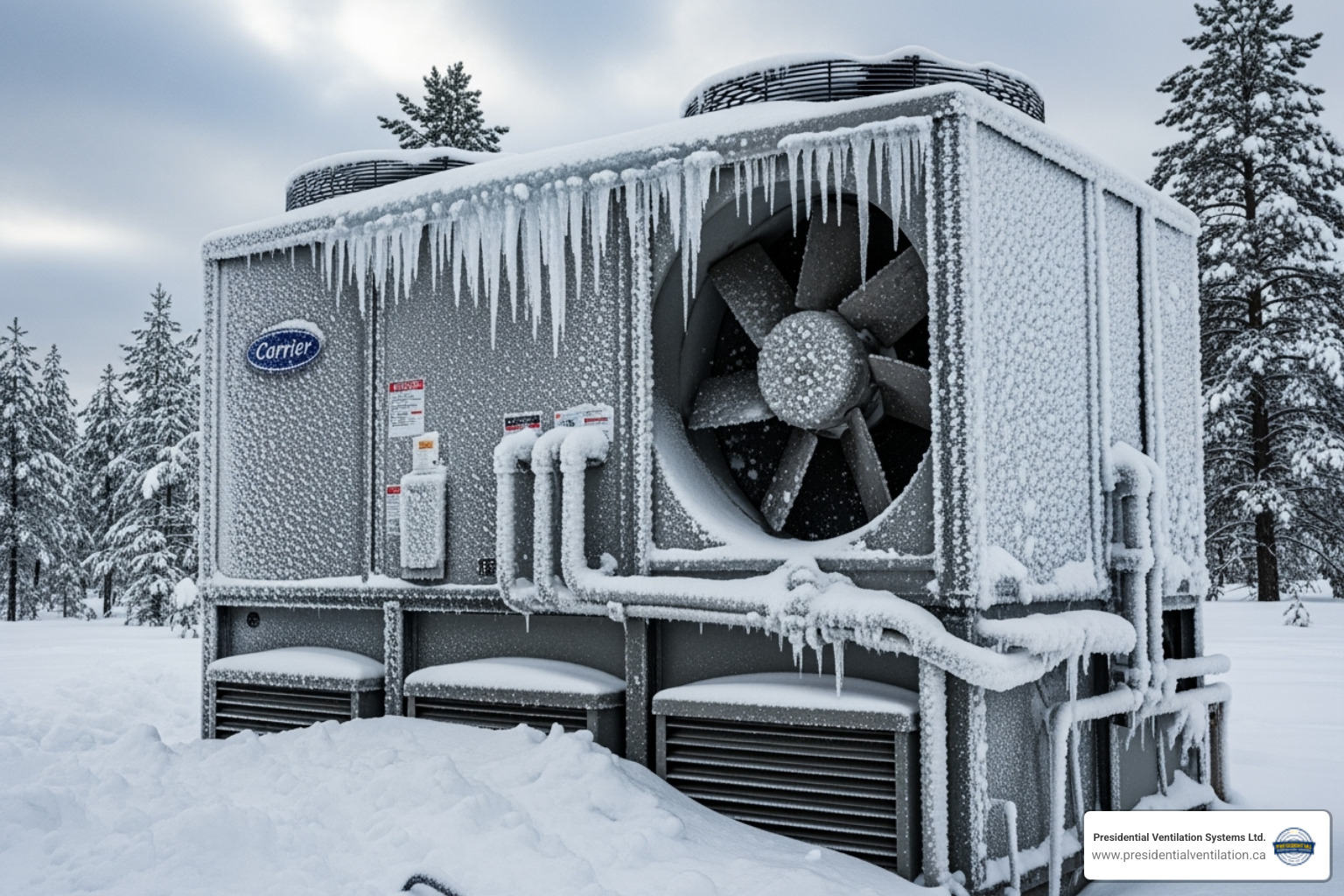
Our Nova Scotia location brings extreme cold snaps, high humidity, salt-laden coastal air, and rapid temperature swings. These conditions increase wear on components, accelerate corrosion, and force the system to cycle more frequently, leading to premature failure if not properly maintained. Understanding the climate on heat pump performance is key to reliability. You can also learn about the top reasons heat pumps fail in our detailed guide.
These issues typically require professional service to prevent minor problems from escalating.
Many failures are preventable and stem from environmental factors or neglect.
When commercial heat pumps not working in Mount Uniacke NS, the impact goes beyond discomfort. It can mean lost business, reduced productivity, and higher energy bills. A malfunctioning system also experiences a shorter lifespan, which can be a costly problem for your business.
Commercial heat pumps are designed for heavy use and can last 15 to 20 years with proper maintenance. However, neglect or improper sizing can drastically shorten this lifespan, leading to premature replacement. Recognizing problems early is key. For more information, visit our page on commercial heat pumps.
Your heat pump will usually show signs of trouble before it fails completely. Watch for these signs heat pump needs immediate attention:
If your system fails or shows serious warning signs, take these steps to minimize damage and downtime:
The best way to deal with a repair is to prevent it from happening. Preventative maintenance is an insurance policy for your business's comfort and productivity, ensuring your heat pump works reliably when you need it most. Most major breakdowns are the result of small, ignored issues that regular service would have caught.
According to the U.S. Department of Energy, routine maintenance can prevent most issues. A well-maintained system lasts longer, maintains its warranty, and can use 15-25% less energy. To protect your business from having commercial heat pumps not working in Mount Uniacke NS, a proactive approach is essential. Explore our heat pump maintenance Mount Uniacke NS services for customized care.
We create customized maintenance plans for businesses in Mount Uniacke to ensure system reliability.
Key tasks in a professional tune-up include:
Learn more about what's included in our guide to a commercial hvac tune up.
Strategic choices during selection and installation can dramatically reduce future problems.
Combining quality equipment, professional installation, and regular maintenance is the best defense against HVAC downtime.
When you have commercial heat pumps not working in Mount Uniacke NS, you need answers fast. Here are our responses to the most common questions from local business owners.
If your heat pump is blowing cold air when set to heat, it could be one of several issues:
If checking the thermostat and filters doesn't help, call a professional for diagnosis.
Regular service is critical to prevent breakdowns. Commercial systems work harder than residential ones, especially in our climate.
Consistent maintenance is also required by most manufacturers to keep your warranty valid. The investment in routine service is small compared to the cost of emergency repairs and business downtime.
Yes, power outages and the subsequent power surges can damage sensitive electrical components, especially the compressor. The biggest risk is restarting the system too quickly after an extended outage.
Proper Reset Procedure:If power has been out for more than 30 minutes, do not restart the heat pump immediately. Refrigerant pressures need time to equalize.
This patience can prevent catastrophic compressor failure. If the system doesn't work correctly after a proper restart, call for a professional inspection to check for damage from the outage.
When you're facing commercial heat pumps not working in Mount Uniacke NS, you need a reliable partner who understands the urgency. For over 30 years, Presidential Ventilation Systems Ltd. has been dedicated to keeping Nova Scotia businesses operational and comfortable.
We know that HVAC downtime means lost productivity and unhappy customers. As a leading Daikin Comfort Pro Dealer, our technicians have specialized training to diagnose and resolve complex issues quickly and effectively, ensuring your system runs at peak performance.
Our local expertise means we understand the unique challenges of Mount Uniacke's climate, from salt air corrosion to extreme cold. We offer comprehensive solutions to keep your business running smoothly.
Our services include:
Don't let a malfunctioning heat pump disrupt your operations. Whether you need an emergency repair or a proactive maintenance plan, we are ready to help. Contact us for expert commercial heat pump services today to protect your business and ensure year-round comfort.

Commercial heat pumps not working in mount uniacke ns can bring your business to a standstill, leading to lost productivity, unhappy customers, and potential emergency repairs. When your system fails during extreme weather, the disruption can be significant.
Quick answer: If your commercial heat pump isn't working, start with these checks:
Mount Uniacke's climate, with its extreme cold, high humidity, salt air, and frequent temperature fluctuations, puts significant stress on HVAC systems. Commercial heat pumps work harder than residential units, making them more vulnerable to wear and tear, especially if maintenance is neglected.
Heat pumps are energy-efficient because they transfer heat rather than generating it. In winter, they move heat from the outside air indoors; in summer, they reverse the process. This efficiency depends on many components working together, and a single failure can shut down the entire system. Understanding common failure points helps minimize downtime and protect your investment.
When your commercial heat pumps not working in mount uniacke ns, don't panic. Before calling for emergency service, perform a few quick, safe checks that can often resolve common issues and save you time and money. This information also helps our technicians diagnose the problem faster if a service call is needed.
Check the thermostat: Ensure it's set to the correct mode ("Heat" or "Cool") and a logical temperature. Accidental adjustments are a common cause of issues. Also, look for any error codes on the display. Write down any codes you see, as they provide valuable diagnostic information for our technicians.
Check the power supply: Look for a tripped breaker in your electrical panel. Flip it completely off, then back on. If it trips again, there's a serious electrical issue that requires a professional. Also, verify the outdoor disconnect switch near the unit is in the "on" position.
Inspect air filters: Clogged filters are a primary cause of poor performance. They restrict airflow, forcing the system to work harder and potentially causing it to overheat or freeze. A simple filter change can often restore proper function. Learn more in our heat pump filter replacement guide.
Inspect the outdoor unit: Clear away any leaves, branches, snow, or debris blocking the coils and fan. In winter, some frost is normal, but heavy ice buildup can signal a problem like low refrigerant or a faulty defrost system. Do not chip ice off the coils, as this can cause damage.
Check for blocked vents: Make sure indoor supply and return vents are not obstructed by furniture, boxes, or other items. Blocked vents restrict airflow just like a dirty filter.
If these steps don't resolve the problem, it's time to call a professional. For more guidance, see our page on when to heat pump troubleshooting call our technicians.
Mount Uniacke's climate presents unique challenges for HVAC equipment. If you're dealing with commercial heat pumps not working in Mount Uniacke NS, our local weather is often a contributing factor.
Our Nova Scotia location brings extreme cold snaps, high humidity, salt-laden coastal air, and rapid temperature swings. These conditions increase wear on components, accelerate corrosion, and force the system to cycle more frequently, leading to premature failure if not properly maintained. Understanding the climate on heat pump performance is key to reliability. You can also learn about the top reasons heat pumps fail in our detailed guide.
These issues typically require professional service to prevent minor problems from escalating.
Many failures are preventable and stem from environmental factors or neglect.
When commercial heat pumps not working in Mount Uniacke NS, the impact goes beyond discomfort. It can mean lost business, reduced productivity, and higher energy bills. A malfunctioning system also experiences a shorter lifespan, which can be a costly problem for your business.
Commercial heat pumps are designed for heavy use and can last 15 to 20 years with proper maintenance. However, neglect or improper sizing can drastically shorten this lifespan, leading to premature replacement. Recognizing problems early is key. For more information, visit our page on commercial heat pumps.
Your heat pump will usually show signs of trouble before it fails completely. Watch for these signs heat pump needs immediate attention:
If your system fails or shows serious warning signs, take these steps to minimize damage and downtime:
The best way to deal with a repair is to prevent it from happening. Preventative maintenance is an insurance policy for your business's comfort and productivity, ensuring your heat pump works reliably when you need it most. Most major breakdowns are the result of small, ignored issues that regular service would have caught.
According to the U.S. Department of Energy, routine maintenance can prevent most issues. A well-maintained system lasts longer, maintains its warranty, and can use 15-25% less energy. To protect your business from having commercial heat pumps not working in Mount Uniacke NS, a proactive approach is essential. Explore our heat pump maintenance Mount Uniacke NS services for customized care.
We create customized maintenance plans for businesses in Mount Uniacke to ensure system reliability.
Key tasks in a professional tune-up include:
Learn more about what's included in our guide to a commercial hvac tune up.
Strategic choices during selection and installation can dramatically reduce future problems.
Combining quality equipment, professional installation, and regular maintenance is the best defense against HVAC downtime.
When you have commercial heat pumps not working in Mount Uniacke NS, you need answers fast. Here are our responses to the most common questions from local business owners.
If your heat pump is blowing cold air when set to heat, it could be one of several issues:
If checking the thermostat and filters doesn't help, call a professional for diagnosis.
Regular service is critical to prevent breakdowns. Commercial systems work harder than residential ones, especially in our climate.
Consistent maintenance is also required by most manufacturers to keep your warranty valid. The investment in routine service is small compared to the cost of emergency repairs and business downtime.
Yes, power outages and the subsequent power surges can damage sensitive electrical components, especially the compressor. The biggest risk is restarting the system too quickly after an extended outage.
Proper Reset Procedure:If power has been out for more than 30 minutes, do not restart the heat pump immediately. Refrigerant pressures need time to equalize.
This patience can prevent catastrophic compressor failure. If the system doesn't work correctly after a proper restart, call for a professional inspection to check for damage from the outage.
When you're facing commercial heat pumps not working in Mount Uniacke NS, you need a reliable partner who understands the urgency. For over 30 years, Presidential Ventilation Systems Ltd. has been dedicated to keeping Nova Scotia businesses operational and comfortable.
We know that HVAC downtime means lost productivity and unhappy customers. As a leading Daikin Comfort Pro Dealer, our technicians have specialized training to diagnose and resolve complex issues quickly and effectively, ensuring your system runs at peak performance.
Our local expertise means we understand the unique challenges of Mount Uniacke's climate, from salt air corrosion to extreme cold. We offer comprehensive solutions to keep your business running smoothly.
Our services include:
Don't let a malfunctioning heat pump disrupt your operations. Whether you need an emergency repair or a proactive maintenance plan, we are ready to help. Contact us for expert commercial heat pump services today to protect your business and ensure year-round comfort.
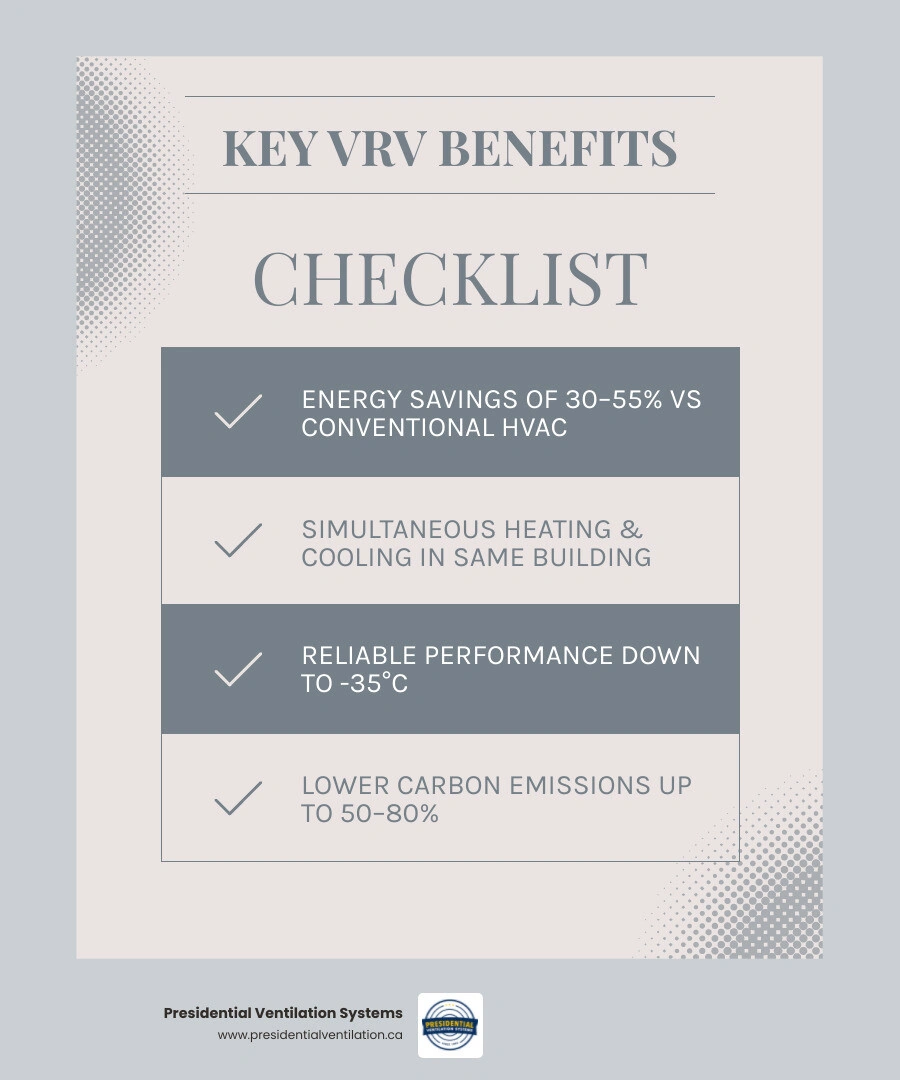
What is a VRV HVAC system and how does it benefit a commercial building in nova scotia? A VRV (Variable Refrigerant Volume) system is an advanced multi-zone HVAC technology that circulates refrigerant — rather than air or water — directly to multiple indoor units throughout a building, with each zone independently controlled. For Nova Scotia commercial buildings, the key benefits are:
Running a commercial building in Nova Scotia means dealing with cold, demanding winters, high energy costs, and the constant pressure to keep every corner of your space comfortable. Whether you manage an office in Dartmouth, a hotel in Truro, or a mixed-use property in Halifax, your HVAC system is one of your biggest operating expenses — and one of the biggest opportunities for savings. VRV technology was first developed by Daikin in 1982 and has since become one of the most efficient and flexible commercial climate control solutions available. Yet many Nova Scotia building owners are still running older, less efficient systems that waste energy and money every single day.
This guide breaks down exactly how VRV systems work, why they outperform traditional commercial HVAC, and what they mean for your building's comfort, efficiency, and bottom line.
To understand how a Variable Refrigerant Volume system can transform your commercial property, it helps to look at how we manage indoor climates in our region. With high local electricity rates, building managers across Halifax, Dartmouth, and Bedford are actively seeking smarter ways to heat and cool their spaces.
Traditional commercial systems rely on moving massive volumes of conditioned air through bulky sheet-metal ductwork, or circulating treated water through heavy piping. A VRV system takes a completely different approach. It circulates refrigerant directly to the specific zones where climate control is needed. By varying the flow of refrigerant based on the exact real-time demands of each room, it eliminates the energy waste associated with traditional "all-on" or "all-off" systems.
For local businesses, implementing this technology means a dramatic reduction in monthly utility bills. Because our maritime climate is highly variable—often shifting from damp and chilly to warm and sunny in a single afternoon—having a system that adapts instantly to these changes is invaluable. If you operate a facility in Halifax, upgrading to this technology is one of the most effective steps you can take to lower your operational footprint. You can learn more about local commercial climate options in our guide on Commercial HVAC Halifax.
At the heart of Daikin VRV technology is the inverter-driven scroll compressor. Traditional HVAC systems use single-speed compressors that operate like a light switch: they are either running at 100% capacity or they are completely off. This constant cycling on and off consumes an enormous amount of electricity and subjects the mechanical components to heavy wear and tear.
A VRV system behaves more like a dimmer switch. The inverter compressor continuously adjusts its speed to match the precise load of the building. If only two offices in a twenty-room building require heating on a cool morning in Cole Harbour, the compressor runs at a fraction of its total capacity, delivering only the exact amount of refrigerant needed to satisfy those two zones.
This level of precise temperature control ensures that there are no dramatic temperature swings, cold drafts, or stuffy rooms. Each indoor unit—whether it is a sleek wall-mounted unit, a recessed ceiling cassette, or a concealed ducted unit—operates independently. This modularity makes VRV an incredibly flexible option for both new builds and major renovations. When planning a system upgrade, working with specialists who understand local structural designs is key to a seamless transition; explore our insights on Commercial HVAC Installation.
When evaluating a major mechanical upgrade for a commercial property in Dartmouth, Burnside, or Sackville, the decision ultimately comes down to performance, reliability, and long-term value. The advantages of VRV technology are clear:
To maximize these benefits, proper ventilation design must be integrated into the mechanical layout. To see how we approach these designs, read about our Commercial Ventilation Solutions.
Traditional commercial HVAC systems—such as constant-volume packaged rooftop units (RTUs), massive chillers, and older boiler networks—were designed for an era when energy was inexpensive and building controls were simple. These systems typically treat an entire floor, or even an entire building, as a single thermal zone.
The result is a constant compromise: employees on the sunny south side of a Burnside office building are overheating, while those on the shaded north side are freezing. To solve this, traditional systems often cool the air to a low temperature and then use electric reheat coils at individual terminal boxes to warm it back up for specific rooms—a process that essentially wastes energy twice.
VRV systems eliminate this inefficiency entirely. Instead of moving massive volumes of air through ducts that are prone to thermal loss and leakage (which can account for up to 30% of energy loss), VRV moves heat energy through highly insulated, small-diameter copper lines. This decentralized control ensures that energy is only expended exactly where and when it is required. For businesses operating in industrial parks like Burnside, understanding the electrical infrastructure required to support these modern systems is crucial; see our Commercial Electrical Guide Burnside NS for more details.
Variable Air Volume (VAV) systems have long been the standard for medium-to-large commercial buildings. While they are more efficient than constant-volume systems, they still struggle to match the part-load efficiency and zoning flexibility of VRV.
| Performance Metric | Modern VRV HVAC Systems | Traditional VAV Systems |
|---|---|---|
| Energy Medium | Refrigerant (direct expansion) | Conditioned Air (large ductwork) |
| Part-Load Efficiency | Extremely High (inverter-driven) | Moderate (limited by fan energy) |
| Zoning Capabilities | Precise, room-by-room control | Large zones, prone to hot/cold spots |
| Duct Thermal Losses | Near Zero (insulated refrigerant lines) | Up to 10–30% energy loss through leaks/conduction |
| Space Requirements | Minimal (saves ceiling & floor space) | High (requires large vertical chases & plenums) |
| System Redundancy | High (multiple modular compressors) | Low (single fan or chiller failure affects whole building) |
One of the most impressive feats of VRV engineering is the 3-pipe heat recovery system. In many commercial buildings, different zones have completely opposite thermal needs at the exact same time. For example, an interior server room or a crowded conference room in a Dartmouth office may require cooling, even in the middle of November. Meanwhile, perimeter offices with large windows facing the cold outdoor air require heating.
In a traditional setup, you would have to run a chiller to cool the server room and a boiler to heat the offices—consuming energy on both fronts.
A VRV heat recovery system solves this by using branch selector boxes to redirect waste heat. The system captures the heat rejected from the server room during the cooling process and, instead of dumping it outside, routes it through the refrigerant piping to warm the perimeter offices. This process of energy recycling can result in a heat recovery coefficient of performance (COP) of 6.0 or higher, dramatically reducing the building's overall energy draw.
Designing a mechanical system for a commercial property in Nova Scotia requires a deep understanding of our local climate. Unlike dry, inland regions, our coastal environment brings high humidity, heavy salt air, and rapid temperature swings. These factors can accelerate wear on outdoor equipment and complicate indoor humidity control if not properly addressed during the design phase.
When planning a VRV layout for a property in Truro, East Dover, or Cole Harbour, mechanical engineers must carefully calculate both peak loads (the maximum heating or cooling required on the coldest or hottest days of the year) and block loads (the actual combined load of the building at any given moment). Because a VRV system can share capacity across zones, the outdoor unit does not need to be sized to the sum of all indoor units' peak loads. This "diversity factor" allows for a more compact and cost-effective outdoor installation.
Additionally, because these systems involve complex electrical controls and dedicated circuits, ensuring your facility's electrical system is up to code is a vital step. If you are retrofitting an older commercial property, consult our guide on Commercial Electrical Repairs to ensure your electrical infrastructure is ready to support a modern mechanical system.
A common question among business owners in areas like Sackville and Waverley is how refrigerant-based systems perform during our harsh winters, where design temperatures can drop to -18°C or lower.
Modern VRV systems designed for cold climates utilize Enhanced Vapor Injection (EVI) compressors. This technology allows the system to maintain high heating capacities and excellent efficiency (COPs of 2.0 to 2.5) even when outdoor temperatures drop as low as -35°C. For extreme maritime winter conditions, some designs even involve placing the outdoor condensing units inside a dedicated mechanical room equipped with automated, damper-controlled louvers. These dampers can mix cold outdoor air with tempered air from adjacent warehouse spaces to optimize performance and protect the equipment from freezing winds and salt spray.
It is important to note that because a VRV system only circulates refrigerant to condition the indoor air, it does not inherently bring fresh outdoor air into the building. To meet local building codes and ASHRAE ventilation standards, a VRV system must be paired with a Dedicated Outdoor Air System (DOAS) or an Energy Recovery Ventilator (ERV).
To ensure optimal indoor air quality and prevent drafts, the fresh air ventilation system must be meticulously designed and balanced. At Presidential Ventilation Systems, we specialize in custom sheet-metal fabrication and duct design to ensure that fresh, pre-conditioned outdoor air is distributed evenly throughout your commercial space.
Proper air balancing prevents positive or negative pressure issues within the building, which can otherwise cause drafty doors, moisture infiltration, and localized humidity problems. By pairing a high-efficiency VRV system with a custom-engineered ERV or HRV, you can recover heat from exhaust air before it leaves the building, ensuring your indoor air remains fresh, clean, and highly energy-efficient year-round.
VRV systems are highly versatile and deliver the best results in buildings with diverse, multi-zone thermal loads. Excellent candidates include:
A commercial VRV installation typically follows a structured timeline to minimize disruption to your business operations:
Because VRV systems are highly sophisticated, they require regular, proactive preventative maintenance to protect your investment and ensure a lifespan of 15 to 20 years:
Upgrading your commercial property's climate control system is a major decision, but the long-term benefits of Variable Refrigerant Volume technology are undeniable. By delivering precise, zone-by-zone comfort, reducing energy waste by up to 55%, and providing reliable heating even in the depths of a Nova Scotia winter, a VRV system is an investment that pays dividends in both tenant satisfaction and lower utility bills.
At Presidential Ventilation Systems Ltd., we bring over 30 years of experience serving businesses across Halifax, Dartmouth, Sackville, Bedford, and the surrounding areas. As a leading Daikin Comfort Pro Dealer, our team has the specialized expertise required to design, install, and maintain high-performance VRV and commercial ventilation systems tailored to our unique maritime climate.
If you are ready to explore how a modern VRV system can optimize your building's efficiency and comfort, contact our team today to discuss our Commercial Climate Control Solutions.
Knowing the signs your commercial HVAC system needs professional service early can be the difference between a quick fix and a full system failure that shuts down your building's heating and cooling for days.
Commercial HVAC systems work hard. They run year-round, handle large spaces, and are under constant demand from employees, customers, and tenants. When something starts going wrong, the warning signs are often subtle at first — a strange noise here, a slightly higher energy use there. By the time the problem becomes obvious, it has usually been affecting your system's efficiency for a while.
According to industry data, regular HVAC maintenance can reduce energy use by 5 to 20% annually, and commercial systems that receive preventive care experience up to 95% fewer breakdowns than those that don't. That's a significant gap — and it starts with knowing what to look for.
Here's a quick overview of the most common warning signs:
If you're noticing any of these in your facility, it's time to take action before a small issue becomes a major one.
Identifying issues with your commercial heating and cooling setup requires a mix of observation and proactive management. Because these systems are highly complex, a single failing part can trigger a chain reaction that compromises the entire unit.
When you notice changes in how your system sounds, smells, or performs, it is a clear message from your equipment that something is wrong. Let's break down the five most critical indicators that your commercial HVAC system requires professional diagnostic attention.
A primary job of any commercial climate control system is to maintain a uniform, comfortable environment throughout your facility. When you start noticing that the boardroom feels like a freezer while the corner offices are uncomfortably warm, your system is struggling.
Temperature fluctuations are rarely a simple thermostat issue. In commercial properties, these hot and cold spots often point to deeper system imbalances, such as:
If your building layout has changed or if you are dealing with Commercial HVAC Systems Not Working in Halifax NS, professional diagnostic tools are required to re-balance the airflow and ensure even comfort across all zones.
While commercial HVAC systems are powerful, they are designed to operate with a consistent, low-level hum. Sudden, loud, or unusual sounds are immediate red flags that mechanical components are wearing out or failing.
Ignoring these sensory warning signs can turn a minor belt replacement into a catastrophic motor failure. For a deeper look at identifying these sound and smell cues, check out our Commercial HVAC Repair Guide Stewiacke.
As a facility manager or business owner, you keep a close eye on operational efficiency. If your energy usage records show a sudden, unexplained increase — especially when compared to the same period in previous years — your HVAC system is likely losing its efficiency.
As of June 2026, energy efficiency benchmarks are tighter than ever, and an inefficient HVAC system is one of the fastest ways to reduce your operational efficiency. When internal components like the compressor, fan motors, or coils are dirty or failing, the system must work twice as hard and run much longer to achieve the same indoor temperatures.
Regular maintenance and timely interventions can prevent these energy spikes. Scheduling a professional Commercial HVAC Tune Up is the most effective way to restore your system's efficiency and optimize your system's performance.
Short cycling occurs when your commercial HVAC system turns on, runs for a brief period, and then abruptly shuts off before completing a standard heating or cooling cycle. This process repeats rapidly throughout the day.
This frequent on/off operation is incredibly damaging to your equipment. The startup phase of a compressor draws the most electrical current and subjects mechanical parts to the highest amount of physical stress. Constant starting and stopping accelerates component wear, shortens the overall system lifespan, and causes massive energy spikes.
Common causes of short cycling include:
If your system is short cycling, consulting a professional is urgent. For businesses in the corridor region, our Mount Uniacke Commercial HVAC Repair Guide offers excellent insights into how local climate factors can trigger these cycling issues.
Have you noticed that the air coming from your supply vents feels weak, or that it takes hours for your building to cool down on a warm afternoon? Weak airflow is a clear sign of system restriction.
When airflow is restricted, your HVAC system cannot distribute conditioned air effectively, causing some zones to remain uncomfortable while the system runs continuously. This lack of circulation also allows stale air and humidity to build up indoors, lowering employee productivity and tenant satisfaction.
Airflow blockages are typically caused by:
Keeping up with your Commercial Ventilation Maintenance Halifax NS ensures your ductwork, filters, and ventilation components remain clean, clear, and capable of delivering strong, healthy airflow to every corner of your property.
Deciding whether to continue repairing an aging commercial HVAC system or invest in a full system replacement is a major operational decision. Below is a quick comparison table to help guide your facilities team:
| Indicator | Choose Repair | Choose Replacement |
|---|---|---|
| Equipment Age | Under 10 years old | 10 to 15+ years old |
| Repair Frequency | Infrequent, minor component wear | Constant breakdowns, major part failures |
| Repair Scope | Minor component replacement | Major system overhaul required |
| Energy Efficiency | Stable energy usage close to baseline | Consistently climbing energy usage, outdated technology |
| Major Components | Failed capacitor, contactor, or fan belt | Failed compressor, cracked coils, or rusted chassis |
The most effective way to catch these warning signs before they escalate into a major business disruption is through structured, proactive care. Waiting for the system to break down before calling a technician — known as reactive or "run-to-fail" maintenance — is always the most disruptive path.
Implementing a preventive maintenance agreement delivers exceptional long-term reliability by catching minor issues, such as a worn belt or a small refrigerant leak, before they cause a complete system breakdown. To learn more about how structured care protects your facility's operations, read about How a Maintenance Agreement Extends Commercial HVAC Equipment Lifespan.
In Nova Scotia, our coastal climate brings unique environmental challenges that accelerate wear on outdoor HVAC equipment. High humidity, heavy seasonal storms, and salt-laden air can quickly corrode aluminum fins, rust structural brackets, and degrade electrical connections.
When minor warning signs are ignored in coastal environments, salt air corrosion accelerates the damage, leading to rapid refrigerant leaks, electrical shorts, and eventual complete system failure. Understanding How Salt Air and Coastal Conditions in Nova Scotia Affect Commercial HVAC Equipment highlights why prompt, professional service is so critical for businesses in our region.
Water leaks and high indoor humidity are usually caused by a clogged condensate drain line or frozen evaporator coils. Because cooling systems naturally dehumidify the air as they operate, they produce a significant amount of water. If the drain pan or drain lines are blocked by algae, dirt, or debris, this water will overflow, leading to stained ceiling tiles, mold growth, and potential water damage to your building's structure.
Regularly clearing these drains is a key part of our Commercial Central HVAC Maintenance Guide Dartmouth NS.
As a general rule, commercial air filters should be checked monthly and replaced at least every three months. However, in high-occupancy buildings or facilities prone to dust, more frequent changes may be required. Outdoor and indoor heat exchanger coils should be professionally inspected and cleaned at least once a year — typically in the spring before the heavy cooling season begins.
For reliable, scheduled upkeep, consider booking a Reliable Commercial HVAC Service in Cole Harbour NS.
When a commercial HVAC system is neglected, dirt and dust accumulate on the air filters and heat exchanger coils. This buildup restricts airflow and acts as an insulating barrier, making it much harder for the system to transfer heat. As a result, the compressor and fan motors must run longer and draw more electrical current to maintain the set temperature. This added strain can increase your annual energy consumption by 5% to 20%, leading to higher energy consumption and shortening the lifespan of your valuable equipment.
Your commercial HVAC system is a major investment that keeps your business running smoothly, comfortably, and productively. Paying close attention to the early warning signs of system failure — from minor temperature swings to unusual noises — is the key to avoiding unplanned downtime and premature equipment replacement.
At Presidential Ventilation Systems Ltd., we bring over 30 years of experience to commercial properties across Nova Scotia, including Halifax, Dartmouth, Bedford, Burnside, and surrounding areas. As a trusted Daikin Comfort Pro Dealer, our team is fully equipped to handle complex commercial diagnostics, routine maintenance, and system optimizations.
Don't wait for a complete system breakdown to address your heating and cooling needs. Contact us today to schedule a professional inspection and learn more about our high-efficiency Commercial HVAC services.

