


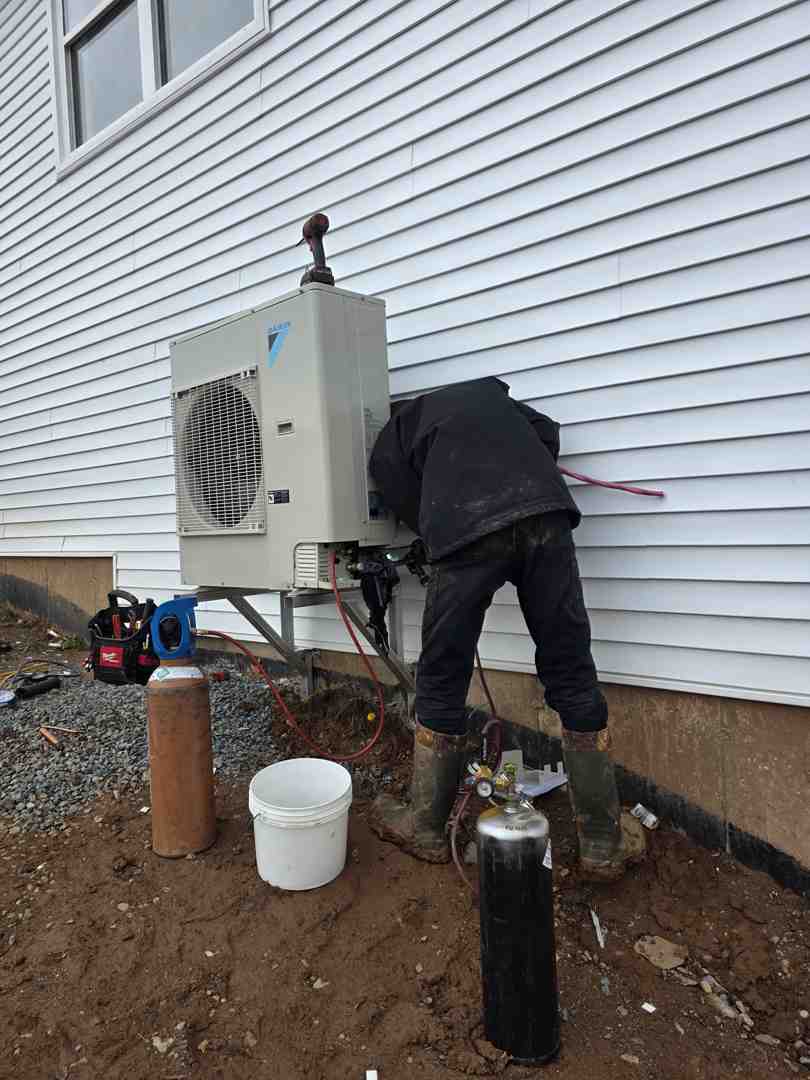
Commercial central heat pump maintenance in Dartmouth, NS is one of the most important investments a local business can make to protect its comfort systems, manage energy performance, and avoid unexpected breakdowns year-round.
Here is a quick overview of what routine commercial central heat pump maintenance typically includes:
Dartmouth's maritime climate is tough on commercial HVAC equipment. Salt air, high humidity, damp winters, and warm humid summers put constant stress on heat pump components. Without regular professional maintenance, small issues quickly become major repairs - or full system failures at the worst possible time. For businesses that depend on consistent comfort for employees and customers alike, that is a risk not worth taking.
When we talk about commercial central heat pump maintenance in Dartmouth, ns, it is important to distinguish between the two primary types of systems used in our local business districts like Burnside or downtown Dartmouth. While both utilize heat pump technology to move thermal energy, their maintenance needs and operational styles differ significantly.
A central (ducted) system uses a network of ducts to distribute air throughout a building. This is often the preferred choice for larger commercial spaces, offices with multiple rooms, or retail outlets where uniform temperature control is paramount. On the other hand, ductless mini-splits consist of individual indoor heads connected to an outdoor compressor, providing zoned cooling and heating.
| Feature | Central Ducted Systems | Ductless Mini-Splits |
|---|---|---|
| Air Distribution | Uniform through existing ductwork | Zoned (room-by-room) |
| Infrastructure | Requires extensive ducting | Small refrigerant lines only |
| Maintenance Focus | Duct integrity, central blower, large coils | Individual head filters, condensate pumps |
| Ideal For | Large open offices, multi-room suites | Additions, server rooms, small shops |
| Visual Impact | Hidden (vents only) | Visible wall-mounted units |
Choosing a Ducted Heat Pump Dartmouth NS often comes down to the existing layout of your property. If your building was previously heated by a furnace or has an established ventilation system, a central heat pump is a seamless upgrade. However, regardless of the system type, professional oversight is required to ensure the mechanical components can handle the heavy lifting required by our Atlantic weather. Our team recognizes that the "right" system is only as good as the care it receives after installation.
Why are we so insistent on regular check-ups? Because Dartmouth is a beautiful coastal city, but that beauty comes with a price: salt air and high humidity. These two factors are the natural enemies of metal components and electrical circuits.
Salt air is corrosive. Over time, salt particles from the Harbour can settle on your outdoor condenser coils, leading to "pitting" and corrosion. This reduces the unit's ability to shed or absorb heat, forcing the compressor to work harder. High humidity, especially during our "foggy" season, can lead to moisture buildup inside the unit, promoting the growth of biological contaminants if not properly cleaned.
A Commercial HVAC Tune-Up isn't just a luxury; it’s a lifespan extender. Research shows that regular maintenance can significantly extend the life of commercial equipment. When you consider the value of a commercial-grade system, adding a few more years to its service life provides massive long-term reliability. Furthermore, consistent maintenance ensures operational reliability. For a business, a breakdown during a January cold snap or a July heatwave isn't just uncomfortable—it can halt productivity and drive customers away.
Most manufacturers, including top-tier brands like Daikin, require proof of professional maintenance to honor warranty claims. If a major component like a compressor fails, the manufacturer may ask for service records. Keeping your system maintained by a reputable provider is your insurance policy against manufacturing defects.
To keep your system running at peak performance, our technicians focus on several high-priority areas. Each component plays a vital role in the "refrigeration cycle" that keeps your office cool in the summer and warm in the winter.
We recommend a bi-annual approach to maintenance: once in the spring to prepare for cooling and once in the fall to prepare for the heating season.
The Spring Cooling Prep:
The Fall Heating Prep:
Proper commercial central heat pump maintenance in Dartmouth, ns does more than just prevent breaks; it optimizes your system's performance. When a system is clean and well-lubricated, it uses less electricity to achieve the same temperature. For Dartmouth businesses, this can result in significant improvements in monthly energy efficiency.
The air your employees breathe directly impacts their health and productivity. A neglected heat pump can become a breeding ground for mold or a circulator for allergens. By integrating maintenance with Commercial Heat Pumps and air exchangers (HRV/ERV), you ensure that stale indoor air is constantly replaced with filtered, fresh outdoor air. Experienced HVAC professionals have long emphasized that a proactive approach to air handling is key to a healthy workplace.
Efficiency is not just about comfort or operating costs. It also affects how much energy your building uses day to day. In Dartmouth, NS, regular commercial central heat pump maintenance helps your system run closer to its intended efficiency, which can reduce wasted power and unnecessary wear. When your coils are clean, filters are clear, and airflow is correct, your heat pump does more work with less strain. That can support your sustainability goals without changing how your team uses the space.
While professional service is scheduled, your staff should keep an eye (and ear) out for these warning signs that you need immediate Heat Pump Maintenance Dartmouth NS Guide assistance:
Maintaining a commercial system can feel like a big job, but having the right information makes it manageable. Many local businesses look to industry standards for guidance on service intervals and expectations.
For most Dartmouth businesses, a bi-annual inspection is the gold standard. High-usage environments, such as 24/7 retail stores or medical facilities, may require quarterly checks. Following manufacturer recommendations is the best way to ensure your warranty remains valid.
While many programs (like those from Efficiency Nova Scotia) focus on the installation of new, high-efficiency equipment, keeping that equipment maintained is often a requirement for ongoing efficiency standards. Some programs for businesses in areas like Sackville may offer audits that highlight the value of preventative care.
Yes! We encourage business owners to perform simple "DIY" checks between professional visits. This includes:
At Presidential Ventilation Systems Ltd., we bring over 30 years of experience to every job site across the Halifax Regional Municipality. As a dedicated Daikin Comfort Pro Dealer, we understand the nuances of Heat Pump Maintenance Dartmouth NS and how to keep your commercial systems running through the toughest Atlantic winters and the most humid summers.
From the industrial hubs of Burnside to the storefronts of Cole Harbour and Eastern Passage, our team is committed to providing the professional oversight your business needs to thrive. Don't wait for a breakdown to realize the value of your HVAC system. Invest in a Heat Pump Maintenance Dartmouth NS plan today and breathe easy knowing your comfort is in expert hands. Whether you are in Bedford, Fall River, or downtown Dartmouth, we are here to ensure your "beyond comfort" goals are met with reliability and efficiency.

Commercial central heat pump maintenance in Dartmouth, NS is one of the most important investments a local business can make to protect its comfort systems, manage energy performance, and avoid unexpected breakdowns year-round.
Here is a quick overview of what routine commercial central heat pump maintenance typically includes:
Dartmouth's maritime climate is tough on commercial HVAC equipment. Salt air, high humidity, damp winters, and warm humid summers put constant stress on heat pump components. Without regular professional maintenance, small issues quickly become major repairs - or full system failures at the worst possible time. For businesses that depend on consistent comfort for employees and customers alike, that is a risk not worth taking.
When we talk about commercial central heat pump maintenance in Dartmouth, ns, it is important to distinguish between the two primary types of systems used in our local business districts like Burnside or downtown Dartmouth. While both utilize heat pump technology to move thermal energy, their maintenance needs and operational styles differ significantly.
A central (ducted) system uses a network of ducts to distribute air throughout a building. This is often the preferred choice for larger commercial spaces, offices with multiple rooms, or retail outlets where uniform temperature control is paramount. On the other hand, ductless mini-splits consist of individual indoor heads connected to an outdoor compressor, providing zoned cooling and heating.
| Feature | Central Ducted Systems | Ductless Mini-Splits |
|---|---|---|
| Air Distribution | Uniform through existing ductwork | Zoned (room-by-room) |
| Infrastructure | Requires extensive ducting | Small refrigerant lines only |
| Maintenance Focus | Duct integrity, central blower, large coils | Individual head filters, condensate pumps |
| Ideal For | Large open offices, multi-room suites | Additions, server rooms, small shops |
| Visual Impact | Hidden (vents only) | Visible wall-mounted units |
Choosing a Ducted Heat Pump Dartmouth NS often comes down to the existing layout of your property. If your building was previously heated by a furnace or has an established ventilation system, a central heat pump is a seamless upgrade. However, regardless of the system type, professional oversight is required to ensure the mechanical components can handle the heavy lifting required by our Atlantic weather. Our team recognizes that the "right" system is only as good as the care it receives after installation.
Why are we so insistent on regular check-ups? Because Dartmouth is a beautiful coastal city, but that beauty comes with a price: salt air and high humidity. These two factors are the natural enemies of metal components and electrical circuits.
Salt air is corrosive. Over time, salt particles from the Harbour can settle on your outdoor condenser coils, leading to "pitting" and corrosion. This reduces the unit's ability to shed or absorb heat, forcing the compressor to work harder. High humidity, especially during our "foggy" season, can lead to moisture buildup inside the unit, promoting the growth of biological contaminants if not properly cleaned.
A Commercial HVAC Tune-Up isn't just a luxury; it’s a lifespan extender. Research shows that regular maintenance can significantly extend the life of commercial equipment. When you consider the value of a commercial-grade system, adding a few more years to its service life provides massive long-term reliability. Furthermore, consistent maintenance ensures operational reliability. For a business, a breakdown during a January cold snap or a July heatwave isn't just uncomfortable—it can halt productivity and drive customers away.
Most manufacturers, including top-tier brands like Daikin, require proof of professional maintenance to honor warranty claims. If a major component like a compressor fails, the manufacturer may ask for service records. Keeping your system maintained by a reputable provider is your insurance policy against manufacturing defects.
To keep your system running at peak performance, our technicians focus on several high-priority areas. Each component plays a vital role in the "refrigeration cycle" that keeps your office cool in the summer and warm in the winter.
We recommend a bi-annual approach to maintenance: once in the spring to prepare for cooling and once in the fall to prepare for the heating season.
The Spring Cooling Prep:
The Fall Heating Prep:
Proper commercial central heat pump maintenance in Dartmouth, ns does more than just prevent breaks; it optimizes your system's performance. When a system is clean and well-lubricated, it uses less electricity to achieve the same temperature. For Dartmouth businesses, this can result in significant improvements in monthly energy efficiency.
The air your employees breathe directly impacts their health and productivity. A neglected heat pump can become a breeding ground for mold or a circulator for allergens. By integrating maintenance with Commercial Heat Pumps and air exchangers (HRV/ERV), you ensure that stale indoor air is constantly replaced with filtered, fresh outdoor air. Experienced HVAC professionals have long emphasized that a proactive approach to air handling is key to a healthy workplace.
Efficiency is not just about comfort or operating costs. It also affects how much energy your building uses day to day. In Dartmouth, NS, regular commercial central heat pump maintenance helps your system run closer to its intended efficiency, which can reduce wasted power and unnecessary wear. When your coils are clean, filters are clear, and airflow is correct, your heat pump does more work with less strain. That can support your sustainability goals without changing how your team uses the space.
While professional service is scheduled, your staff should keep an eye (and ear) out for these warning signs that you need immediate Heat Pump Maintenance Dartmouth NS Guide assistance:
Maintaining a commercial system can feel like a big job, but having the right information makes it manageable. Many local businesses look to industry standards for guidance on service intervals and expectations.
For most Dartmouth businesses, a bi-annual inspection is the gold standard. High-usage environments, such as 24/7 retail stores or medical facilities, may require quarterly checks. Following manufacturer recommendations is the best way to ensure your warranty remains valid.
While many programs (like those from Efficiency Nova Scotia) focus on the installation of new, high-efficiency equipment, keeping that equipment maintained is often a requirement for ongoing efficiency standards. Some programs for businesses in areas like Sackville may offer audits that highlight the value of preventative care.
Yes! We encourage business owners to perform simple "DIY" checks between professional visits. This includes:
At Presidential Ventilation Systems Ltd., we bring over 30 years of experience to every job site across the Halifax Regional Municipality. As a dedicated Daikin Comfort Pro Dealer, we understand the nuances of Heat Pump Maintenance Dartmouth NS and how to keep your commercial systems running through the toughest Atlantic winters and the most humid summers.
From the industrial hubs of Burnside to the storefronts of Cole Harbour and Eastern Passage, our team is committed to providing the professional oversight your business needs to thrive. Don't wait for a breakdown to realize the value of your HVAC system. Invest in a Heat Pump Maintenance Dartmouth NS plan today and breathe easy knowing your comfort is in expert hands. Whether you are in Bedford, Fall River, or downtown Dartmouth, we are here to ensure your "beyond comfort" goals are met with reliability and efficiency.
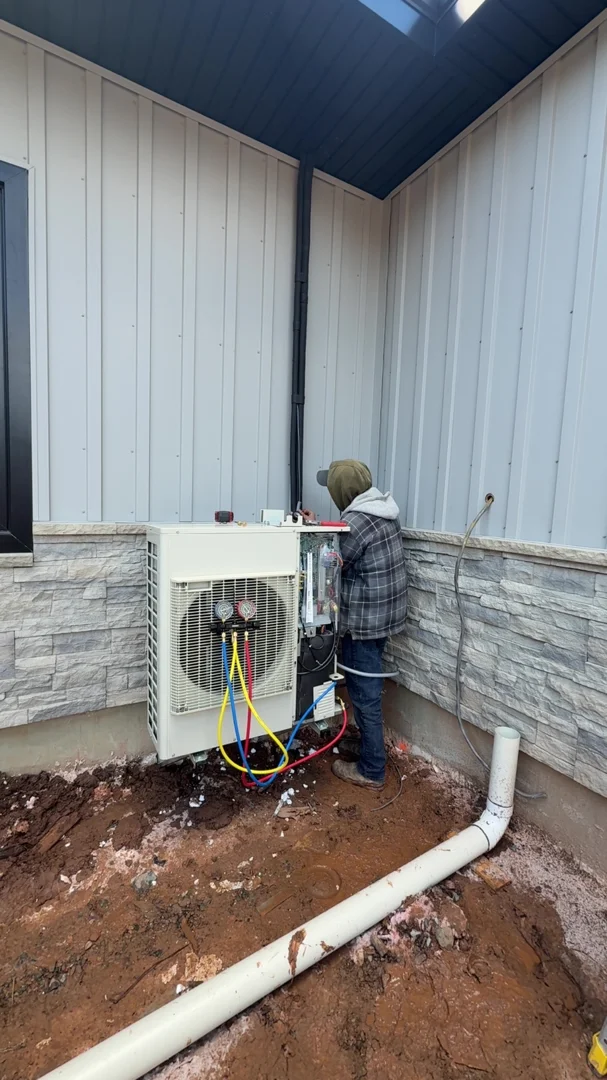
Knowing the signs your commercial HVAC system needs professional service early can be the difference between a quick fix and a full system failure that shuts down your building's heating and cooling for days.
Commercial HVAC systems work hard. They run year-round, handle large spaces, and are under constant demand from employees, customers, and tenants. When something starts going wrong, the warning signs are often subtle at first — a strange noise here, a slightly higher energy use there. By the time the problem becomes obvious, it has usually been affecting your system's efficiency for a while.
According to industry data, regular HVAC maintenance can reduce energy use by 5 to 20% annually, and commercial systems that receive preventive care experience up to 95% fewer breakdowns than those that don't. That's a significant gap — and it starts with knowing what to look for.
Here's a quick overview of the most common warning signs:
If you're noticing any of these in your facility, it's time to take action before a small issue becomes a major one.
Identifying issues with your commercial heating and cooling setup requires a mix of observation and proactive management. Because these systems are highly complex, a single failing part can trigger a chain reaction that compromises the entire unit.
When you notice changes in how your system sounds, smells, or performs, it is a clear message from your equipment that something is wrong. Let's break down the five most critical indicators that your commercial HVAC system requires professional diagnostic attention.
A primary job of any commercial climate control system is to maintain a uniform, comfortable environment throughout your facility. When you start noticing that the boardroom feels like a freezer while the corner offices are uncomfortably warm, your system is struggling.
Temperature fluctuations are rarely a simple thermostat issue. In commercial properties, these hot and cold spots often point to deeper system imbalances, such as:
If your building layout has changed or if you are dealing with Commercial HVAC Systems Not Working in Halifax NS, professional diagnostic tools are required to re-balance the airflow and ensure even comfort across all zones.
While commercial HVAC systems are powerful, they are designed to operate with a consistent, low-level hum. Sudden, loud, or unusual sounds are immediate red flags that mechanical components are wearing out or failing.
Ignoring these sensory warning signs can turn a minor belt replacement into a catastrophic motor failure. For a deeper look at identifying these sound and smell cues, check out our Commercial HVAC Repair Guide Stewiacke.
As a facility manager or business owner, you keep a close eye on operational efficiency. If your energy usage records show a sudden, unexplained increase — especially when compared to the same period in previous years — your HVAC system is likely losing its efficiency.
As of June 2026, energy efficiency benchmarks are tighter than ever, and an inefficient HVAC system is one of the fastest ways to reduce your operational efficiency. When internal components like the compressor, fan motors, or coils are dirty or failing, the system must work twice as hard and run much longer to achieve the same indoor temperatures.
Regular maintenance and timely interventions can prevent these energy spikes. Scheduling a professional Commercial HVAC Tune Up is the most effective way to restore your system's efficiency and optimize your system's performance.
Short cycling occurs when your commercial HVAC system turns on, runs for a brief period, and then abruptly shuts off before completing a standard heating or cooling cycle. This process repeats rapidly throughout the day.
This frequent on/off operation is incredibly damaging to your equipment. The startup phase of a compressor draws the most electrical current and subjects mechanical parts to the highest amount of physical stress. Constant starting and stopping accelerates component wear, shortens the overall system lifespan, and causes massive energy spikes.
Common causes of short cycling include:
If your system is short cycling, consulting a professional is urgent. For businesses in the corridor region, our Mount Uniacke Commercial HVAC Repair Guide offers excellent insights into how local climate factors can trigger these cycling issues.
Have you noticed that the air coming from your supply vents feels weak, or that it takes hours for your building to cool down on a warm afternoon? Weak airflow is a clear sign of system restriction.
When airflow is restricted, your HVAC system cannot distribute conditioned air effectively, causing some zones to remain uncomfortable while the system runs continuously. This lack of circulation also allows stale air and humidity to build up indoors, lowering employee productivity and tenant satisfaction.
Airflow blockages are typically caused by:
Keeping up with your Commercial Ventilation Maintenance Halifax NS ensures your ductwork, filters, and ventilation components remain clean, clear, and capable of delivering strong, healthy airflow to every corner of your property.
Deciding whether to continue repairing an aging commercial HVAC system or invest in a full system replacement is a major operational decision. Below is a quick comparison table to help guide your facilities team:
| Indicator | Choose Repair | Choose Replacement |
|---|---|---|
| Equipment Age | Under 10 years old | 10 to 15+ years old |
| Repair Frequency | Infrequent, minor component wear | Constant breakdowns, major part failures |
| Repair Scope | Minor component replacement | Major system overhaul required |
| Energy Efficiency | Stable energy usage close to baseline | Consistently climbing energy usage, outdated technology |
| Major Components | Failed capacitor, contactor, or fan belt | Failed compressor, cracked coils, or rusted chassis |
The most effective way to catch these warning signs before they escalate into a major business disruption is through structured, proactive care. Waiting for the system to break down before calling a technician — known as reactive or "run-to-fail" maintenance — is always the most disruptive path.
Implementing a preventive maintenance agreement delivers exceptional long-term reliability by catching minor issues, such as a worn belt or a small refrigerant leak, before they cause a complete system breakdown. To learn more about how structured care protects your facility's operations, read about How a Maintenance Agreement Extends Commercial HVAC Equipment Lifespan.
In Nova Scotia, our coastal climate brings unique environmental challenges that accelerate wear on outdoor HVAC equipment. High humidity, heavy seasonal storms, and salt-laden air can quickly corrode aluminum fins, rust structural brackets, and degrade electrical connections.
When minor warning signs are ignored in coastal environments, salt air corrosion accelerates the damage, leading to rapid refrigerant leaks, electrical shorts, and eventual complete system failure. Understanding How Salt Air and Coastal Conditions in Nova Scotia Affect Commercial HVAC Equipment highlights why prompt, professional service is so critical for businesses in our region.
Water leaks and high indoor humidity are usually caused by a clogged condensate drain line or frozen evaporator coils. Because cooling systems naturally dehumidify the air as they operate, they produce a significant amount of water. If the drain pan or drain lines are blocked by algae, dirt, or debris, this water will overflow, leading to stained ceiling tiles, mold growth, and potential water damage to your building's structure.
Regularly clearing these drains is a key part of our Commercial Central HVAC Maintenance Guide Dartmouth NS.
As a general rule, commercial air filters should be checked monthly and replaced at least every three months. However, in high-occupancy buildings or facilities prone to dust, more frequent changes may be required. Outdoor and indoor heat exchanger coils should be professionally inspected and cleaned at least once a year — typically in the spring before the heavy cooling season begins.
For reliable, scheduled upkeep, consider booking a Reliable Commercial HVAC Service in Cole Harbour NS.
When a commercial HVAC system is neglected, dirt and dust accumulate on the air filters and heat exchanger coils. This buildup restricts airflow and acts as an insulating barrier, making it much harder for the system to transfer heat. As a result, the compressor and fan motors must run longer and draw more electrical current to maintain the set temperature. This added strain can increase your annual energy consumption by 5% to 20%, leading to higher energy consumption and shortening the lifespan of your valuable equipment.
Your commercial HVAC system is a major investment that keeps your business running smoothly, comfortably, and productively. Paying close attention to the early warning signs of system failure — from minor temperature swings to unusual noises — is the key to avoiding unplanned downtime and premature equipment replacement.
At Presidential Ventilation Systems Ltd., we bring over 30 years of experience to commercial properties across Nova Scotia, including Halifax, Dartmouth, Bedford, Burnside, and surrounding areas. As a trusted Daikin Comfort Pro Dealer, our team is fully equipped to handle complex commercial diagnostics, routine maintenance, and system optimizations.
Don't wait for a complete system breakdown to address your heating and cooling needs. Contact us today to schedule a professional inspection and learn more about our high-efficiency Commercial HVAC services.
Knowing how to choose the right hvac system for a new construction home in nova scotia is one of the most important decisions you will make during your build. Heating and cooling account for nearly 55% of a typical Nova Scotia household's annual energy use — so getting this decision right from the start has a real, lasting impact on your comfort and efficiency.
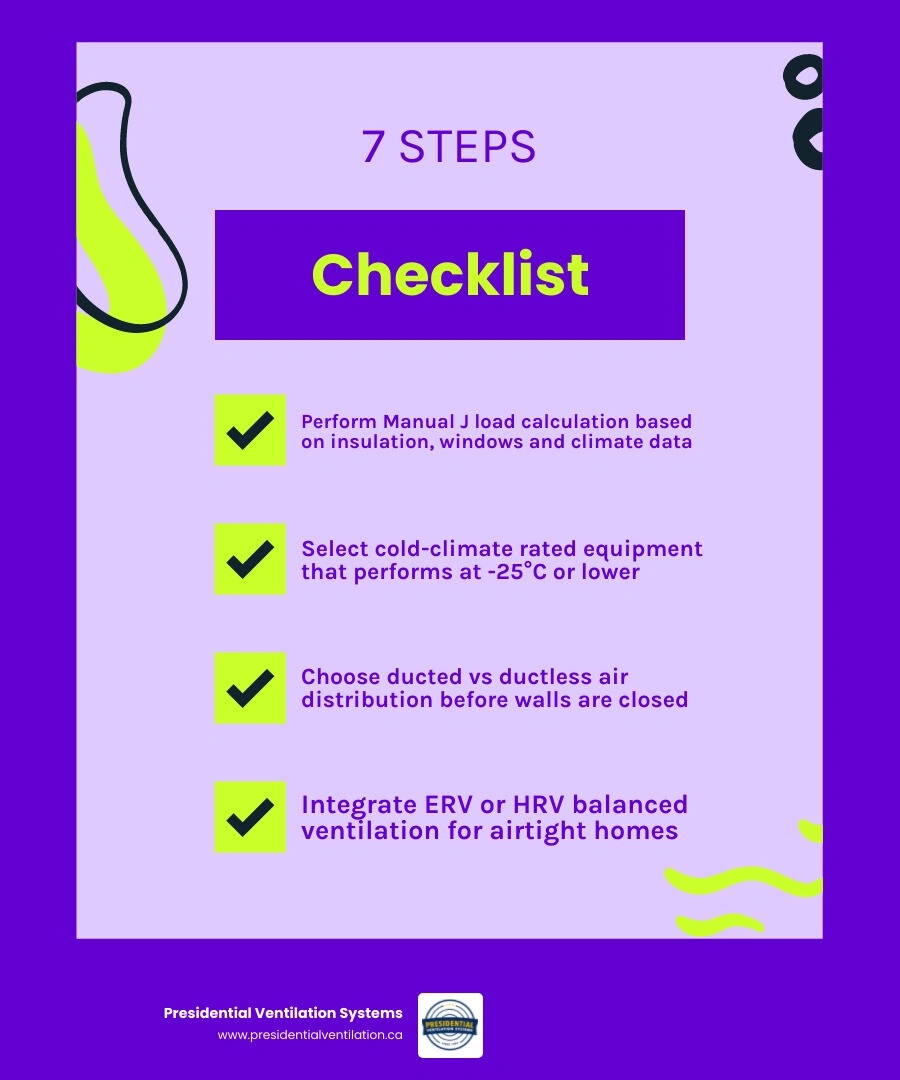
Quick Answer: How to Choose the Right HVAC System for a New Construction Home in Nova Scotia
Building a new home gives you a rare advantage: you get to design your ventilation and air distribution system from scratch, before the walls are closed. There is no retrofitting, no working around existing infrastructure, and no compromise. But that opportunity also means there are more decisions to make earlier in the process — and the consequences of getting them wrong are baked into your home for decades.
This guide walks you through every step, from load calculations and ductwork design to ventilation integration and trade coordination, so your new Nova Scotia home is comfortable, efficient, and built right the first time.
Designing a home in Nova Scotia means preparing for a climate of extremes. From damp, bone-chilling winters in Fall River and Bedford to humid, salty summer breezes along the coast of Eastern Passage, your climate control systems have to work hard year-round. When planning your new construction project, several critical factors must guide your mechanical choices.
Modern homes built in 2026 are constructed to be incredibly airtight. With the adoption of the National Building Code (NBC) 2020 standards across Nova Scotia, custom homes feature advanced house wraps, meticulous air sealing, and high-performance R-values in the walls and ceilings.
While an airtight envelope is fantastic for keeping drafts out, it completely changes how we must approach your HVAC and indoor air quality design. In an older, drafty home, fresh air leaks in naturally through gaps in windows and doors. In a modern airtight home, stale air, VOCs, and moisture are trapped inside. Your HVAC design must actively manage this sealed environment to prevent indoor air pollution and moisture damage.
Nova Scotia sits in a unique marine climate zone. We experience high relative humidity throughout the year, which makes winters feel colder and summers feel much stickier. Your home's heating and cooling system must be robust enough to handle deep winter freezes while offering excellent dehumidification capabilities during the shoulder seasons and summer months. Selecting variable-speed air handling units ensures your system can run on low, continuous cycles to extract moisture from the air without over-cooling your living spaces.
A high-performance home requires careful planning of your utility infrastructure. Your ventilation fans, air handlers, and backup systems all demand dedicated space and proper capacity. Designing these systems in tandem with your overall layout prevents the need for complex upgrades down the road. To understand how infrastructure planning works during the design stages, read our guide on How Electrical Planning for New Construction Differs from Retrofit Work in Atlantic Canada.
One of the greatest benefits of building a new home in areas like Dartmouth, Sackville, or Timberlea is the ability to plan a seamless, quiet, and highly efficient air distribution layout before framing even begins.
In older homes, ductwork was frequently run through unconditioned attics, crawlspaces, or damp basements. This layout is highly inefficient, often resulting in a 20% to 30% loss of heating and cooling energy due to conduction and air leakage.
In a new build, we design the ductwork to live entirely within the conditioned envelope of the home. By utilizing open-web floor trusses or framing custom bulkheads through closets and hallways, your ductwork remains protected from extreme temperature swings, ensuring that every bit of conditioned air reaches your living spaces.
Standard, off-the-shelf ducting often leads to restricted airflow, whistling noises, and hot or cold spots throughout the house. Custom ductwork design ensures that the supply and return trunks are sized perfectly for your home's specific layout. Balanced static pressure is essential for system longevity; when air flows smoothly without restriction, your blower motor doesn't have to work as hard, extending the lifespan of your equipment. For a deeper look at how we craft these systems, check out our insights on Custom Ductwork Design Halifax NS.
When determining your home's layout, you will need to choose between a centralized ducted system, a ductless zoned layout, or a hybrid of both. Here is how they compare for a new construction build:
| Feature | Ducted System Layout | Ductless System Layout |
|---|---|---|
| Aesthetic Impact | Minimalist; clean grilles on floors, walls, or ceilings. | Visible wall-mounted or ceiling-recessed cassettes in rooms. |
| Air Filtration | Superior; central high-MERV filters and air purifiers. | Individual unit filters; requires regular cleaning per head. |
| Zoning Control | Managed via motorized dampers and smart thermostats. | Excellent; each room or zone is adjusted independently. |
| Installation Timing | Must be fully integrated during the framing stage. | Flexible, but requires early path planning for linesets. |
Because modern Nova Scotia homes are built to be incredibly airtight, mechanical ventilation is no longer optional — it is a building code requirement. Without proper ventilation, moisture from cooking, showering, and breathing accumulates, leading to condensation on windows and potential mold issues.
To maintain excellent indoor air quality, we integrate balanced ventilation systems into your HVAC layout:
Integrating these ventilation systems directly into your central ductwork ensures that every room receives a continuous supply of fresh, filtered air. To help weigh these layout options during your design phase, explore our guide on How to Decide Between Ducted and Ductless When Building a New Home in Nova Scotia.
One of the most common mistakes in residential construction is sizing the HVAC system based on simple rules of thumb, such as "one ton of capacity per 600 square feet." This outdated approach almost always results in an oversized system.
An oversized climate control system will warm or cool your home too quickly, a process known as short-cycling. Because the system turns on and off rapidly, it never runs long enough to extract humidity from the air, leaving your home feeling clammy in the summer. Short-cycling also causes significant wear and tear on system components, shortening the system's lifespan and increasing your energy consumption.
To prevent this, we perform a professional Manual J load calculation. This comprehensive calculation takes into account:
By sizing your system precisely to your home's thermal load, we ensure continuous, low-stage operation that maximizes energy efficiency, controls humidity, and extends the life of your equipment.
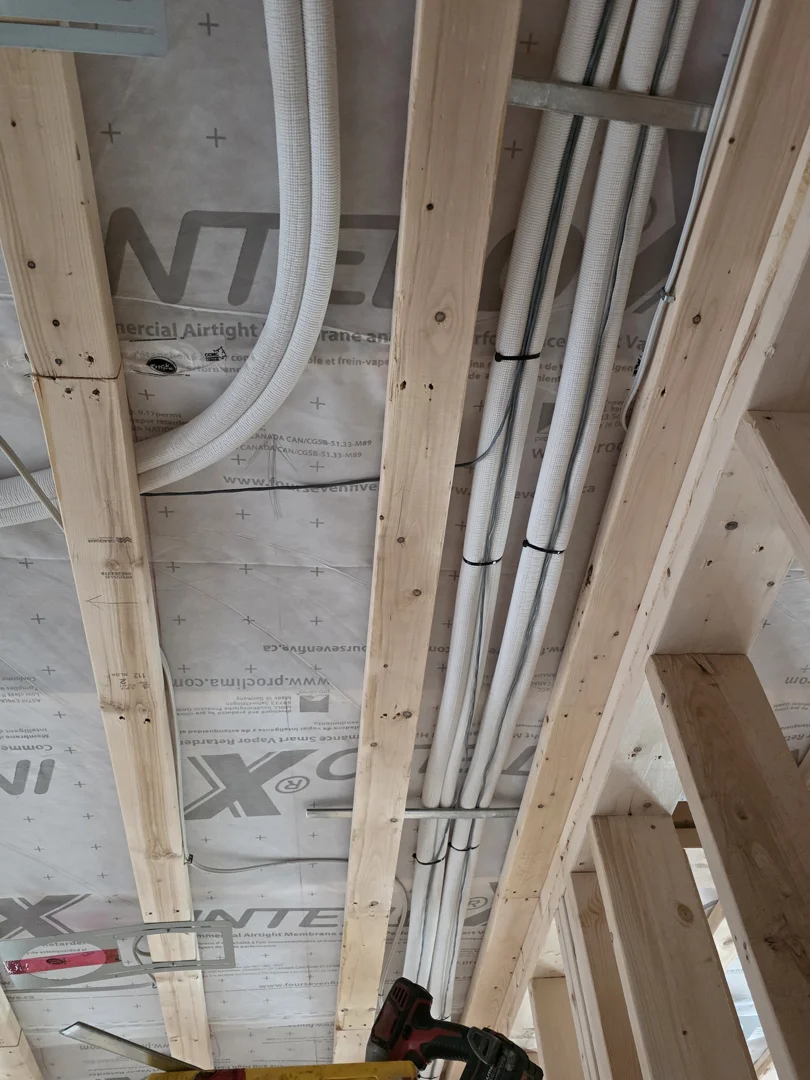
A successful HVAC installation relies heavily on proper trade sequencing during the rough-in phase of your build. Because rigid ductwork and large ventilation trunks take up substantial physical space, they must be routed through your home's framing before other mechanical trades begin their work.
If other utility lines are run through a joist bay before the ductwork is installed, the ventilation team may be forced to reroute ducting, creating sharp bends that restrict airflow and increase noise.
Coordinating your ventilation layout with other trades ensures that everything is placed correctly for air handlers, ERVs, and smart controls. For a detailed breakdown of how to manage this timeline with your builder, read our expert guide on How to Coordinate Electrical and HVAC Installation in a New Build in Nova Scotia. You can also learn more about our comprehensive approach to system integration by visiting our page on New Construction Electrical Services in Nova Scotia.
Modern homes are built so tightly that they cannot exchange air naturally. Balanced ventilation, using an HRV or ERV, is required to mechanically exhaust stale indoor air and bring in filtered outdoor air. This process controls indoor humidity levels, prevents condensation on windows, and eliminates indoor pollutants like carbon dioxide, cooking odors, and VOCs, keeping your indoor air clean and healthy.
Ductwork should always be installed before other utilities. Rigid metal ducts and ventilation pipes require dedicated, straight paths through your home's framing and floor trusses. Because wiring and smaller pipes are highly flexible, they can easily be routed around pre-installed ductwork, preventing spatial conflicts and complex design changes.
High-quality insulation and superior air sealing reduce your home's overall heating and cooling loads. When your home retains heat efficiently, your heating and cooling equipment can be smaller and more compact. Sizing your system to match this reduced load prevents short-cycling, lowers energy consumption, and ensures your system runs quietly and efficiently.
Choosing the right HVAC and ventilation system for your new construction home in Nova Scotia is a major decision, but it is also an incredible opportunity. By planning your air distribution, trade sequencing, and indoor air quality systems before the drywall goes up, you can build a home that is remarkably comfortable, quiet, and energy-efficient for decades to come.
At Presidential Ventilation Systems, we bring over 30 years of local experience to every custom home build. From custom ductwork fabrication to advanced HRV and ERV integration, our team is proud to serve families across Halifax, Dartmouth, Bedford, Sackville, and surrounding communities.
If you are ready to design a custom ventilation system for your new build, explore our dedicated page on HVAC Installation Halifax NS 2025 or contact us today to learn more about our professional home comfort services. Let's work together to build a home you will love living in.