Business

Get Your Commercial Heat Pump Running Again in Nova Scotia

By
Tom Brown
October 23, 2025
5 min read

Why Commercial Heat Pumps Stop Working When You Need Them Most

When your commercial heat pumps not working in stewiacke ns, it can bring business operations to a standstill. A system failure leads to unhappy customers, reduced employee productivity, and potential damage to temperature-sensitive inventory. Commercial units work harder than residential systems, serving larger spaces and making them prone to sudden failures, especially during a cold snap or after a power outage.

Quick Troubleshooting Checklist for Commercial Heat Pumps:

  1. Check your thermostat - Verify it's set to the correct mode (heat/cool) and temperature.
  2. Inspect circuit breakers - Look for tripped breakers in your electrical panel.
  3. Examine air filters - Replace if dirty or clogged (check monthly).
  4. Clear the outdoor unit - Remove snow, ice, or debris blocking airflow.
  5. Listen for unusual sounds - Grinding or squealing indicates mechanical issues.
  6. Call a professional - If basic checks don't resolve the issue, contact an expert.

Many common issues have simple solutions that business owners can address themselves. Understanding the warning signs and knowing when to troubleshoot versus when to call an expert can save you time and money. This guide walks you through identifying problems, performing basic troubleshooting, and recognizing when it's time to bring in certified HVAC professionals.
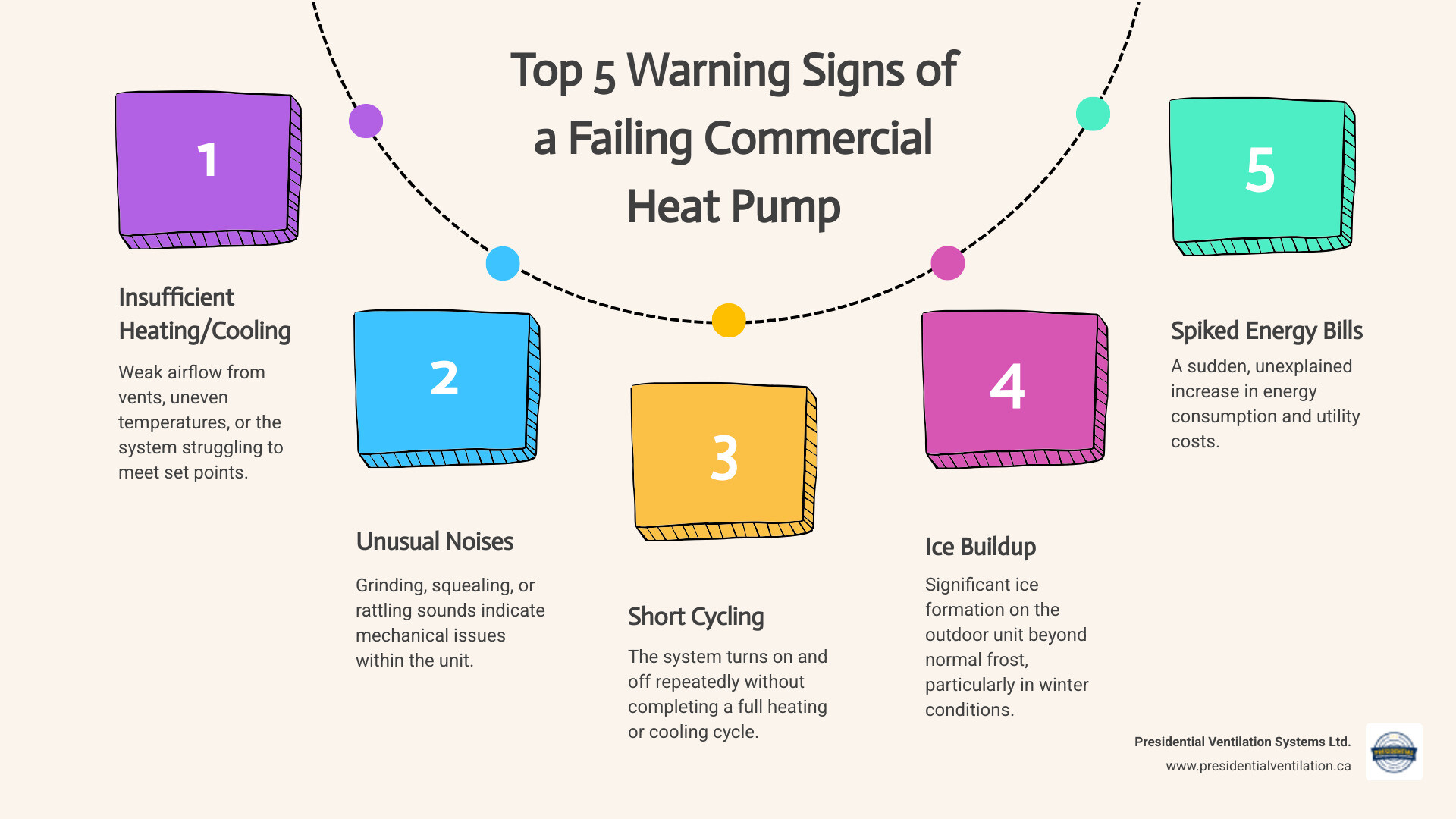
Infographic showing the top 5 warning signs of a failing commercial heat pump: 1. Insufficient heating or cooling with weak airflow from vents, 2. Unusual mechanical noises like grinding, squealing, or rattling sounds, 3. Short cycling where the system turns on and off repeatedly, 4. Ice buildup on the outdoor unit beyond normal frost, 5. Sudden spike in energy bills without explanation - commercial heat pumps not working in stewiacke ns infographic process-5-steps-informal

Identifying the Problem: Signs Your Commercial Heat Pump Needs Attention

When your commercial heat pumps not working in stewiacke ns, it's often preceded by clear warning signs. Catching these early can mean the difference between a quick fix and a complete system breakdown. Look out for these red flags:
  • Insufficient Heating or Cooling: The most obvious sign is when the system can't maintain a comfortable temperature. You might notice weak airflow from vents or air that's barely conditioned.
  • Unusual Noises: Grinding sounds often point to worn motor bearings, while squealing can mean a failing belt or motor. Rattling suggests loose components or debris. A high-pitched screaming sound indicates dangerous refrigerant pressure, and you should shut the system down immediately and call a professional.
  • Short Cycling: If the heat pump turns on and off every few minutes, it's short cycling. This wears out components much faster than normal operation.
  • Increased Energy Bills: A sudden spike in utility costs without a change in usage often means your heat pump is working overtime to compensate for an underlying problem.
  • Uneven Temperatures: If some areas of your business are hot while others are cold, you may have airflow issues, ductwork leaks, or an improperly sized system.
  • Musty or Burning Smells: A musty odor can indicate mold or mildew in the coils or ductwork. A burning smell is more serious and could point to an overheating electrical component or a strained motor.
  • Ice Buildup on the Outdoor Unit: While a light layer of frost is normal in cold weather, thick ice accumulation signals a problem, such as low refrigerant or a malfunctioning defrost cycle.
  • System Won't Turn On or Runs Constantly: A system that fails to start could have a simple electrical issue or a major component failure. One that runs non-stop is struggling to reach the set temperature, pointing to issues like refrigerant leaks or poor insulation.

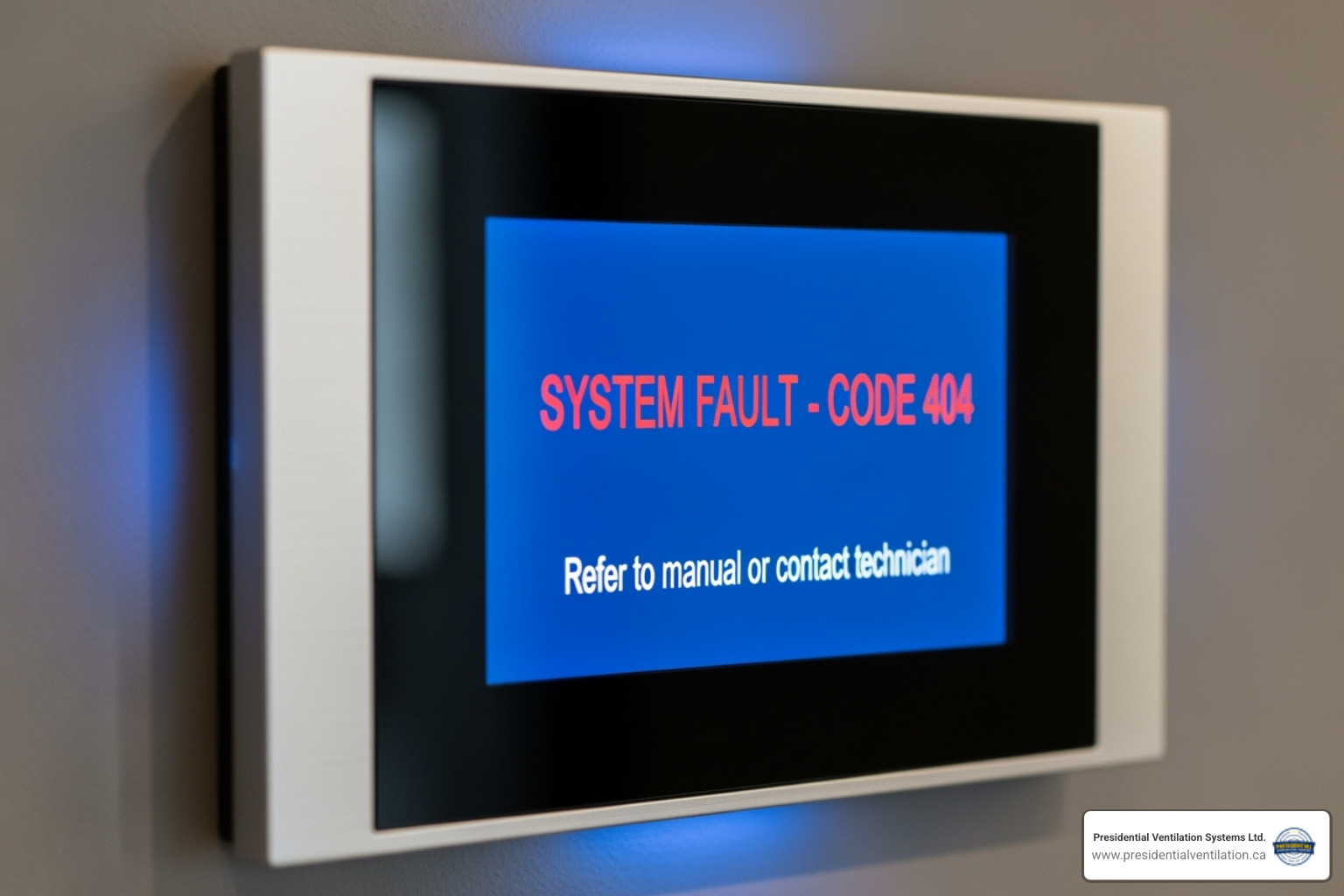
commercial thermostat displaying an error message - commercial heat pumps not working in stewiacke ns

The Impact of the Stewiacke Climate

Nova Scotia's weather pushes commercial heat pumps to their limits. Understanding these local challenges can help you spot problems early.

  • Heavy Snowfall and Freezing Rain: Snow and ice can block airflow to the outdoor unit, severely reducing its ability to exchange heat. This drop in performance causes the system to work harder for less output.
  • Defrost Cycle Issues: In our cold temperatures, the defrost cycle is critical for melting ice off the outdoor coil. If the timer or sensor fails, or if refrigerant levels are low, ice can quickly encase the unit and cause it to fail.
  • Power Outages: After a storm-related power outage of more than 30 minutes, restarting your heat pump immediately can damage the compressor. Once power is restored, switch to the emergency heat setting for at least six hours before returning to normal operation to allow the system to warm up gradually. Always check your manual for specific instructions.

First Response: What a Business Owner Can Do

When your commercial heat pumps not working in stewiacke ns, don't immediately call for service. Several straightforward checks might solve the problem, saving you time and the cost of a service call.

person safely checking a commercial electrical panel - commercial heat pumps not working in stewiacke ns

Immediate DIY Troubleshooting Steps for a Commercial Heat Pump Not Working

  • Check the Thermostat: Confirm it's set to the correct mode (heating or cooling) and temperature. An employee or cleaning crew may have changed the settings. If the thermostat is battery-powered, replace the batteries, as weak ones can cause erratic behavior.
  • Inspect the Circuit Breaker: Your heat pump has a dedicated breaker in the electrical panel. Look for a tripped breaker (in the "off" or middle position). Flip it fully to "off," then back to "on." For a full reset, turn the breaker off for five minutes before turning it back on.
  • Examine Air Filters: Dirty filters are a leading cause of heat pump problems. Locate the return air filters and hold one up to the light. If you can't see through it, it's clogged and restricting airflow. For commercial systems, check filters monthly and replace them when dirty. Common sizes include 20x25x1 and 24x24x1, with many businesses using MERV 11-13 rated filters for better air quality.

Inspecting the Outdoor Unit

  • Clear Debris: Walk around the outdoor unit and clear away any leaves, branches, or debris. Ensure there are at least two feet of clear space on all sides for proper airflow.
  • Remove Snow and Ice: In winter, gently brush away snow accumulation. Do not use sharp tools that could damage the fins. For thick ice, you can pour lukewarm water over the coils to help it melt. Persistent ice buildup that doesn't clear during a defrost cycle indicates a deeper problem requiring professional service.
  • Look and Listen: Check for visible damage like bent fins or loose wires. Listen for the unusual grinding, squealing, or rattling noises mentioned earlier.

Common Reasons Commercial Heat Pumps Fail in Stewiacke, NS

When basic troubleshooting doesn't work, the issue with your commercial heat pumps not working in stewiacke ns is likely more complex. Understanding these common causes can help you communicate with your HVAC technician.
  • Electrical Issues: Beyond a tripped breaker, problems can include a failed starting capacitor (the unit may hum but not start) or a malfunctioning thermostat that sends incorrect signals.
  • Refrigerant Leaks: Refrigerant is essential for heat transfer. If it leaks, the system will struggle, leading to constant running, poor heating/cooling, and ice buildup on the coils. Low refrigerant always indicates a leak that needs professional repair.
  • Frozen Outdoor Unit: Persistent freezing in our climate often points to deeper issues than just snow. A clogged filter, low refrigerant, or a failed outdoor fan motor can all prevent the unit from defrosting properly.
  • Airflow Problems: Dirty filters, blocked vents, or leaking ductwork can starve the system of air, forcing it to work harder. This strain can eventually lead to compressor failure—the most significant and costly repair.

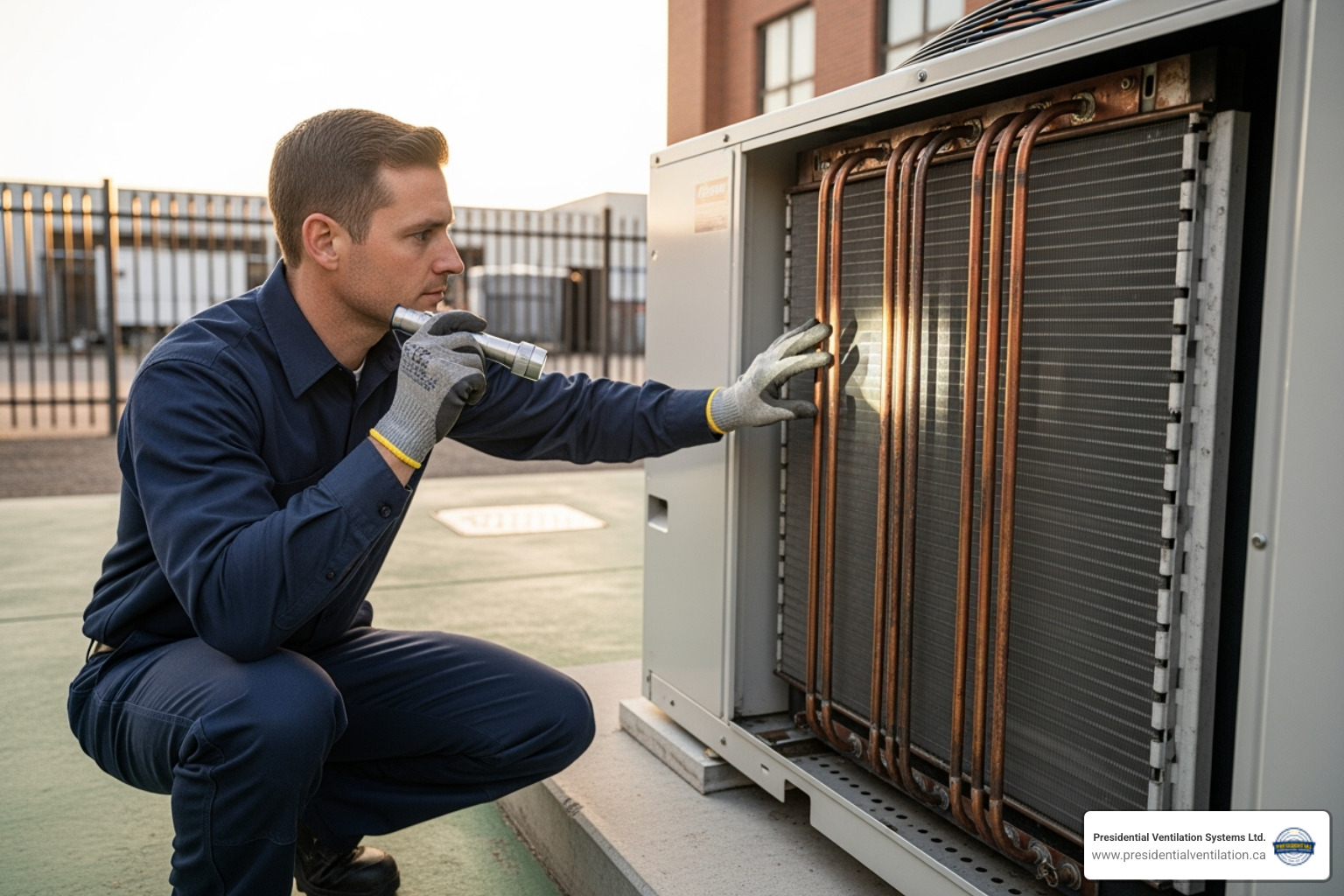
technician inspecting the coils on a commercial heat pump - commercial heat pumps not working in stewiacke ns

Issues Specific to the Local Climate

Stewiacke's cold, damp winters place unique demands on heat pumps.

  • Improper Defrosting: When a heat pump's defrost timer or sensor fails in near-freezing temperatures, the outdoor unit can become encased in ice, leading to a complete shutdown.
  • Blockages from Snow and Ice: A single snowstorm can bury an outdoor unit, cutting off airflow. Freezing rain is equally problematic, coating the unit in a layer of ice that chokes the system.
  • Power Surge Damage: When power returns after an outage, the resulting surge can damage sensitive electronics. Following proper restart procedures is crucial to prevent this.

When to Call a Professional Technician

Know when to step back and call an expert to ensure safety and prevent further damage. Contact a professional for:

  • Refrigerant-Related Issues: Handling refrigerant requires certification by law. If you suspect a leak (hissing sounds, persistent ice), call a technician.
  • Electrical Problems: If a breaker trips repeatedly or you notice burning smells, shut the system down and call for help. Do not attempt to fix complex electrical issues yourself.
  • Compressor Problems: Loud grinding or screeching noises, or a unit that won't start at all, often signal compressor failure, which requires professional diagnosis.
  • Persistent Mechanical Noises: If unusual sounds continue after clearing debris, it indicates an internal problem that could lead to catastrophic failure if ignored.

The Importance of Preventative Maintenance

Overlooking regular maintenance for your commercial heat pump is like skipping oil changes for your company vehicles. It's a critical practice to prevent a crisis when your commercial heat pumps not working in stewiacke ns during extreme weather. The key benefits include:

  • Increased System Longevity: A well-maintained commercial heat pump can last well beyond its 10-15 year average lifespan, delaying a major capital expense.
  • Improved Energy Efficiency: A clean, tuned system uses less electricity, lowering your monthly utility bills.
  • Fewer Costly Breakdowns: Catching small issues early prevents them from escalating into expensive emergency repairs.
  • Maintained Warranty Coverage: Many manufacturers require proof of regular professional maintenance to keep your warranty valid.
  • Better Indoor Air Quality: Clean coils and filters create a healthier environment for your employees and customers. Regular maintenance is key to both performance and air quality.

Creating a Maintenance Schedule

A structured schedule ensures your system gets the care it needs.

  • Monthly Tasks: You or your staff should inspect and replace air filters, check thermostat settings, and keep the outdoor unit clear of debris, snow, and ice.
  • Seasonal Tune-Ups: In spring and fall, have a certified technician perform a thorough inspection. This includes checking refrigerant levels, testing electrical connections, cleaning indoor and outdoor coils, inspecting drain lines, and verifying the defrost cycle is ready for winter.
  • Annual Comprehensive Tune-Ups: This is a deeper dive into all components, including the compressor, to assess overall efficiency and health.

Long-Term Considerations for Your System

As your heat pump ages, it's important to plan for the future.

  • Average Lifespan: As a unit approaches the 10-15 year mark, expect more frequent service calls and declining efficiency.
  • Repair vs. Replace: If a repair is very expensive or if you're calling for service constantly, replacement with a new, reliable system often makes more financial sense.
  • Sizing and Upgrades: If your business has expanded, your old unit may be undersized. Upgrading to a properly sized system can improve comfort and efficiency.
  • Energy-Efficient Models: Modern heat pumps use significantly less energy than older units, and the savings on operating costs can be substantial.

Frequently Asked Questions about Commercial Heat Pump Issues

When your commercial heat pumps not working in stewiacke ns, questions arise. Here are clear answers to common concerns from Stewiacke business owners.

Why does my commercial heat pump freeze up in the winter?

A solid block of ice on your outdoor unit indicates a problem. While light frost is normal, heavy ice buildup is often caused by:

  • Blocked Airflow: Heavy snow or debris piled around the unit prevents it from breathing.
  • Improper Defrost Cycles: A malfunctioning defrost timer or sensor will allow ice to accumulate unchecked.
  • Low Refrigerant: A leak can cause refrigerant levels to drop, preventing the system from generating enough heat to melt ice during the defrost cycle.
  • Malfunctioning Outdoor Fan: If the fan isn't moving air across the coil, ice will form.

Do not chip away at the ice, as this can damage the unit. If the ice doesn't clear on its own, call a professional.

Is it better to repair or replace an older commercial heat pump?

The decision depends on the unit's age, the frequency of breakdowns, and the repair needed. As a general rule, if your heat pump is over 10-15 years old and requires frequent or major repairs, replacement is often the more cost-effective long-term solution. An aging, inefficient unit costs more in energy bills and repeated service calls. A new, energy-efficient model offers reliability, a fresh warranty, and lower operating costs that can provide a significant return on investment.

What causes a heat pump to run constantly?

A heat pump that runs non-stop is struggling to reach the set temperature. Common causes include:

  • Dirty Air Filters or Blocked Vents: Restricted airflow forces the system to work much harder and longer.
  • Low Refrigerant Levels: A leak reduces the system's heating and cooling capacity, forcing it to run continuously.
  • Undersized System: The unit may not be powerful enough for your commercial space, especially during extreme weather.
  • Poor Building Insulation: If conditioned air is escaping, the heat pump must run constantly to compensate for the loss.

If you've replaced the filters and cleared vents but the problem persists, it's time for a professional inspection.

Keep Your Stewiacke Business Running Smoothly

When commercial heat pumps not working in stewiacke ns, it impacts your bottom line. We've covered the warning signs, DIY troubleshooting, and common reasons for failure in our challenging Nova Scotia climate. Simple actions like checking thermostats, replacing filters, and keeping the outdoor unit clear can prevent many problems.

However, some issues demand professional expertise. Refrigerant leaks, complex electrical faults, and compressor problems are not DIY fixes—they require a certified technician for a safe and effective repair.

At Presidential Ventilation Systems Ltd., we have served businesses across Nova Scotia since 1993. Our three decades of experience mean we understand what it takes to keep commercial heat pumps performing reliably. As a leading Daikin Comfort Pro Dealer, we combine manufacturer expertise with local knowledge.

We know your business can't afford downtime. Our technicians provide accurate diagnostics and honest recommendations to get your system running efficiently. Whether you need an emergency repair, preventative maintenance, or advice on replacement, we are here to help.

Don't wait for a minor issue to become a major disruption. Let us help keep your Stewiacke business comfortable and operating smoothly.
Learn more about our commercial heat pump services

Share this post
Get Your Commercial Heat Pump Running Again in Nova ScotiaPresidential Ventilation Systems
Share this post

Why Commercial Heat Pumps Stop Working When You Need Them Most

When your commercial heat pumps not working in stewiacke ns, it can bring business operations to a standstill. A system failure leads to unhappy customers, reduced employee productivity, and potential damage to temperature-sensitive inventory. Commercial units work harder than residential systems, serving larger spaces and making them prone to sudden failures, especially during a cold snap or after a power outage.

Quick Troubleshooting Checklist for Commercial Heat Pumps:

  1. Check your thermostat - Verify it's set to the correct mode (heat/cool) and temperature.
  2. Inspect circuit breakers - Look for tripped breakers in your electrical panel.
  3. Examine air filters - Replace if dirty or clogged (check monthly).
  4. Clear the outdoor unit - Remove snow, ice, or debris blocking airflow.
  5. Listen for unusual sounds - Grinding or squealing indicates mechanical issues.
  6. Call a professional - If basic checks don't resolve the issue, contact an expert.

Many common issues have simple solutions that business owners can address themselves. Understanding the warning signs and knowing when to troubleshoot versus when to call an expert can save you time and money. This guide walks you through identifying problems, performing basic troubleshooting, and recognizing when it's time to bring in certified HVAC professionals.

Infographic showing the top 5 warning signs of a failing commercial heat pump: 1. Insufficient heating or cooling with weak airflow from vents, 2. Unusual mechanical noises like grinding, squealing, or rattling sounds, 3. Short cycling where the system turns on and off repeatedly, 4. Ice buildup on the outdoor unit beyond normal frost, 5. Sudden spike in energy bills without explanation - commercial heat pumps not working in stewiacke ns infographic process-5-steps-informal

Identifying the Problem: Signs Your Commercial Heat Pump Needs Attention

When your commercial heat pumps not working in stewiacke ns, it's often preceded by clear warning signs. Catching these early can mean the difference between a quick fix and a complete system breakdown. Look out for these red flags:

  • Insufficient Heating or Cooling: The most obvious sign is when the system can't maintain a comfortable temperature. You might notice weak airflow from vents or air that's barely conditioned.
  • Unusual Noises: Grinding sounds often point to worn motor bearings, while squealing can mean a failing belt or motor. Rattling suggests loose components or debris. A high-pitched screaming sound indicates dangerous refrigerant pressure, and you should shut the system down immediately and call a professional.
  • Short Cycling: If the heat pump turns on and off every few minutes, it's short cycling. This wears out components much faster than normal operation.
  • Increased Energy Bills: A sudden spike in utility costs without a change in usage often means your heat pump is working overtime to compensate for an underlying problem.
  • Uneven Temperatures: If some areas of your business are hot while others are cold, you may have airflow issues, ductwork leaks, or an improperly sized system.
  • Musty or Burning Smells: A musty odor can indicate mold or mildew in the coils or ductwork. A burning smell is more serious and could point to an overheating electrical component or a strained motor.
  • Ice Buildup on the Outdoor Unit: While a light layer of frost is normal in cold weather, thick ice accumulation signals a problem, such as low refrigerant or a malfunctioning defrost cycle.
  • System Won't Turn On or Runs Constantly: A system that fails to start could have a simple electrical issue or a major component failure. One that runs non-stop is struggling to reach the set temperature, pointing to issues like refrigerant leaks or poor insulation.

commercial thermostat displaying an error message - commercial heat pumps not working in stewiacke ns

The Impact of the Stewiacke Climate

Nova Scotia's weather pushes commercial heat pumps to their limits. Understanding these local challenges can help you spot problems early.

  • Heavy Snowfall and Freezing Rain: Snow and ice can block airflow to the outdoor unit, severely reducing its ability to exchange heat. This drop in performance causes the system to work harder for less output.
  • Defrost Cycle Issues: In our cold temperatures, the defrost cycle is critical for melting ice off the outdoor coil. If the timer or sensor fails, or if refrigerant levels are low, ice can quickly encase the unit and cause it to fail.
  • Power Outages: After a storm-related power outage of more than 30 minutes, restarting your heat pump immediately can damage the compressor. Once power is restored, switch to the emergency heat setting for at least six hours before returning to normal operation to allow the system to warm up gradually. Always check your manual for specific instructions.

First Response: What a Business Owner Can Do

When your commercial heat pumps not working in stewiacke ns, don't immediately call for service. Several straightforward checks might solve the problem, saving you time and the cost of a service call.

person safely checking a commercial electrical panel - commercial heat pumps not working in stewiacke ns

Immediate DIY Troubleshooting Steps for a Commercial Heat Pump Not Working

  • Check the Thermostat: Confirm it's set to the correct mode (heating or cooling) and temperature. An employee or cleaning crew may have changed the settings. If the thermostat is battery-powered, replace the batteries, as weak ones can cause erratic behavior.
  • Inspect the Circuit Breaker: Your heat pump has a dedicated breaker in the electrical panel. Look for a tripped breaker (in the "off" or middle position). Flip it fully to "off," then back to "on." For a full reset, turn the breaker off for five minutes before turning it back on.
  • Examine Air Filters: Dirty filters are a leading cause of heat pump problems. Locate the return air filters and hold one up to the light. If you can't see through it, it's clogged and restricting airflow. For commercial systems, check filters monthly and replace them when dirty. Common sizes include 20x25x1 and 24x24x1, with many businesses using MERV 11-13 rated filters for better air quality.

Inspecting the Outdoor Unit

  • Clear Debris: Walk around the outdoor unit and clear away any leaves, branches, or debris. Ensure there are at least two feet of clear space on all sides for proper airflow.
  • Remove Snow and Ice: In winter, gently brush away snow accumulation. Do not use sharp tools that could damage the fins. For thick ice, you can pour lukewarm water over the coils to help it melt. Persistent ice buildup that doesn't clear during a defrost cycle indicates a deeper problem requiring professional service.
  • Look and Listen: Check for visible damage like bent fins or loose wires. Listen for the unusual grinding, squealing, or rattling noises mentioned earlier.

Common Reasons Commercial Heat Pumps Fail in Stewiacke, NS

When basic troubleshooting doesn't work, the issue with your commercial heat pumps not working in stewiacke ns is likely more complex. Understanding these common causes can help you communicate with your HVAC technician.

  • Electrical Issues: Beyond a tripped breaker, problems can include a failed starting capacitor (the unit may hum but not start) or a malfunctioning thermostat that sends incorrect signals.
  • Refrigerant Leaks: Refrigerant is essential for heat transfer. If it leaks, the system will struggle, leading to constant running, poor heating/cooling, and ice buildup on the coils. Low refrigerant always indicates a leak that needs professional repair.
  • Frozen Outdoor Unit: Persistent freezing in our climate often points to deeper issues than just snow. A clogged filter, low refrigerant, or a failed outdoor fan motor can all prevent the unit from defrosting properly.
  • Airflow Problems: Dirty filters, blocked vents, or leaking ductwork can starve the system of air, forcing it to work harder. This strain can eventually lead to compressor failure—the most significant and costly repair.

technician inspecting the coils on a commercial heat pump - commercial heat pumps not working in stewiacke ns

Issues Specific to the Local Climate

Stewiacke's cold, damp winters place unique demands on heat pumps.

  • Improper Defrosting: When a heat pump's defrost timer or sensor fails in near-freezing temperatures, the outdoor unit can become encased in ice, leading to a complete shutdown.
  • Blockages from Snow and Ice: A single snowstorm can bury an outdoor unit, cutting off airflow. Freezing rain is equally problematic, coating the unit in a layer of ice that chokes the system.
  • Power Surge Damage: When power returns after an outage, the resulting surge can damage sensitive electronics. Following proper restart procedures is crucial to prevent this.

When to Call a Professional Technician

Know when to step back and call an expert to ensure safety and prevent further damage. Contact a professional for:

  • Refrigerant-Related Issues: Handling refrigerant requires certification by law. If you suspect a leak (hissing sounds, persistent ice), call a technician.
  • Electrical Problems: If a breaker trips repeatedly or you notice burning smells, shut the system down and call for help. Do not attempt to fix complex electrical issues yourself.
  • Compressor Problems: Loud grinding or screeching noises, or a unit that won't start at all, often signal compressor failure, which requires professional diagnosis.
  • Persistent Mechanical Noises: If unusual sounds continue after clearing debris, it indicates an internal problem that could lead to catastrophic failure if ignored.

The Importance of Preventative Maintenance

Overlooking regular maintenance for your commercial heat pump is like skipping oil changes for your company vehicles. It's a critical practice to prevent a crisis when your commercial heat pumps not working in stewiacke ns during extreme weather. The key benefits include:

  • Increased System Longevity: A well-maintained commercial heat pump can last well beyond its 10-15 year average lifespan, delaying a major capital expense.
  • Improved Energy Efficiency: A clean, tuned system uses less electricity, lowering your monthly utility bills.
  • Fewer Costly Breakdowns: Catching small issues early prevents them from escalating into expensive emergency repairs.
  • Maintained Warranty Coverage: Many manufacturers require proof of regular professional maintenance to keep your warranty valid.
  • Better Indoor Air Quality: Clean coils and filters create a healthier environment for your employees and customers. Regular maintenance is key to both performance and air quality.

Creating a Maintenance Schedule

A structured schedule ensures your system gets the care it needs.

  • Monthly Tasks: You or your staff should inspect and replace air filters, check thermostat settings, and keep the outdoor unit clear of debris, snow, and ice.
  • Seasonal Tune-Ups: In spring and fall, have a certified technician perform a thorough inspection. This includes checking refrigerant levels, testing electrical connections, cleaning indoor and outdoor coils, inspecting drain lines, and verifying the defrost cycle is ready for winter.
  • Annual Comprehensive Tune-Ups: This is a deeper dive into all components, including the compressor, to assess overall efficiency and health.

Long-Term Considerations for Your System

As your heat pump ages, it's important to plan for the future.

  • Average Lifespan: As a unit approaches the 10-15 year mark, expect more frequent service calls and declining efficiency.
  • Repair vs. Replace: If a repair is very expensive or if you're calling for service constantly, replacement with a new, reliable system often makes more financial sense.
  • Sizing and Upgrades: If your business has expanded, your old unit may be undersized. Upgrading to a properly sized system can improve comfort and efficiency.
  • Energy-Efficient Models: Modern heat pumps use significantly less energy than older units, and the savings on operating costs can be substantial.

Frequently Asked Questions about Commercial Heat Pump Issues

When your commercial heat pumps not working in stewiacke ns, questions arise. Here are clear answers to common concerns from Stewiacke business owners.

Why does my commercial heat pump freeze up in the winter?

A solid block of ice on your outdoor unit indicates a problem. While light frost is normal, heavy ice buildup is often caused by:

  • Blocked Airflow: Heavy snow or debris piled around the unit prevents it from breathing.
  • Improper Defrost Cycles: A malfunctioning defrost timer or sensor will allow ice to accumulate unchecked.
  • Low Refrigerant: A leak can cause refrigerant levels to drop, preventing the system from generating enough heat to melt ice during the defrost cycle.
  • Malfunctioning Outdoor Fan: If the fan isn't moving air across the coil, ice will form.

Do not chip away at the ice, as this can damage the unit. If the ice doesn't clear on its own, call a professional.

Is it better to repair or replace an older commercial heat pump?

The decision depends on the unit's age, the frequency of breakdowns, and the repair needed. As a general rule, if your heat pump is over 10-15 years old and requires frequent or major repairs, replacement is often the more cost-effective long-term solution. An aging, inefficient unit costs more in energy bills and repeated service calls. A new, energy-efficient model offers reliability, a fresh warranty, and lower operating costs that can provide a significant return on investment.

What causes a heat pump to run constantly?

A heat pump that runs non-stop is struggling to reach the set temperature. Common causes include:

  • Dirty Air Filters or Blocked Vents: Restricted airflow forces the system to work much harder and longer.
  • Low Refrigerant Levels: A leak reduces the system's heating and cooling capacity, forcing it to run continuously.
  • Undersized System: The unit may not be powerful enough for your commercial space, especially during extreme weather.
  • Poor Building Insulation: If conditioned air is escaping, the heat pump must run constantly to compensate for the loss.

If you've replaced the filters and cleared vents but the problem persists, it's time for a professional inspection.

Keep Your Stewiacke Business Running Smoothly

When commercial heat pumps not working in stewiacke ns, it impacts your bottom line. We've covered the warning signs, DIY troubleshooting, and common reasons for failure in our challenging Nova Scotia climate. Simple actions like checking thermostats, replacing filters, and keeping the outdoor unit clear can prevent many problems.

However, some issues demand professional expertise. Refrigerant leaks, complex electrical faults, and compressor problems are not DIY fixes—they require a certified technician for a safe and effective repair.

At Presidential Ventilation Systems Ltd., we have served businesses across Nova Scotia since 1993. Our three decades of experience mean we understand what it takes to keep commercial heat pumps performing reliably. As a leading Daikin Comfort Pro Dealer, we combine manufacturer expertise with local knowledge.

We know your business can't afford downtime. Our technicians provide accurate diagnostics and honest recommendations to get your system running efficiently. Whether you need an emergency repair, preventative maintenance, or advice on replacement, we are here to help.

Don't wait for a minor issue to become a major disruption. Let us help keep your Stewiacke business comfortable and operating smoothly.
Learn more about our commercial heat pump services

The Latest HVAC News

Stay informed with our informative blog posts.
How a Commercial Split System Heat Pump Differs from a Residential UnitPresidential Ventilation Systems
Business
5 min read

How a Commercial Split System Heat Pump Differs from a Residential Unit

Discover how a commercial split system heat pump differs from a residential unit with expert insights on capacity, zoning, installation, and efficiency for your building.
Read more

Why Knowing How a Commercial Split System Differs from a Residential Unit Matters

Understanding how a commercial split system differs from a residential unit is essential before choosing the right system for your building — because picking the wrong one leads to comfort problems, code violations, and premature equipment failure.

Here is a quick breakdown of the core differences:

FeatureResidential Split SystemCommercial Split System
Capacity1 to 5 tons5 tons and above (often 20+ tons)
ZoningSingle or dual zoneMulti-zone, VRF, BAS controls
InstallationGround-mounted, 1–2 daysRooftop or mechanical room, multi-day
Efficiency StandardDOE SEER2 (residential code)ASHRAE 90.1 (commercial code)
Ventilation CodeASHRAE 62.2ASHRAE 62.1
Lifespan12–20 years10–15 years (higher operating hours)
ControlsSmart thermostatBuilding automation system (BAS)
PermittingResidential permitCommercial mechanical permit, PE drawings

Both system types use the same basic split architecture — an outdoor condenser and an indoor air handler connected by refrigerant lines. But beyond that shared foundation, the two diverge significantly in scale, complexity, code requirements, and how they are installed and maintained.

Whether you manage a small office in Nova Scotia or own a multi-tenant commercial property, knowing these differences helps you make a confident, code-compliant decision from the start.

Infographic comparing commercial vs residential split system differences in capacity, zoning, codes, and lifespan

Understanding How a Commercial Split System Differs from a Residential Unit

At its most basic level, a split system is named for its divided architecture. One part sits outside to reject or absorb heat, while the other sits inside to distribute conditioned air. However, when we look at how a commercial split system differs from a residential unit, the physical design and structural components diverge dramatically to meet the demands of business operations.

Residential split units are designed for simplicity and localized comfort. The outdoor condenser is typically a single, compact unit placed on a concrete pad next to the house, while the indoor air handler resides in a basement, closet, or attic. These systems are engineered for intermittent operation, cycling on and off as a family goes about their day.

Commercial split systems, on the other hand, are engineered for heavy-duty, continuous operation. The physical components are built with industrial-grade materials to withstand the elements and constant run cycles. A commercial outdoor unit is significantly larger and is often installed on a flat roof to save ground space and reduce noise at ground level. Inside, the air handler is part of a complex network.

During a Commercial HVAC Installation, our team connects these heavy outdoor condensers to multiple indoor air handlers using extensive refrigerant line networks. Unlike residential systems that have limited line lengths, commercial systems utilize advanced oil-return cycles and heavy-duty compressors to pump refrigerant across massive vertical and horizontal distances—sometimes spanning several floors of a building.

Component / FeatureResidential Split SystemCommercial Split System
Compressor DesignSingle-stage or standard inverterMulti-stage, tandem, or variable VRF scroll compressors
Refrigerant Line LengthTypically limited to 50–150 feetUp to 230–360+ feet of vertical/horizontal piping
Condensation ManagementSingle gravity drain lineMulti-point drainage systems with condensate pumps
Cabinet ConstructionLight-gauge steel, standard paintHeavy-gauge galvanized steel, UV-resistant powder coat
Electrical PhaseSingle-phase (240V)Three-phase power (208V, 460V, or 575V)

Capacity, Tonnage, and Zoning Capabilities

The sheer volume of air that needs to be conditioned is one of the most obvious ways how a commercial split system differs from a residential unit. Homes have relatively predictable heating and cooling loads based on family size and standard weather. Commercial spaces, however, must handle high occupant density, heat-generating office equipment, and constant foot traffic.

To manage these intense demands, commercial systems require far greater cooling and heating capacities. While residential systems focus on keeping a single family comfortable, commercial systems are built to maintain precise climates across vast, varied environments.

For advanced commercial layouts, specialized equipment is required. By consulting a comprehensive Daikin Commercial Systems Guide, business owners can explore how Variable Refrigerant Flow (VRF) technology allows a single outdoor commercial unit to connect to dozens of indoor units, providing unmatched zoning flexibility.

Sizing and Capacity: How a Commercial Split System Differs from a Residential Unit

Residential split systems are strictly rated between 1 and 5 tons of capacity (with one ton representing 12,000 BTUs of cooling per hour). If a home needs more than 5 tons, it is almost always split into multiple independent residential systems. This is because residential ductwork and electrical panels are not designed to handle the massive airflow and power draw of larger single units.

Commercial split systems start where residential units max out. Commercial capacities typically begin at 5 to 7.5 tons and can easily scale up to 20 tons or more for a single split system. For large-scale facilities, these modular systems can be networked together to deliver hundreds of tons of heating and cooling capacity.

In business districts like Burnside or downtown Halifax, a retail store or office building requires these higher tonnage thresholds to offset the heat generated by computers, lighting, and large crowds. If you are planning a commercial layout, securing a professional design for Commercial HVAC Halifax ensures your system is perfectly sized to prevent short-cycling or underperformance.

Zoning and Control: How a Commercial Split System Differs from a Residential Unit

In a typical single-family home, a single smart thermostat on the wall controls the temperature for the entire house. If the living room is warm, the system runs until that specific spot cools down, often leaving upstairs bedrooms too cold.

Commercial properties cannot operate this way. A commercial building might feature a server room that requires constant cooling, a conference room packed with twenty people, and empty perimeter offices—all needing different levels of conditioning at the same time.

This is where commercial zoning capabilities shine. Commercial split systems often leverage multi-split or VRF technology to adjust the refrigerant flow to each individual indoor air handler. Instead of turning completely on or off, the system delivers the exact amount of heating or cooling required for each specific zone.

These complex systems are integrated with Building Automation Systems (BAS), allowing facility managers to schedule, monitor, and adjust temperatures across hundreds of rooms from a single digital dashboard. To ensure proper airflow balance and zoning efficiency, these setups must be paired with customized Commercial Ventilation Solutions that manage fresh air intake and exhaust dynamically.

Installation Complexity, Space Requirements, and Ductwork

Installing a residential split system is a relatively straightforward process that our team can typically complete in one or two days. The outdoor unit sits neatly in the yard, and the indoor unit connects easily to the home's existing ductwork.

Commercial installations are a completely different undertaking. Because of their size and weight, commercial outdoor units are frequently placed on flat roofs. This requires detailed structural engineering assessments to ensure the roof can support the load, followed by coordination with crane operators to hoist the heavy equipment into place.

Rooftop commercial HVAC units installed on a flat commercial roof with structural supports

Ductwork requirements also highlight how a commercial split system differs from a residential unit. Residential ducts are typically made of light-gauge sheet metal or flexible ducting designed for low-velocity airflow. Commercial ductwork must handle immense static pressure and high velocities to distribute air across large footprints.

For properties in the regional business parks, choosing a specialized provider for Commercial Ductwork Installation in Mount Uniacke NS is critical. Properly engineered and sealed heavy-gauge ductwork prevents energy loss, reduces air noise, and ensures that air actually reaches the furthest corners of your commercial layout.

Furthermore, commercial installations require much longer refrigerant piping runs. While a residential unit might fail to return oil to the compressor if the line exceeds 100 feet, commercial split systems are engineered with advanced refrigerant management that allows for vertical separations of up to 300+ feet. This flexibility is essential for multi-story office buildings where the outdoor units must sit on the roof while serving ground-floor spaces.

Maintenance, Lifespan, and Service Access

Because commercial split systems run almost continuously to keep up with business hours and high internal heat loads, they experience significantly more wear and tear than residential units. This continuous operation directly impacts their maintenance requirements, lifespan, and how they are serviced.

Residential systems are generally serviced once or twice a year - typically a quick spring check for the cooling side and a fall check for the heating side. Homeowners can easily change their own filters and clear leaves away from the outdoor unit.

Commercial systems operate under strict regulatory and operational demands, requiring scheduled quarterly or monthly inspections. Staying on top of a professional Commercial HVAC Tune Up is essential to catch minor issues before they cause costly business downtime.

Typical Lifespan Comparison:

  • Residential Split System: 12 to 20 Years
  • Commercial Unit: 10 to 15 Years

As shown above, commercial units typically last 10 to 15 years, whereas well-maintained residential systems can easily last 12 to 20 years. The shorter lifespan of commercial equipment is not due to inferior build quality - in fact, they are built much tougher - but is simply a result of the extreme operational hours they endure.

To protect this investment, property managers in HRM should follow a structured maintenance routine. Utilizing a local Commercial Central System Maintenance Guide Halifax NS helps keep systems running efficiently and ensures compliance with local commercial building codes.

Service access is another major differentiator. A residential technician can easily walk up to a ground-mounted unit in a backyard. A commercial technician, however, must navigate roof hatches, ladders, and safety harnesses to access rooftop units.

When issues do arise, commercial diagnostics require specialized tools and deep expertise in three-phase electrical systems and electronic expansion valves. If your business experiences comfort issues, referencing a guide on Commercial Systems Not Working in Halifax NS can help you identify whether you are dealing with a simple airflow restriction or a complex system fault that requires professional attention.

Efficiency Ratings, Ventilation, and Indoor Air Quality Standards

The regulatory frameworks governing energy efficiency and indoor air quality (IAQ) represent a massive divide between residential and commercial systems.

Residential systems are rated using seasonal metrics like SEER2 (Seasonal Energy Efficiency Ratio) and HSPF2 (Heating Seasonal Performance Factor), which are optimized for residential cycling patterns. These units must comply with local residential building codes and are designed to meet basic fresh-air exchange guidelines.

Commercial split systems are governed by entirely different standards. They must comply with ASHRAE Standard 90.1, which regulates energy efficiency for commercial buildings using metrics like EER (Energy Efficiency Ratio) and IEER (Integrated Energy Efficiency Ratio). These ratings measure efficiency under continuous, full-load and part-load conditions, reflecting real-world business operations.

Ventilation requirements are where the two systems differ most. While residential homes rely on natural infiltration or small heat recovery ventilators (HRVs) to bring in fresh air, commercial buildings must comply with strict ASHRAE Standard 62.1 ventilation codes.

To understand these rigorous clean-air requirements, business owners can consult the Commercial Ventilation Halifax Ultimate Guide. Commercial split systems must actively pull in large volumes of outdoor fresh air, condition it, and distribute it to prevent the buildup of carbon dioxide, volatile organic compounds (VOCs), and airborne pathogens.

This process often involves:

  • Demand-Controlled Ventilation (DCV): Using CO2 sensors to automatically adjust fresh air intake based on real-time room occupancy.
  • High-Level Filtration: Utilizing heavy-duty MERV 13 filters to capture fine particulates, smoke, and allergens.
  • Economizer Dampers: Drawing in cool outdoor air directly when weather permits to cool the building without running the energy-intensive compressor.

Frequently Asked Questions about Commercial and Residential Split Systems

Can a residential split system be used in a commercial building?

Technically, yes, but it is rarely a good idea and is often a direct code violation. Residential units are designed for low-density occupancy and do not have the capacity to handle commercial ventilation standards (ASHRAE 62.1).

Additionally, if a commercial building is taller than four stories, or falls under specific commercial, assembly, or institutional occupancy classifications, building codes mandate commercial-grade equipment. Using a residential system in a business space typically leads to premature compressor failure, poor air quality, and voided equipment warranties.

What is the typical lifespan of a commercial split system?

A commercial split system typically lasts between 10 and 15 years. While they are constructed with highly durable, industrial-grade components, they run for significantly more hours per day than residential systems.

Continuous operation, exposure to harsh coastal weather on rooftops, and high demand cycles naturally accelerate wear. To maximize this lifespan and prevent sudden system failures, business owners should consult a local resource like the Commercial System Repair Guide Stewiacke to establish a proactive repair and inspection schedule.

How does zoning differ between these two system types?

Residential split systems are generally single-zone setups controlled by one thermostat, though some can be split into two zones using mechanical duct dampers.

Commercial split systems, especially those utilizing Variable Refrigerant Flow (VRF) or multi-split technology, offer highly sophisticated zoning. They allow dozens of individual indoor air handlers to connect to a single outdoor unit. Each indoor unit can operate independently, adjusting refrigerant flow dynamically to heat one room while cooling another simultaneously, ensuring maximum comfort and energy efficiency across different areas of a business.

Conclusion

Understanding how a commercial split system differs from a residential unit is the key to ensuring your property remains comfortable, efficient, and fully compliant with local building codes. While residential units focus on simple, reliable comfort for single-family homes, commercial split systems deliver the high capacity, advanced zoning, and robust ventilation required to keep businesses running smoothly.

At Presidential Ventilation Systems Ltd., we bring over 30 years of hands-on experience to every project across Nova Scotia—from Halifax and Dartmouth to Bedford, Burnside, and Mount Uniacke. As a trusted Daikin Comfort Pro Dealer, we specialize in designing, installing, and maintaining high-performance systems tailored to your unique space.

Whether you need a custom-engineered system for a new commercial build or want to keep your current setup running at peak efficiency, we are here to help. Explore our specialized services for Commercial Systems and let our expert team design a reliable climate control solution for your building today.

A – Z Guide to How a Maintenance Agreement Extends Commercial HVAC Equipment LifespanPresidential Ventilation Systems
Business
5 min read

A – Z Guide to How a Maintenance Agreement Extends Commercial HVAC Equipment Lifespan

Discover how a maintenance agreement extends commercial HVAC equipment lifespan with proactive care that prevents breakdowns and protects your investment.
Read more

Why a Maintenance Agreement Is the Smartest Decision You Can Make for Your Commercial HVAC System

How a maintenance agreement extends commercial HVAC equipment lifespan comes down to one simple idea: consistent, proactive care prevents the small problems that quietly destroy expensive systems before their time.

Without a structured maintenance plan, commercial ventilation and air handling systems face a relentless cycle of strain, wear, and eventual failure — often years ahead of schedule. A poorly maintained commercial HVAC unit can fail five or more years earlier than expected, forcing a costly and disruptive replacement. On the other hand, well-maintained systems can last 35% longer, stretching from a typical 9-year lifespan to 14 years or more.

Here is a quick summary of how a maintenance agreement directly extends your commercial HVAC equipment lifespan:

  • Prevents premature component wear by catching belt wear, dirty coils, and failing electrical connections early
  • Reduces unexpected breakdowns by up to 70-75% through scheduled inspections that address issues before they escalate
  • Cuts energy consumption by 15-20%, which lowers operational strain on motors, fans, and compressors
  • Protects manufacturer warranties by maintaining documented proof of professional, regular service
  • Extends usable equipment life by 35% or more, deferring large capital replacement costs
  • Improves budget predictability by replacing surprise emergency repair bills with planned, manageable service costs

For commercial property owners and facility managers in Ontario, the stakes are high. Few building systems are as critical — or as expensive to replace — as your HVAC and ventilation infrastructure. Skipping regular maintenance does not save money. It simply delays a much larger problem.

Infographic showing how a maintenance agreement extends commercial HVAC equipment lifespan through key benefits infographic

Understanding Commercial HVAC Lifespans and the Impact of Neglect

worn commercial ventilation components requiring maintenance

Every commercial building is a complex ecosystem, and its mechanical ventilation is the respiratory system. When we neglect this system, we do not just risk a temporary loss of comfort; we initiate a slow, costly process of equipment degradation. Understanding how these systems age—and why they fail early—is the first step toward protecting your investment.

Typical Lifespan of Commercial Ventilation and Air Handling Systems

Under ideal conditions, a high-quality commercial air handler, rooftop ventilation unit, or energy recovery ventilator (ERV) is designed to serve your building for roughly 15 years. However, "ideal conditions" do not exist in an unmaintained environment.

Without regular attention, the typical lifespan of these complex systems drops dramatically to around 9 years. The constant buildup of dust, belt wear, and electrical strain accelerates the aging process. By contrast, implementing a structured maintenance schedule allows these systems to easily exceed their standard limits, often operating efficiently for 14 to 15 years or more. This 35% lifespan extension means you defer the massive capital expense of system replacement by half a decade.

For businesses operating in commercial hubs like Bedford, keeping air distribution systems in peak condition is vital to handling the seasonal demands of our local climate. To learn more about customized commercial systems designed for our region, explore our guide on Commercial HVAC Bedford.

Common Causes of Early Equipment Failure in Commercial Buildings

Commercial ventilation systems rarely fail all at once without warning. Instead, they succumb to a chain reaction of minor issues that go unaddressed:

  1. Airflow Restriction: Dust and debris accumulate on filters and inside ductwork. This forces fan motors to work twice as hard to move the same volume of air, leading to motor burnout.
  2. Clogged and Dirty Coils: Condenser and evaporator coils coated in grime cannot transfer heat effectively. The system must run longer cycles to meet building demands, putting immense strain on internal components.
  3. Damper and Control Failures: Actuators and dampers that become stuck can disrupt the entire building’s air balance, causing pressure imbalances and forcing mechanical components to fight against static resistance.
  4. Neglected Ventilation Accessories: Systems like Heat Recovery Ventilators (HRVs) and ERVs require specialized care. When neglected, they lose their efficiency and place an extra burden on the primary heating and cooling systems.

Proper design, professional installation, and ongoing care are critical to preventing these issues. For a comprehensive look at how commercial ventilation systems should be structured and maintained in our province, see our Commercial Ventilation Halifax Ultimate Guide. Additionally, if you are looking to install or upgrade high-efficiency ventilation systems in commercial spaces, our Commercial HRV Installation Bedford NS Guide provides valuable insights into optimizing performance from day one.

How a Maintenance Agreement Extends Commercial HVAC Equipment Lifespan

A commercial HVAC maintenance agreement is not just a service contract; it is a shield for your bottom line. By shifting from a reactive "fix-it-when-it-breaks" approach to a proactive model, we can systematically eliminate the root causes of mechanical failure.

Preventing Premature Component Wear Through Scheduled Inspections

During a scheduled inspection, our technicians do not just look for broken parts—they look for signs of future failure. We check for belt wear, align pulleys, lubricate bearings, and inspect electrical connections.

For example, a loose electrical connection can cause a voltage spike that destroys a fan motor. A dry bearing creates friction, generating heat that eventually seizes the blower assembly. By catching and correcting these micro-issues during routine visits, we prevent them from cascading into major system breakdowns.

This proactive oversight is especially crucial for properties utilizing extensive duct networks. Ensuring your ductwork is properly sealed and structurally sound is a major component of this process. Businesses can learn more about proper duct systems through our resource on Commercial Ductwork Installation in Mount Uniacke NS.

Optimizing Airflow and Reducing Operational Strain

When a ventilation system has to push air through clogged filters or poorly balanced duct systems, static pressure increases. High static pressure is the ultimate silent killer of commercial air handlers. It forces fan motors to draw more electrical current, running hotter and wearing out their internal windings.

Regular maintenance ensures that your system’s static pressure remains within manufacturer specifications. We clean the fans, calibrate dampers, and verify that the air distribution is perfectly balanced. This reduces the physical strain on your equipment, allowing it to run cooler, quieter, and much longer.

To keep your building's air flowing smoothly and safely, we offer tailored services detailed in our Commercial Ventilation Maintenance Halifax NS guide, as well as specialized Commercial Ventilation Solutions designed to fit unique commercial layouts.

Key Maintenance Tasks That Directly Impact Equipment Longevity

To truly understand how a maintenance agreement extends commercial HVAC equipment lifespan, we must look at the specific technical tasks performed during a professional service visit. A checklist-driven approach ensures that no component is overlooked.

Maintenance CategorySpecific TaskImpact on Equipment Lifespan
Air Quality & FlowFilter ReplacementEliminates static pressure; protects blower motor from overheating
Thermal TransferCoil CleaningRestores heat transfer efficiency; prevents long run cycles
Mechanical SystemsBelt Alignment & LubricationMinimizes friction; prevents pulley wear and motor seizure
Electrical SystemsTerminal Tightening & Amp Draw ChecksPrevents voltage drops, short circuits, and control board failures
Drainage SystemsCondensate Drain ClearingPrevents water backup, rust, mold, and ceiling water damage

Essential Steps in a Commercial HVAC Tune-Up

A comprehensive tune-up involves several critical steps that directly target system longevity:

  • Deep Coil Cleaning: We remove dirt, pollen, and debris from the heat exchanger coils to maintain optimal thermal performance.
  • Damper and Actuator Calibration: We test and adjust outdoor air dampers to ensure they open and close smoothly, maintaining proper indoor air quality without overworking the system.
  • Electrical Auditing: Technicians measure voltage and amp draw on all motors, comparing the results to manufacturer specifications to detect early signs of motor winding degradation.
  • Condensate Line Flushing: Algae and debris can quickly clog condensate lines in commercial air handlers, leading to severe water damage and rust. Regular clearing keeps these pathways open.

Scheduling these tasks seasonally ensures your system is never caught off guard by extreme weather. For more details on what a professional service visit looks like, read about our Commercial HVAC Tune-Up services.

How a Maintenance Agreement Extends Commercial HVAC Equipment Lifespan by Protecting Warranties

Modern commercial ventilation systems come with robust manufacturer warranties, but these warranties are almost always conditional. Manufacturers require documented proof of regular, professional maintenance to honor parts replacement claims.

If a major component like a compressor or blower motor fails and you cannot provide service records proving the system was maintained annually, the manufacturer may void the warranty. A maintenance agreement automatically compiles this vital paper trail, ensuring that if a part does fail, you are fully covered.

Financial and Operational Benefits of Proactive Commercial HVAC Care

Investing in a maintenance agreement is a strategic business decision that yields measurable financial returns. It transforms your mechanical systems from unpredictable liabilities into reliable, high-performing assets.

Maximizing Energy Efficiency and Reducing System Wear

According to the U.S. Department of Energy, regular HVAC maintenance can cut energy use by 15% to 20%. When your ventilation system is clean, lubricated, and properly calibrated, it requires significantly less electrical power to move air and manage indoor temperatures.

Lower energy consumption does not just mean reduced utility bills; it also represents a direct reduction in physical wear and tear. A system that runs 15% fewer hours each day to achieve the same results will naturally last years longer than a neglected system running continuous, inefficient cycles. This also shrinks your building's carbon footprint, supporting environmental sustainability goals.

For businesses planning new system setups or complete overhauls, integrating efficiency from the start is key. Learn more about our professional setup services in our guide to Commercial HVAC Installation.

How a Maintenance Agreement Extends Commercial HVAC Equipment Lifespan Through Predictable Asset Management

When you operate under a reactive maintenance model, your HVAC budget is entirely unpredictable. A sudden blower motor failure can disrupt your operations, ruin inventory, and force you to pay premium emergency rates for repairs.

A maintenance agreement changes the game by providing:

  • Fewer Emergency Breakdowns: Routine inspections reduce unexpected failures by 70% to 75%.
  • Predictable Budgeting: You can plan for minor parts replacements during scheduled visits rather than facing sudden, expensive failures.
  • Planned Capital Expenditure: Instead of being forced into an emergency system replacement during a peak season, you can plan and budget for replacements years in advance, ensuring business continuity.

Choosing the Right Commercial Ventilation and HVAC Partner

Not all maintenance plans are created equal. To maximize your equipment's lifespan, you need a partner who understands the unique demands of commercial infrastructure in Nova Scotia.

Key Criteria for Selecting a Commercial Service Provider

When evaluating service providers for your commercial property, look for the following:

  • Extensive Local Experience: Look for a provider with decades of experience navigating our local climate and building codes.
  • Certified, Licensed Technicians: Ensure the technicians working on your systems are fully licensed ventilation professionals.
  • Detailed, Transparent Reporting: You should receive a comprehensive checklist and digital report after every single visit, detailing system health, amp draws, and recommended proactive repairs.
  • Customizable Agreements: Your maintenance plan should be tailored to your specific building layout, occupancy levels, and equipment types, rather than a generic, one-size-fits-all contract.

Finding a trustworthy partner in our province is simple when you know what to look for. Explore our recommendations on how to Find Me the Top Rated Commercial HVAC Companies in Halifax.

Frequently Asked Questions About Commercial HVAC Maintenance

How often should commercial ventilation systems undergo professional maintenance?

For most commercial buildings, we recommend quarterly inspections. High-occupancy facilities, retail spaces, or buildings with high dust levels may require more frequent filter changes and inspections, while standard office buildings can often operate beautifully with seasonal tune-ups scheduled in the spring and fall.

Does a maintenance agreement help keep manufacturer warranties valid?

Yes. Most major manufacturers require documented proof of regular professional maintenance to honor their parts warranties. A maintenance agreement ensures these services are completed on time and provides you with the detailed service history required for warranty compliance.

What are the primary risks of deferred commercial HVAC maintenance?

Deferred maintenance leads to a rapid decline in energy efficiency, poor indoor air quality, and an increased risk of catastrophic component failure. Over time, neglecting your system leads to high operational costs, frequent emergency repairs, and forces premature, expensive equipment replacement.

Protect Your Commercial Investment with Presidential Ventilation

Your commercial ventilation system is a vital asset that directly impacts your building’s comfort, air safety, and operational costs. Protecting this investment requires more than just occasional repairs—it demands consistent, professional care.

At Presidential Ventilation Systems, we bring over 30 years of experience to commercial properties across Nova Scotia, including Halifax, Dartmouth, Bedford, Sackville, and surrounding areas. As a trusted local leader, we design tailored maintenance programs that optimize airflow, protect your warranties, and significantly extend your equipment’s usable life.

Don't wait for an expensive system failure to take action. Contact our team today to establish a proactive care plan that keeps your business running smoothly for years to come. Learn more and sign up for our Presidential Ventilation Maintenance Plan.